
Reading Aloud
Read the following sentences aloud, paying special attention to strong and weak forms. Strong forms are in bold faces, while weak forms in italics.
1. When you’re through with the book, you just throw it away, I guess.
2. “In my house,” he pointed without looking because he was busy reading.
3. Margie had hoped he wouldn’t know how to put it together again,but he knew how all right, and, after an hour or so, there it was again.
4. Sure he is. My father knows as much as my teacher.
5. It was right next to her bedroom, and the mechanical teacher was on and waiting for her.
Cultural Information
1. Quotes:
Books are the nutrient of the whole world. A life without books is like a life without sunlight; wisdom without books is like a wingless bird.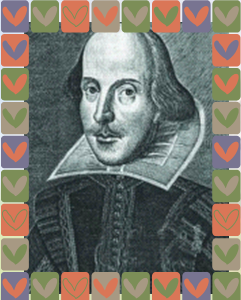
--- William Shakespeare
2. Science Fiction:
Science fiction is a genre of fiction. It differs from fantasy in that, within the context of the story, its imaginary elements are largely possible within scientifically established or scientifically postulated laws of nature (though some elements in a story might still be pure imaginative speculation). Science fiction is largely based on writing rationally about alternative possibilities. The settings for science fiction are often contrary to the known reality, but the majority of science fiction relies on a considerable degree of suspension of disbelief provided by potential scientific explanations to various fictional elements.

These may include:
1. A setting in the future, in alternative timelines, or in an historical past that contradicts known facts of history or the archaeological record;
2. A setting in outer space, on other worlds, or involving aliens;
3. Stories that involve technology or scientific principles that contradict known laws of nature;
4. Stories that involve discovery or application of new scientific principles, such as time travel or psionics, or new technology, such as nano technology, faster-than-light travel or robots, or of new and different political or social systems (e.g. a dystopia, or a situation where organized society has collapsed)
Audiovisual Supplement
Watch a video clip and answer the following questions.

Main Idea
Structural Analysis
The story is mostly arranged in a chronological order, with the exception of the beginning, where the last event of that eventful day is recorded, and with a flashback unfolding in the near middle of the story.
Work out the structure of the text by completing the table.
Paragraph(s) | Main idea |
Part I | It serves as the background of the story. |
Part II | |
Part III | It tells us something about the schoolroom, the mechanical teacher, and Margie’s thoughts. It also reveals indirectly how children in the distant future dislike school with a mechanical teacher only and how they wish to have human teachers teaching them. |

