

Reading Aloud
Read the following sentences aloud, paying special attention to sentence stresses.
1. She was from a /small /town in /east /Texas, and this was /only her /second /time on an /airplane.
2. I was /ready to /faint, but when I /saw the/face of the /girl/next to me, I /pulled myself to/gether.
3. As we /jolted and /screeched our way /downward, I could /hear /small/pockets of /soothing conver/sation /everywhere.
4. We /chatted about the /lives we now /felt /blessed to be /living, as /difficult or /rocky as they
might be.
5. I am in/debted to my /fellow /passengers and /wish I could /pay them /back.
Cultural Information
1. Quote
Is life so dear, or peace so sweet, as to be purchased at the price of chains or slavery? Forbid it, Almighty God! I know not what course others may take  but as for me; give meliberty or give me death!
--- Patrick Henry
2. Top 3 Airline Safety Questions
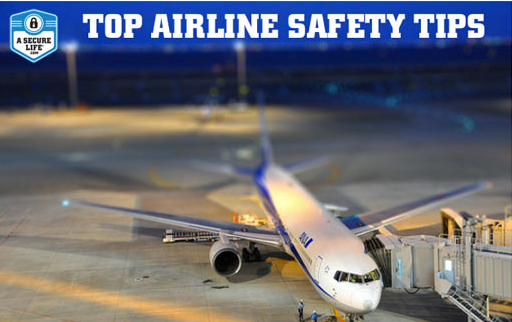
(1) Where is the safest place to sit on an airplane?The short answer is there is no safest seat. In an aircraft accident where the plane is seriously damaged or one or more occupants are injured orkilled, the severity of the injuries depends on many factors, some of which may not be apparent until an accident occurs.
(2) Which aircraft model is the safest?
In general, all aircrafts in a particular class have to adhere to the same set of standards. Whens afety concerns arise because of one or more accidents associated with a particular model, the civil aviation authorities of the major industrialized countries will usually require that the issue be addressed in all relevant aircraft models.
(3) What kind of emergency am I most likely to face?
For every accident, there are dozens, even hundreds of unusual circumstances that can happen during a flight. For a passenger, the most likely emergencies that you will face where you will have to do something is an evacuation of the aircraft using the emergency slides or the emergency oxygen system.
Audiovisual Supplement

Text Analysis
1. What happened to the plane? And what did it have to do?
The plane was hit by lightening. As a result, it was jolting and swerving. It had to make an emergency landing in New Orleans.
2. What is the writer’s purpose of presenting her extraordinary and unforgettable travel experience on an airplane?
To eulogize her fellow passengers, praise their fine deeds and inspire others to copy them.
3. What about the tone of the piece?
The tone is objective and emotional, with concrete or detailed accounts of the actual situations and touching scenes.
Structural Analysis
1. How is the plot developed or organized?
The plot is developed or organized by means of the natural time sequence of the happenings
(chronological order).
2. Work out the structure of the text by completing the table.
Paragraphs | Main idea |
1-4 | The author tells us about ______1_____ and introduces some ______2_____ including the writer. |
5-9 | This part narrates and delineates ______3_______of the writer and other passengers on the plane when they were faced with the dangerous situation. |
10-12 | This part tells the readers what the passengers ______4______after they landed safely. |
13-14 | The writer felt indebted to passengers and realized the key is to _______5__________. |

