
-
1 文化背景
-
2 篇章结构
-
3 字词难句
-
4 思政要点
What’s the World to Do about Water?
Michael E. Webber
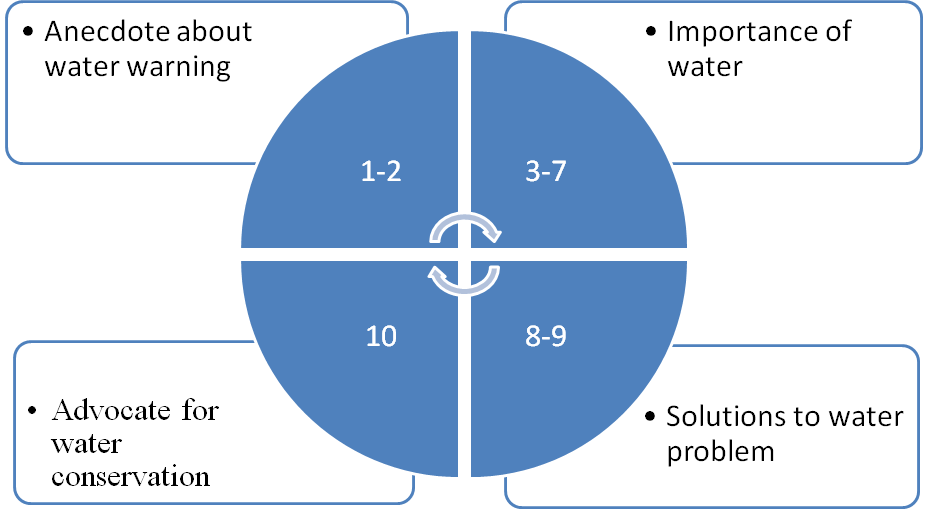
1 In 2007, when my daughter was seven years old, we would brush our teeth together every night as part of our daily ritual. To conserve water, we would turn off the faucet after wetting our brushes and turn it back on only to rinse. One night, I didn’t turn off the water fast enough to her liking. She turned off the faucet, made an angry face at me, and growled, “Turn off the water, Daddy. The scientists need time.”
2 That statement still rings in my ears today, not only because of her precociousness but also because she was exactly right. We need to conserve our resources to buy ourselves time so scientists can find new solutions to our problems. And this is especially true for water.
3 Water is on track to be the most important and most contentious resource of the 21st century. It could replace oil as the strategic resource that triggers geopolitical conflicts. But with the right solutions, it could also be the one that brings us all together.
4 In 2003, the late Nobel Laureate Richard Smalley gave a lecture at Rice University’s Energy & Nanotechnology Conference highlighting humanity’s top 10 problems for the next 50 years. His list, in descending order of importance, was: energy, water, food, environment, poverty, terrorism and war, disease, education, democracy, and population.
5 The reason energy and water sit at the top, ahead of food and poverty, is that addressing them makes subsequent problems easier to deal with. Developing abundant sources of clean, reliable, affordable energy enables an abundance of clean water. An abundance of clean water enables food production and protects the environment. And so forth.
6 In many ways, the 1900s was the century of energy conflict. Now, the dawn of a new energy era is just around the corner — with the prices of solar power going down, and distributed generation and energy efficiency on the point of taking off — and we can foresee a time this century when water replaces energy as the next great challenge for humanity. Getting water right could clear the path to a fully liberated, healthy, and peaceful civilization.
7 But water is complicated. First, there’s no alternative. There are alternatives to coal and petroleum, but water cannot be replaced. Second, water is intertwined with every other sector of society. Energy production requires water for cooling power plants and fracturing shale. Agriculture needs water for irrigation. Industry and cities use trillions of gallons of water for all sorts of purposes. Third, water demands are growing at the same time supplies are fluctuating. Climate change is expected to intensify droughts and floods while shifting where water will be and when. That means humanity will be confronted with decisions about whether to move people to water or water to people.
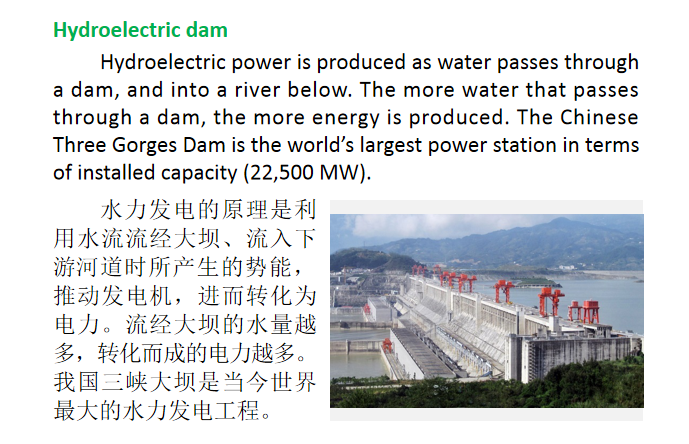
8 Thankfully, there are solutions. Some are large, incredibly expensive, and energy-intensive, such as building cross-continent water-transfer aqueducts, new hydroelectric dams, and massive desalination plants. Some are small, such as using micro water harvesters that condense water vapor out of the air. All of them take a while.
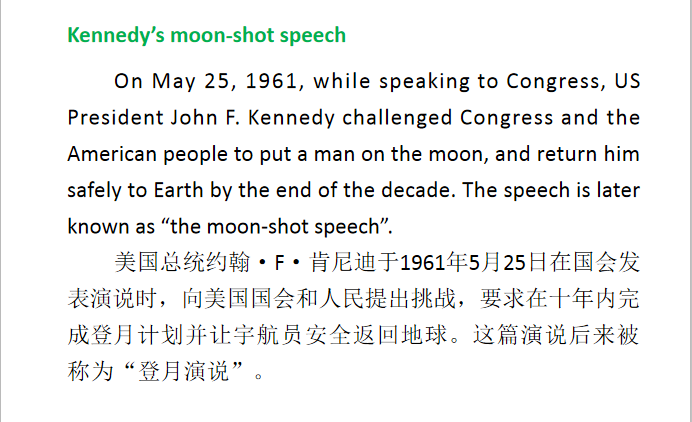
9 In April 1961, President John F. Kennedy said, “If we could ever competitively — at a cheap rate — get freshwater from saltwater, it would be in the long-range interest of humanity and would really dwarf any other scientific accomplishments.” That was one month before his famous moon-shot speech. Before the decade was over, we sent man to the moon and back. But we still haven’t found a solution as to how to get freshwater from saltwater without a lot of money and energy. That’s mainly because our great innovation apparatus has not been dedicated to water. Research budgets have prioritized energy, defense, and health while mostly ignoring water, even though fixing water would help our energy, defense, and health problems. If we spent as much money looking for water on Earth as we do searching for it on Mars, the outcomes might be very different.
10 In the end, we can solve the water problem. But we need aggressive conservation that will buy us time while our inventors get to work.
一、Text生词
conserve: v. use without wasting; protect from loss or destruction 节约使用;保护
e.g. To conserve energy, most families in this apartment building do not turn on the air-conditioners except in extreme weather.
为节约能源,这幢楼大多数人家若非高温一般不开空调。
conservation n.
e.g. Water conservation tops the list of our urgent tasks.
节水是我们工作的重中之重。
to one’s liking: 中意,称心
e.g. “We do our best to ensure that the food we serve is always to your liking,” said the owner of the restaurant to us.
“我们尽力提供你们满意的菜肴,”饭店老板对我们说。
ring in one’s ears: make one feel that one can still hear sth. 犹言在耳
e.g. She went to bed with the song still ringing in her ears.
她上床睡觉,歌声仍萦绕在耳。
resource: n. (usu. pl.) 资源
e.g. Land resources in this small island country are extremely scarce.
这个弹丸岛国的土地资源极为稀少。
on track: likely to achieve the result you want 步入……轨道;有望
e.g. Please get the discussion on track. Time is limited.
请不要岔开话题。时间有限。
The boy is on track to become a chess master.
这孩子有望成为象棋大师。
replace: v. be used instead of sth./sb. else, put sb./sth. new in the place or position of sb./sth. 取代
e.g. Will computers ever completely replace books?
电脑会不会完全取代书本?
An American college graduate has been hired to replace our previous English teacher.
他们请了个美国大学毕业生取代我们原来的英文老师。
strategic: a. 战略的,战略上的
e.g. The city of Zhangjiakou is located at a strategic position.
张家口市地处战略要冲。
The bridge has great strategic value.
这座桥具有重要的战略价值。
conflict: n. a fight, battle or struggle, a state of opposition between ideas, interests, etc. 冲突,矛盾
e.g. There is a long history of conflicts over water resources between the two countries.
两国长期存在水资源冲突。
highlight: v. give special attention to (sth.); emphasize 使突出;强调
e.g. The teacher said: “Write a paragraph centering around a topic sentence, and highlight your topic sentence in yellow.”
老师说:“围绕中心句写一个段落,中心句用黄色标出。”
n. sth. very interesting, exciting or important, the best part of sth. 主要部分,提要
e.g. I missed the game, but I saw the highlights on the evening news.
我错过了比赛,不过在晚间新闻看了精彩回顾。
environment: n. 环境
e.g. How can we create a workplace environment that encourages innovation?
我们如何营造鼓励创新的工作环境?
subsequent: a. happening after sth. else 随后的,后来的
e.g. The house was built in 1980, and has been expanded several times in subsequent years.
这幢房建于1980年,之后数次扩建。
In subsequent interviews the candidate denied what he had said that night.
那位候选人在嗣后的采访中否认了当晚所说的话。
abundant: a. 大量的,充裕的
e.g. The project aims at providing abundant energy in power-starved areas of the world.
该项目旨在为世界上能源不足的地区提供充足的能源。
source: n. 来源;源头(指河流的源头,或资金、信息等的来源,不同于“resource”,后者常指体现国家、组织或个人实力的资源,如物力、财力、劳力以及土地、矿山等自然资源)
e.g. Exhibitions are an important source of income for many artists.
开展会是不少艺术家重要的收入来源。
Novels have been a rich source of material for the film industry.
小说是电影行业取之不尽的故事来源。
reliable: a. 可靠的,可信赖的
e.g. Dogs, if treated properly and trained with firm kindness, are faithful and reliable.
只要你对它好,训练时态度坚决而友善,狗都能变得忠实可靠。
enable: v. 使成为可能;使能够
e.g. The cell phone will enable you to call for help from anywhere.
手机可以让你在任何地方呼求帮助。
and so forth: et cetera 等等,诸如此类。常用于表达“还有其他与上文同类的活动(事件、东西),不再逐一列出”。
e.g. We shopped, had lunch, shopped some more, and so forth.
我们买买买,吃午饭,再买买买,就这样。
around the corner: not far away, coming very soon 不远;即将到来
e.g. The petrol station is around the corner.
加油站就在附近。
Christmas is just around the corner.
圣诞节即将来临。
go down: 下降
e.g. If housing prices continue to go down, many small banks will go bankrupt.
如果房价持续走低,不少小银行就会破产。
She believes that interest rates will go down in the next few weeks.
她认为在接下来的数周内利率会下降。
distribute: v. 分发;散布;分配
e.g. As freshmen, they must learn quickly how to distribute their time among the several courses they take.
作为新生,他们必须很快学会不同的课程怎么分配时间。
They believe that to distribute wealth properly is at least as important as to create wealth.
他们认为合理分配财富至少和创造财富同等重要。
efficiency: n. 效率
e.g. She is always seeking to improve the efficiency and effectiveness of teaching.
她一直琢磨着如何提高教学效率、改善教学效果。
A market economy is all about efficiency, not morality.
市场经济注重的是效率而不是道德。
on the point of: about to (do sth.) 正要……
e.g. The researchers believe that they are on the point of a breakthrough.
那些研究者认为他们即将取得突破性进展。
foresee: (foresaw, foreseen) v. think or know sth. is going to happen in the future 预见;预知
e.g. Did scientists foresee the revolution in communication technology?
当时科学家有没有预见到这一通讯科技的重大变革?
civilization: n. 文明
e.g. Athens (雅典) is generally considered as the birthplace of Western civilization.
雅典被认为是西方文明的发源地。
complicated: a. 复杂的
e.g. Our physics teacher is very good at explaining complicated concepts in simple language.
我们的物理老师善于深入浅出讲解复杂的概念。
alternative: n. 选择;供选择的东西
e.g. Biking is a more environment-friendly alternative to car driving.
相对于开车,骑自行车更为环保。
intensify: v. increase in degree or strength 加剧,强化
e.g. The police intensified their search for the escaped prisoner.
警方加强了对逃犯的搜捕。
be confronted with: meet face-to-face with 面对
e.g. When confronted with the witnesses of the murder, the accused was speechless.
面对谋杀目击者,被告哑口无言。
rate: n. 价格,比率
e.g. The postal rates vary from state to state.
不同的国家邮资不同。
The mortality rate of cancer has been going down in recent years.
癌症死亡率近年有所下降。
vt. place in a particular rank or grade 将……列入(某一特定的阶层或等级)
e.g. She is rated among the top ten heart surgeons in the country.
她名列全国十大心脏外科医生。
in the interest of: to the advantage of 对……有利,为了
e.g. In the interest of the public, we do not allow dumping into the rivers.
为了公众的利益,我们不允许将垃圾倾倒入河。
dwarf: v. 使(显得)矮小;变矮小
e.g. At over six feet in height, the twelve-year-old boy dwarfs his peers.
这个12岁的孩子身高超过6英尺,明显高于同龄孩子。
n. an abnormally small person 侏儒
e.g. I remember mother reading to me the story of Snow White and the Seven Dwarfs.
我还记得妈妈给我读《白雪公主和七个小矮人》。
budget: n. 预算
e.g. Is there any money left in our monthly budget?
我们每月预算里还有钱剩下吗?
The project is well over budget.
这一项目远超预算。
innovation: n. 革新,创新
e.g. In aiming for innovation, surround yourself with people that think differently from you.
要有所创新,就要和想法和你不同的人在一起。
mostly: ad. 主要地;通常;大部分
e.g. We have some cold days. But mostly it is warm.
天气有时会挺冷,但基本上挺暖和。
outcome: n. 结果
e.g. It was midnight on election day. Many people were still up waiting for the outcome.
选举日,午夜。许多人还没睡,在等待选举结果。
二、Text难句
One night, I didn’t turn off the water fast enough to her liking. (Para. 1)
One night, she wasn’t pleased with the way I turned off the water, because she thought I didn’t do it fast enough.
一天晚上,女儿认为我关龙头动作不够快,不乐意了。
We need to conserve our resources to buy ourselves time so scientists can find new solutions to our problems. (Para. 2)
We should conserve our resources. If we do so the resources will probably last long enough for scientists to find new solutions to our problems.
我们必须节约资源,争取时间,使科学家来得及找到解决问题的新方法。
His list, in descending order of importance, was: energy, water, food, environment, poverty, terrorism and war, disease, education, democracy, and population. (Para. 4)
His list contains ten items: energy, water, food, environment, poverty, terrorism and war, disease, education, democracy, and population. They are arranged in such a way that each item is more important than the one that follows it.
他列出的问题清单,按重要性排序,依次是:能源、水、食品、环境、贫困、恐怖主义和战争、疾病、教育、民主,以及人口。
The reason energy and water sit at the top, ahead of food and poverty, is that addressing them makes subsequent problems easier to deal with. (Para. 5)
Energy and water are the top two problems on the list. The reason is that if we start to solve these problems, the other problems that follow them on the list, such as food and poverty, will be easier to deal with.
能源和水位居榜首,排在食品和贫困之前,其原因是解决前两个问题,后面的问题就比较容易解决了。
Climate change is expected to intensify droughts and floods while shifting where water will be and when. (Para. 7)
Climate change will make droughts and floods worse. It will also change where and when rain will fall.
气候变化会加剧旱灾和水灾,并改变降水的时间和地点。
Research budgets have prioritized energy, defense, and health … (Para. 9)
Research budgets have treated energy, defense and health as being more important than other areas …
科研预算优先能源、国防和健康领域的项目……
… even though fixing water would help our energy, defense, and health problems. (Para. 9)
… even though solving the water problem would help solve energy, defense and health problems.
……尽管解决水问题有助于解决能源、国防和健康方面的问题。

- 暂无内容

