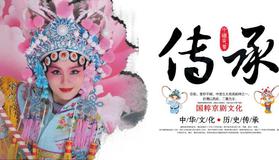
Quyi
As an ancient performing art in China, Quyi (曲艺) is a general term that coversseveral different types of performances, in which speech, singing or both areused. Quyi includes many traditional art forms, such as ballad singing (唱曲), story telling (说书), comic dialogues (滑稽戏), clapper talks (快板) , crosstalk (相声) and so on. It was formed in themiddle Tang Dynasty and flourished in the Song Dynasty. Now more than 300 formsof quyi are popular among all ethnic groups throughout the country.
Performances consist usually of only one, two or three people, withsimple props and no stage scenery. Major singing forms, such as Jingyun dagu(京韵大鼓), normally tell short storiesand the songs are short. Some combine singing with speech, such as Suzhoupingtan(苏州评弹), andthese are often long pieces. Some are half sung and half spoken, such as ShandongKuaishu. Talking forms include Pingshu (评书)and Pinghua(评话), which are used to tell long stories which continue over severalmonths. The performers sit as they sing in some forms, such as pingshu, butwalk up and down when singing in the Er’renzhuan of Northeast China. Singing isaccompanied by musical instruments, clappers or drums.
One of China’s foremost and most popular form of Quyi iscrosstalk(or Xiangsheng) (相声). It is a language art combining four basic skills—speaking,imitating , teasing , and singing (说学逗唱). The language is rich in puns and allusions. It is typicallyperformed in the Beijing dialect (or in Standard Chinese with a strong NorthernChinese accent). There are three forms of Crosstalk. The earliest Crosstalkcomedian known by name is Zhang Sanlu(张三禄), who performed in the mid-nineteenth century. After the widespreaduse of Mandarin from 1949, the popularity of Crosstalk increased throughout thePeople’s Republic of China. At its early stage of development, it was performedby one person, and was called monologue comic talk(单口相声). Its contents were mostlyjokes and humorous stories. Later, comiccrosstalk(对口相声),performed by two people, appeared. One man was called Dougen(逗哏) and the other, Penggen(捧哏). Multilogue crosstalk((群口相声)) is performed by many people.
Another popular form of Quyi is Pingshu. It is an art form of oralstorytelling mainly popular in northern China and the same style in thesouthern China is called pinghua. It developed into an independent art form inthe early years of the Qing Dynasty (late 17th century). The pingshu performerwears a gown and sat behind a table, with a folded fan and a gavel(醒木) (serving as a prop to strikethe table as a warning to the audience to be quiet or as a means of attractingattention in order to strengthen the effect of the performance, especially atthe beginning or during intervals). The art of storytelling, with its broadmass appeal, promoted the growth of other art forms and nurtured many talentedartists. Famous novels such as TheRomance of the Three Kingdoms and serialized novels all emerged under theinfluence of the storytelling artists.
Quyi has a wide mass basis and a strongly Chinese flavor. Manyexcellent quyi items reflect the Chinese people’s thought, ideals and moralaspirations; many works sing the praises of national heroes, honest officials,and faithful lovers. Currently, there are specialized quyi performing troupesand teams at central and local levels. In addition, there are many amateur quyitroupes.
Abridgedand revised from
http://www.chinaembassy.se/eng/wh/t100772.htm

