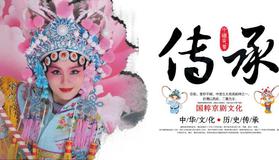
Kunqu Opera
Kunqu is one of the earliest forms of traditional Chinese opera, having a history of more than 600 years. Its melodies originate from Kunshan in Jiangsu Province. It is known as the “ancestor” or “teacher” of a hundred opera forms, because of its influence on other Chinese opera forms, including Beijing Opera. After extensive exploration and reworking by its performers, it gradually developed into today’s Kunqu.
Before the mid-Ming Dynasty, Kunshan melodies were popular in central Jiangsu, until Wei Liangfu(魏良辅), a singer of melodies in the northern style, migrated to Kunshan from Nanchang, Jiangxi Province. Together with performing singers of southern melodies, he made major changes to the songs of Kunshan. Keeping Kunshan tunes as a base, while absorbing the best features of Haiyan tunes (海盐腔) and Yuyao tunes (余姚腔), combined with northern singing techniques, they created a new singing genre. In order to make the accompanying music suit these new songs, with the help of celebrated musician Zhang Yetang(张野塘), Wei Liangfu also adapted the musical instruments of the time. This was how Kunqu, a new form of opera combining both northern and southern musical characteristics, came into being.
At that time, Kunqu was simply singing, with no costumes, makeup or acting. It was Liang Chenyu (梁辰鱼)(1519-1591), a native of Kunshan, who transformed Kunqu into stage opera. He was a famous playwright who also excelled at poetry and music. Wei Liangfu’s achievements in reforming Kunqu melodies were a great influence on Liang, but he believed that these new tunes should not be confined to singing. He and several other accomplished musicians wrote the Washing the Silken Gauze ①(《浣纱记》), a Kunqu opera in which the main character was the legendary beauty, Xi Shi. The performance was a great success. Kunqu became quickly popular, and numerous new plays were subsequently created and staged. During the early years of Emperor Wanli’s reign, Kunqu spread to various places in Jiangsu and Zhejiang, eventually becoming the dominant dramatic style. Later, Kunqu was introduced to Beijing, and became one of the two official forms of drama within the imperial court, and was soon a nationwide favorite. A large number of Kunqu plays and performers emerged, and were welcomed by both scholars and ordinary citizens alike. In Jiangsu and Zhejiang in particular, even the illiterate(文盲) rural inhabitants could sing one or two lines of the songs from major works. Kunqu maintained a position as the most popular national style of opera for more than 200 years, leaving a glorious page in the Chinese history of performing arts.
In its 600-year history, Kunqu has accumulated a repertoire(全部剧目) of more than 400 “zhezixi” (highlights from operas). Some of their scripts were written by outstanding playwrights. Guan Hanqing, for instance, wrote more than 60 zaju (poetic dramas), including the Injustice to Dou E (also known as Snow in the Summer). The Kunqu repertoire contains 18 of his preserved poetic dramas, some of which continue to be performed on stage.
Other masterpieces include the West Chamber② by Wang Shifu, the Peony Pavilion ③ by Tang Xianzu, the Palace of Eternal Youth ④ by Hong Sheng, and the Peach Blossom Fan ⑤by Kong Shangren.
The West Chamber tells of a romance set against the ancient feudal society, in which a young man and woman pursue their rights to freedom of marriage. This opera became known to the masses of China over a period of one thousand years. This poetic drama, written by Wang Shifu, attained an extremely high artistic level as regards its lyrics, music, plot and performing skills and became what is today a classic among Chinese dramas. In one act, “Farewell at a Pavilion,” the lyrics describing the scenery are particularly moving.
Kunqu was listed as one of the “Masterpieces of the Oral and Intangible Heritage of Humanity” by UNESCO in 2001. It is the only Chinese art form listed, and is now a facet of the common cultural heritage of humankind.
Abridged and revised from
http://www.chinavoc.com/arts/perform/opera/kunqu.htm
Notes:
① Washing the Silken Gauze:《浣纱记》, 根据中国明代传奇作品《吴越春秋》而改编的昆曲剧目,共45出。借中国春秋时期吴、越两个诸侯国争霸的故事表达对封建国家兴盛和衰亡历史规律的深刻思考。
② West Chamber:《西厢记》全名《崔莺莺待月西厢记》,是我国古典戏剧的现实主义杰作,对后来以爱情为题材的小说、戏剧创作影响很大。《西厢记》中无不体现出道家哲学上善若水、素朴之美、追求自由的思想。它的曲词华艳优美,富于诗的意境。
③ Peony Pavilion:《牡丹亭》全名《牡丹亭还魂记》,受寻幽爱静的道家理念的影响,汤显祖在这部《牡丹亭》中大量涉及神鬼异境。剧中歌颂青年男女大胆追求自由爱情,坚决反对压迫,体现出追求内心精神的完全超脱、绝对自由的道家思想。
④ Palace of Eternal Youth:《长生殿》,取材自唐代诗人白居易的长诗《长恨歌》、陈鸿的传奇《长恨歌传》和元代剧作家白朴的剧作《梧桐雨》,讲述的是唐玄宗和贵妃杨玉环之间的爱情故事。
⑤ Peach Blossom Fan:《桃花扇》,名列中国古典戏曲五大名著之一,作者借离合之情,写兴亡之感,以明末文人侯方域与秦淮名妓李香君的爱情故事为线索,深刻描写南明王朝的兴亡与明朝的覆灭。

