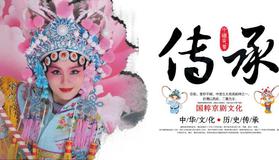
Chinese Opera
Chinese Opera is the traditional form of Chinese theatre, which combines dialogue, singing, music, dance, kung fu, acrobatics, and so on. It is one of the three oldest theatrical art forms in the world, together with Greek tragedy and comedy① and Indian Sanskrit Opera②.
During the Tang Dynasty, the Emperor Xuanzong established an opera school with the poetic name Liyuan (Pear Garden). From that time on, performers of Chinese opera were referred to as “disciples of the pear garden”. Since the Yuan Dynasty it has been encouraged by imperial court officials and emperors and has become a traditional art form. During the Qing Dynasty, it became popular among ordinary people. Performances were watched in tearooms, restaurants, and even around makeshift stages.
It evolved from folk songs, dances, talking, antimasque(带面具的滑稽戏), and especially distinctive dialectical music. Gradually it combined music, art and literature into one performance on the stage. Accompanied by traditional musical instruments like the erhu, the gong(锣), and the pipa, actors present unique melodies as well as dialogues which are beautifully written and of high literary value. These dialogues also promoted the development of distinct literary styles, such as zaju(杂剧) in the Yuan Dynasty.
One feature of Chinese Opera is the different styles of facial make-up, which is one of the highlights and requires distinctive techniques of painting. Exaggerated designs are painted on each performer’s face to symbolize a character’s personality, role, and fate. This technique may have originated from ancient religions and dance. Audience who are familiar with opera can know the story by observing the facial painting as well as the costumes. Generally, a red face represents loyalty; a black face, bravery; yellow and white faces, duplicity(奸诈); and golden and silver faces, mystery.
Besides color, lines also function as symbols. For example, a figure can be painted either all white on his face, or just around the nose. The larger the white area painted, the more viperous(阴险)the role.
Another technique that fascinates people is the marvelous acrobatics. Performers can spray fire out of their mouths when they act as spirits, or can act as a dwarf while squatting. This reflects a saying among actors: “One minute’s performance on the stage takes ten years’ practice behind the scenes.”
Over the years, Chinese opera has evolved into many different regional varieties based on local traits and accents. Today, there are over 300 dazzling regional opera styles. Kunqu Opera, which originated around Jiangsu Province, is a typical ancient opera style and features gentleness and clearness. This enabled it to be ranked among the Masterpieces of the Oral and Intangible Heritage of Humanities③. Qinqiang Opera from Shaanxi, known for its loudness and wildness, and Yu Opera, Yue Opera, and Huangmei Opera are all very enjoyable. Beijing Opera, the best-known Chinese opera style, was formed from the mingling of these regional styles.
Abridged and revised from
http://www.travelchinaguide.com/intro/arts/chinese-opera.htm
Notes:
① Greek tragedy and comedy:古希腊戏剧,是指大致繁荣于公元前6世纪末至公元前4世纪初之间的古希腊世界的戏剧。雅典的悲剧和喜剧也是全世界范围内出现最早的戏剧形式之一。
② Indian Sanskrit Opera: 印度梵剧,印度古典戏剧,在悲、喜、正三种戏剧审美品类中属于悲喜参和的正剧式审美品格。
③ Masterpieces of the Oral and Intangible Heritage of Humanities: 人类口述和非物质遗产代表作,联合国教科文组织从2011年开始“人类口述和非物质遗产代表作”的评选,每两年一次。

