西方文明史

冯新艳

目录

  • 1 Course Orientation
    • 1.1 课程简介及目标
    • 1.2 课程考核
  • 2 About Critical Thinking
    • 2.1 About Critical Thinking
    • 2.2 How Human Mind Functions
    • 2.3 Are You a Selfish Thinker
    • 2.4 Be Aware of Pathologies of Thought
    • 2.5 How to be Fair-minded
    • 2.6 How to Evaluate Thinking
    • 2.7 How to Analyze Thinking
    • 2.8 Tools for Critical Thinking
    • 2.9 Inferences and Assumptions
    • 2.10 Emotion and Reason
    • 2.11 Types of Questions-1
    • 2.12 Types of Questions-2
    • 2.13 Questions for self-development
    • 2.14 Fallacies
    • 2.15 Overview of Critical Thinking
  • 3 The First Civilizations
    • 3.1 第一周预习作业:Mesopotamia
    • 3.2 Video about GUNS, GEMS AND STEEL
    • 3.3 Video about ancient Egypt
    • 3.4 第1次-上课视频及课件
    • 3.5 第2次-上课视频及课件
  • 4 Greek Period
    • 4.1 第二周预习作业:Dark Age
    • 4.2 Aegean Civilizations
    • 4.3 Evidence of Homer
    • 4.4 第3次-上课视频及课件
    • 4.5 第三周预习作业
    • 4.6 Gods in Greece
    • 4.7 Path to Democracy
    • 4.8 第4次-上课视频及课件
    • 4.9 第四周预习作业:About philosophy
    • 4.10 Athenian Drama
    • 4.11 Plato and Stoics
    • 4.12 第5次-上课视频及课件
    • 4.13 第五周预习作业 (Reading)
    • 4.14 第6次-上课视频及课件
  • 5 古罗马文明
    • 5.1 第六周预习作业:Rome
    • 5.2 The Twelve Tables
    • 5.3 Poets in Augustus's Period
    • 5.4 第7次-上课视频及课件
    • 5.5 第七周预习作业:Roman Empire
    • 5.6 Pompeii in Italy
    • 5.7 第8次-上课视频及课件
    • 5.8 第八周预习作业:Christianity
    • 5.9 Development of Christianity
    • 5.10 Summary about Ancient Rome
  • 6 Middle Ages
    • 6.1 第9次-上课视频及课件
    • 6.2 第九周预习作业:Feudalism
    • 6.3 The manorial System
    • 6.4 Christianity in Middle Ages
    • 6.5 第10次-上课视频及课件
    • 6.6 第十周预习作业:Saints
    • 6.7 Video:Knights
    • 6.8 Video:Knighthood
    • 6.9 Reading Comprehension
    • 6.10 第11次-上课视频及课件
    • 6.11 第12次-1-上课视频及课件
  • 7 Threshold of a New Age
    • 7.1 第十一周预习作业:Renaissance
    • 7.2 Video: Renaissance
    • 7.3 第12次-2-上课视频及课件
    • 7.4 第十二周预习:Reformation
    • 7.5 Video:Age of Explorations
    • 7.6 第13次-上课视频及课件
    • 7.7 第十三周预习: Science
    • 7.8 Video:The Enlightenment
    • 7.9 第14次-上课视频及课件
    • 7.10 教学反馈问卷
  • 8 期末考试
    • 8.1 期末考试须知
  • 9 调整淘汰部分
    • 9.1 写作任务须知
课程考核
  • 1 考核方式及标准
  • 2 习作格式规范
  • 3 参考图片

      课程总分=平时成绩(40%)+期末考查(60%)


NOTE 

1. The class will not be graded on a curve. It is theoretically possible for the whole class to get an A or an E. You will not be competing against each other and there will be every incentive to help each other improve

2. You should focus on improving your performance as a thinker and a responsible learner, increasing your strengths and diminishing your weaknesses, not in looking for a grade.

3. You should read and re-read the following criteria many times through-out the semester to ensure that you are clear about what you are striving to achieve.


平时成绩(按100分计算,主要由学习通记载生成)

1. 考勤(旷课1次不扣分,第2-4次每次扣10分,5次及以上无期末考试资格;迟 

             到和早退酌情扣分;学习委员每周报考勤,学期末汇总报考勤)。

2. 课堂参与(35%)--- 以学习通活动参与数据及老师的平时记载为依据。参与投票、问卷、抢答、选人、讨论、随堂练习等课程活动可以获相应分数,积分达分为满分. 其中随堂练习为课前3-5分钟的quiz(依复习作业和预习作业设定题目)。

3. 每周作业(30%)---(1)小作文6-8篇及对应内容视频展示(平时互评、抽评;学期末按照《习作格式规范》整理后打印,并于第16周周四前由学习委员统一上交;(2)教材预习阅读相关的检测作业10次。   

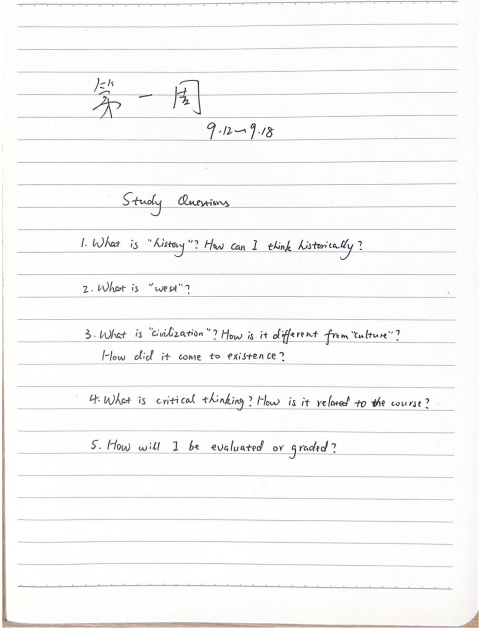
4. 课程笔记本(15%)--- 用于记个人笔记、答预习思考题、写小作文草稿及修改稿、画章节知识点思维图、记课内外阅读的所思所想等。笔记本要求以周为单位分成若干部分 (请参见”参考图片“)。平时抽查,第15周由学习委员上课当天统一提交(16周上课前下发)。若使用电子课程笔记本,可提交打印版,格式自定(期末考试考场不可携带电子产品)或者与老师约时间,单独将电子笔记交给老师检查。

5. 讨论(8%) --- 以学习通数据为依据。发表一个话题累计 分, 回复一个话题累计 分, (同一话题下多次回复不重复得分), 获得一个赞累计  分, 最高100分。

6. 视频学习(7%)--- 有效时间内(一般为6天)完成视频学习方可获得分数。

7. 章节测验(5%)---学习通任务点的预习或复习检测,以学习通数据为依据。


期末考查(按100分计算,统一安排考试时间)

  1. 考查形式:开卷(可带教材、纸质笔记本、纸质词典)

  2. 考查时间:100分钟

  3. 考查内容:

    (1)西方文明发展各时期的重大历史事件和主要人文思想(50%);

    (2)运用所学思辨分析方法分析历史文献节选(25%);

    (3)根据试题要求针对本学期所讨论过的某个话题展开论述(25%)。