
儿童口腔医学(全英文)

儿童口腔医学教研室

目录

  • 1 Examination of the mouth and other relevant structures; Behavior management in pediatric dental clinic
    • 1.1 Introduction
    • 1.2 Examination and behavior guidance
    • 1.3 Summary
  • 2 Dental caries in the child and adolescence (1)
    • 2.1 The overall introduction
    • 2.2 Classification and Prevalence
    • 2.3 Impact Factors and Hazard
    • 2.4 Strategy for dental caries control and prevention
  • 3 Dental caries in the child and adolescence (2)
    • 3.1 Caries management strategies
    • 3.2 Treatment for caries of primary teeth
    • 3.3 Treatment for caries of immature permanent teeth
    • 3.4 Caries control and prevention
    • 3.5 Cases study
    • 3.6 Summary
  • 4 Pulp therapy for primary and immature permanent tooth 
    • 4.1 Introduction
    • 4.2 Diagnosis of the pulp status
    • 4.3 Treatment plan for primary teeth
    • 4.4 Treatment plan for immature permanent teeth
  • 5 Management of dental trauma for primary and immature permanent tooth 
    • 5.1 Introduction
    • 5.2 Introduction to Dental Trauma
    • 5.3 Fractures of Permanent Teeth
    • 5.4 Luxations and Avulsion of Permanent Teeth
    • 5.5 Dental Trauma of Primary Teeth
    • 5.6 In-class Review and Case Discussion
  • 6 Periodontal and mucosal diseases in children
    • 6.1 Introduction
    • 6.2 Periodontal diseases in children
      • 6.2.1 Gingival diseases in children
      • 6.2.2 Periodontitis in children
    • 6.3 Mucosal diseases in children
  • 7 Prevention and treatment for early orthodontic problems
    • 7.1 What is early-age orthodontic treatment
    • 7.2 Why is early-age orthodontic treatment needed
    • 7.3 When and How to imply early-age orthodontic treatment
    • 7.4 Conclusion
  • 8 Early interceptive orthodontic treatments
    • 8.1 Introduction
    • 8.2 Introduction to management of occlusal development
    • 8.3 Occlusive guidance and anomalies of the development of teeth
    • 8.4 Oral habits
  • 9 Lab 1. Morphology of the primary and immature permanent teeth. Radiographic Techniques
    • 9.1 Morphology of the primary and immature permanent teeth.Radiographic techniques
  • 10 Lab 2. Preventive resin restoration 
    • 10.1 Preventive Resin Restoration
  • 11 Lab 3. Strip crown and composite resin restoration for primary incisors
    • 11.1 Composite-Resin and Strip Crown Restoration for Primary Incisors
  • 12 Lab 4. Stainless Steel Crown restoration for primary molars
    • 12.1 Stainless Steel Crown Restoration For Primary Molars
  • 13 Lab 5. Design and manufacture for space maintenance of early loss of deciduous molar
    • 13.1 Design and manufacture for space maintenance of early loss of deciduous molar
  • 14 Lab 6. #ONLINE ONLY# Orofacial muscle training for oral habits
    • 14.1 Orofacial muscle training for oral habits
Oral habits

8.4  Oral habits.

Oral habits


Keypoints:

1.Oral habits

A.Thumb and finger habits: openbite;

B.Tongue thrust (tongue anterior positioning):openbite, bimaxilla protrusion; proclined anterior teeth; anterior crossbite;

C. Lip habits: anterior deepbite; proclined anterior upper teeth; retruded mandible; anterior crossbite;

D.Month breathing: narrowed arches; protruded maxilla; retruded mandible;incompentent lips;

E.Bruxism: primary and permanent teeth worn; deep overbite;

F. Unilateral mastication: imbalance development of jaws.


2.The functional factors which can cause bad oral habits:

            A. masticatory function

         B. habits

         C.tongue thrust

         D. respiratory function

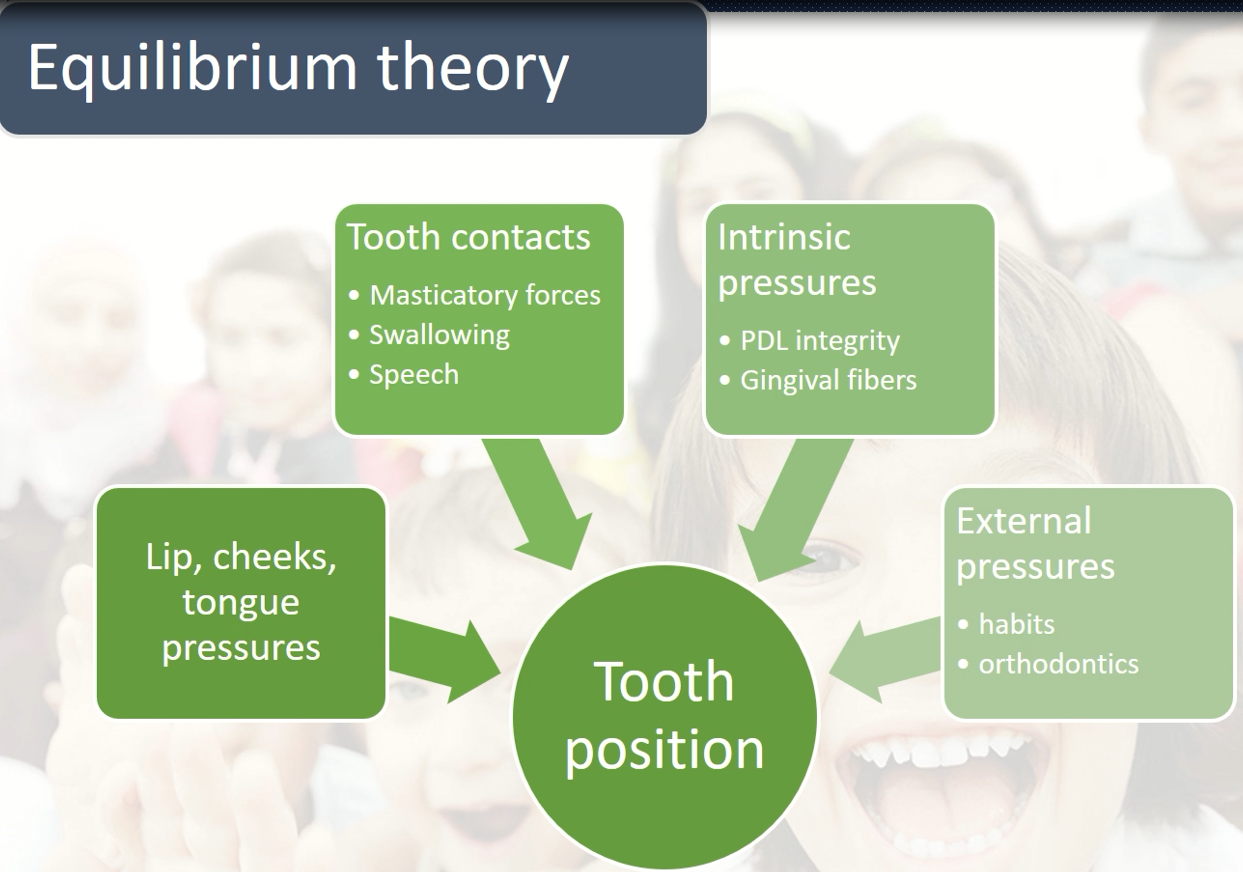
3.Equilibrium theory

4.Digit sucking 

         A kind of bad oral habit during which the tongue is lowered and the cheeks contract during sucking , the pressure balance against the upper teeth is altered, and the upper but not the lower molars are displaced lingually;

A.Digit sucking beyond the time that the permanent teeth begin to erupt (7 years of age) can lead to malocclusion:

    ●Flared and spaced maxillary incisors;

    ●Lingually positioned lower incisors;

    ●Anterior open bite;

    ●Narrow upper arch:

B.Greater effect on dental development

    ●Features

        ●Narrow V shaped maxillary arch

        ●Anterior open bite

        ●Retroclined lower incisors

        ●Buccal crossbite

5.Tongue thrust.

        Clinically, tongue thrust is defined as a forward placement of the tip of tongue, usually happens in the mixed dentition period, which causes openbite and tooth labially/buccally tipping. Tongue thrust needs to be treated in time.

●Infantile swallowing pattern:

       ●Active contractions of the musculature of the lips

       ●A tongue tip brought forward into contact with lower lip

       ●Little activity of the posterior tongue or pharyngeal musculature

●Adult swallowing pattern:

       ●No contracting the muscles

       ●Teeth are momentarily in contact

       ●Tongue remains inside the mouth

6.month breathing habits and respiratory problems

       ●Incompetent lips;

       ●Priclination of maxillary incisors;

       ●High and narrow palatal vault;

       ●Narrowed dental arches;

       ●Mandibular clockwise rotation:

       ●Skeletal class II, long face syndrome;

        Mouth breathing: Change in posture that secondarily altered long-duration pressures from the soft tissues.

7.Bruxism: Teeth grinding while sleeping;

  ●Causes:

       ●Occlusal interference

       ●Psychological factors;

       ●Sleep posture;

  ●Intervention:

       ●Occlusal adjustment;

       ●Psychological therapy;

       ●Tooth weatriness prevention;

       ●Others:

               ●Sleep posture adjustment;

               ●Masticatory muscle tense release: massage;


--------------------------------------------------------------------------------------

Homework(please send your answer to email):

Please illustrate your understanding of the clinic specialties of Pediatric Dentistry.