Part One: Introduction to Drama
I. Why Drama?
All the world's a stage,
And all the men and women merely players:
They have their exits and their entrances;
And one man in his timeplays many parts…
--- William Shakespeare
That is why we must have a theatre, for above all, the theatre places man in the center of the world. We must have a point of adventurous stillness, the quiet eye of the storm, from which to witness the age old revelation of a man challenging God in the working out of his fate.
--- Arthur Miller
▲ Drama is a means of probing for the meaning of life and mystery of existence. We study drama in order to learn what meaning others have made of life and to glean some understanding of ourselves, while maintaining the detachment of a reflective observer.
▲ Drama has exerted a great influence on human civilization for thousands of years, a heritage shared by all human beings, and dramatic performance used to have a golden time in almost all cultures.
1. Classical (Greek) drama --5th centuryB.C.-- Aeschylus, Sophocles and Euripides -- Theater of Dionysus;
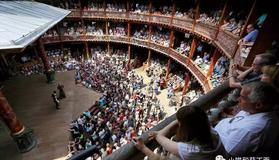
2. Elizabethan (British) drama – 16th century– Shakespeare -- Theater of Globe;
3. Modern drama – Ibsen, Chekov, Strindberg, and Shaw– 19th century;
4. Contemporary drama– O’Neill, Bricht, and Beckett– 20th century – Broadway Theaters
II. The Nature of Drama
1. Drama is a form of literature to be read like poetry and fiction, but in most cases it is meant to be performed onstage.
2. Drama is a highly comprehensive form of art, integrating dialogue, acting, directing, music, dance, costume, make-up, stage designing, lighting…
3. A dramatic work relies on characters rather than the narrator to tell a story. The characters’ thoughts, feelings and psychological conditions are translated into the concrete and tangible, into dialogue and action.
4. Because of the limitation of time and space, drama has to follow the three unities: time, place, and action
5. Drama readers generally have more work to do on their own than readers of fiction or poetry. They can visualize the playas a theatre performance, seeing it enacted in their mind’s eye as if on a real stage by real actors moving, talking, and gesticulating.
6. The split between the “literary drama” and the “popular theatre” has become the condition of the 20th-century drama and theatre.

