Car Body and Car Style
Car body is one of four key automotive assemblies. It refers to the outer shell of a car. Car body includes engine compartment, passenger compartment and cargo compartment and so on. Car styles refers to the shape of car body. Different cars use different carbodies and car styles befitting their varied uses.
Car Body
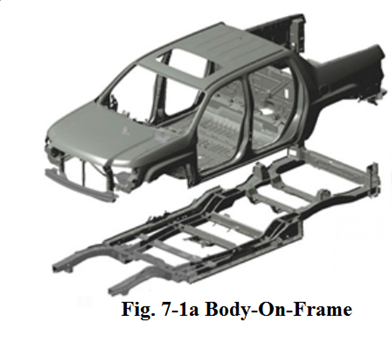
There are two types of car body: one is body-on-frame that means the car body and frame are separated.The body is mounted on this rigid frame as shown in Fig.7-1.he main functions of the frame in a car are to support the car’s mechanical components such as the drive train and the car body; to bear the weight of passengers and cargo loads; and to withstand the sudden impact from collisions. This type of body-on-frame is often found in trucks and buses.
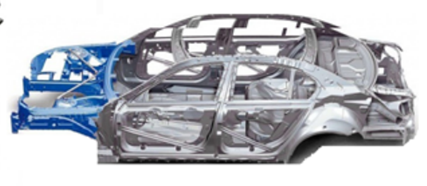
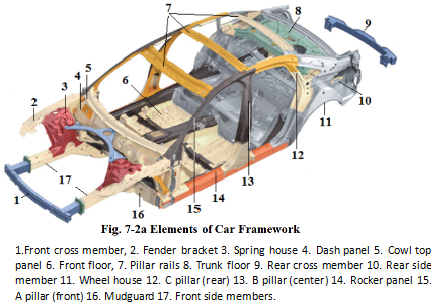
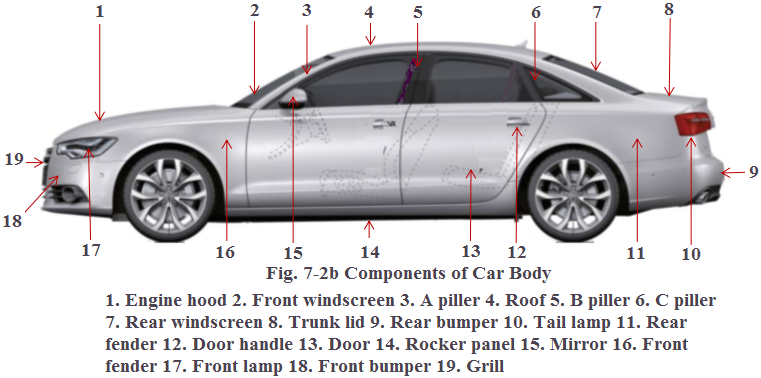
The other is unitized body that means the car’s frame and body are integrated into a single strong structure (see Fig.7-2). Nowadays, almost all modern passenger cars use unitized body. In this fully integrated body structure approach, the entire car is a load-carrying unit that can withstand the forces from driving and cargo loads.The unitized body is typically manufactured by welding various metal elements such as cross and side members, pillars, rails and other components together as one piece, forming a car’s skeleton or framework (for details to see Fig 7-3). The framework is a base for installing engine hood, truck lid, roof, fenders, doors, and windscreens etc.(for details to see Fig.7-4).
Vehicle Style
There are many different car styles with various streamlines such as sedan, hatchback, SUV, crossover, convertible, van, and pick up. Among these car styles mentioned above, the most common family car styles are sedan and hatchback because they are economical and practical.
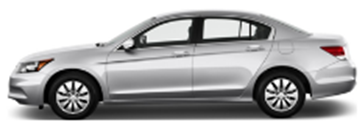
Sedan is four-door car, also called three-box car. We can see in Fig.7-5, there are three separate compartments: engine compartment , passenger compartment and cargo compartment. This kind of car style is the first choice of most customers in China.
Hatchback is often called two-box car. The front compartment of the hatchback is notdifferent from that of the sedan, and the effect is the same. But its passenger compartment is integrated with cargo compartment including a rear door for cargo access.So in this style of hatchback, there are some three-door hatchbacks and some five-door hatchbacks (see Fig.7-6). Now this kind of car style is more and more popular in the Chinese markets.

Off-road vehicles such as SUV belong to hatchbacks. Crossover, however, looks just like SUV in appearance. But actually, it is a front-wheel-drive car without off-road function. So it is considered as urban SUV.
Convertible refers to the car whose roof is folded according to the operator’s de-sire.Convertible has two kinds: one is a hard-top convertible whose roof is made of metal,the other is a soft-top convertible whose roof is made of canvas (see Fig.7-7).

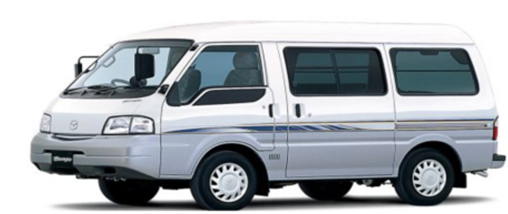
Van has an enclosed compartment which can be used to carry either passengers or cargo according to its different purposes (see Fig.7-8).
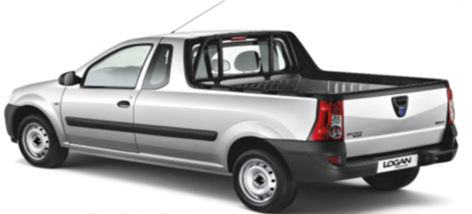
Pickup has a passenger compartment and a cargo box in the rear. It can carry passengers and cargo as well (see Fig.7-9).
译文:
课文A车身和车型
车身是汽车四大总成之一。它是汽车的外壳。车身包括发动机舱、乘员舱和货舱等。车型是指车身的形状。不同的汽车采用不同的车身和车型,以适合不同的用途。
车身
车身有两种类型,一种是非承载式车身,即车身和车架是分开的。车身安装在刚性的车架上,如图7-1所示。汽车车架的功能是:支撑汽车机械部件(如传动系统等)和车身:承受乘员和载货重量:承受突然碰撞的冲击力。这种非承载式车身常见于货车和客车上。
另一种是承载式车身,即汽车车架和车身整合为一体,形成一个单独的坚固结构(见图7-2)。如今,几乎所有的现代乘用车都采用承载式车身。用完全整合车身的结构方法,整个汽车是个承载体,能够承受在行驶和载货中产生的各种力。制造承载式车身通常是把不同的金属构件焊接在一起,如横梁和侧梁、立柱、横梁杆以及其他部件,形成一个车骨架即车框架(见图7-3)。车框架是个安装基座,用来安装发动机罩、行李箱盖、车门、车顶和风窗玻璃等(见图7-4).
车型
现在有许多不同车型配有各种流线,如轿车、掀背式汽车、运动型多用途汽车(SUV)、跨界车、敞篷车,厢式车和皮卡等。在上面提到的这些车型中,最常见的家用车型是轿车和掀背式汽车,因其经济实用。
轿车是四门汽车,也称为三厢车。从图7-5中可看到,其有三个独立的舱室:发动机舱、乘员舱和货舱。这类车型是中国大多数客户的首选。
掀背式汽车常称为两厢车。掀背式汽车的前舱和轿车的无太大区别,作用也相同。但它的乘员舱是和货舱整合为一体,并包括一个取放货物的后车门。所以在掀背式汽车车型中,有三门掀背式汽车和五门掀背式汽车(见图7-6)。现在,这类车型在中国市场上越来越受欢迎。
越野车如SUV都属于掀背式汽车。但是,跨界车在外观上看起来像SUV,可实际上却是前驱汽车而没有越野功能。所以被认为是都市SUV.
敞篷车是指根据用者的意愿,车顶可打开折叠。敞篷车有两种,一种是硬顶敞篷车,它的车顶是用金属制成的:另-种是软顶敞篷车,它的车顶是用帆布制成的(见图7-7)。
厢式车带有一个封闭舱。根据其不同用途,该舱可以载客或载货(见图7-8)。皮卡有乘员舱和一个位于后部的货厢,载客的同时可以载货(见图7-9)。

