
I Lead-in
Questions for discussion:
1.What do people seek fame for?
(social position; abundance of wealth; drowning in fame's glory; refinement of social taste)
2. Would you like to be a celebrity? Why or why not?
(Tik Tok; live streaming; profit-driven; show off; outgoing/extraverted; introverted; rise to fame; profit-driven; make a fortune; capture one’s attention…)
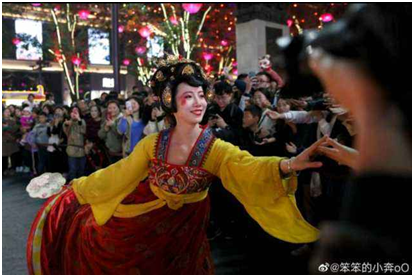

3. What are the reasons behind the rise of cyber-celebrities in China?
(open-minded; innovation and novelty; advertisement; individualism; non-mainstream; long-cherished dream; fame and fortune)
II. Pre-reading Activities
1. Listen to a passage about Oscar Wilde and quotations from him, and answer the following questions. The last question is open-ended and may have different answers.
1) For what was Oscar Wilde famous?
2) What does the quote “Men become old, but they never become good” mean?
2. Listen to a poem by Oscar Wilde.
TO MY WIFE: WITH A COPY OF MY POEMS
I can write no stately proem
As a prelude to my lay;
From a poet to a poem
I would dare to say.
For if of these fallen petals
One to you seem fair,
Love will waft it till it settles
On your hair.
And when wind and winter harden
All the loveless land,
It will whisper of the garden,
You will understand.
3. Background Information
Background Information
1. TennesseeWilliams (1911—1983) was an American writer whose plays are mainly about peoplewith emotional problems and are set in the Southern States. As a playwrightWilliams began his career while studying at the University of Missouri andWashington University, St. Louis. The first critical triumph came in 1945 withThe Glass Menagerie. The Glass Menagerie ran on Broadway for over a year andreceived the New York Drama Critics' Circle Award. Williams' next major play, AStreetcar Named Desire (1947), won the Pulitzer Prize, and established him as amajor American dramatist. Williams also received the Pulitzer Prize for Cat ona Hot Tin Roof (1955), about the moral decay of a Southern family, and for The Nightof the Iguana (1961).
2. ErnestHemingway (1899—1961) was one of the most famous American novelists, shortstory writers and essayists, whose deceptively simple prose style hasinfluenced a wide range of writers. Hemingway was awarded the 1954 Nobel Prizefor Literature.
Hemingway's firstbooks, Three Stories and Ten Poems (1923) and In Our Time (1924), werepublished in Paris. The Torrents of Spring appeared in 1926 and Hemingway'sfirst serious novel, The Sun Also Rises, in the same year. The novel deals witha group of expatriates in France and Spain, members of the disillusionedpost-World War I Lost Generation. Hemingway wrote and rewrote the novel invarious parts of Spain and France between 1924 and 1926. It became his firstgreat success as a novelist. Although the novel's language is simple, Hemingwayused understatement and omission, which make the text multilayered and rich inallusions.
After thepublication of Men Without Women (1927), Hemingway returned to the UnitedStates, settling in Key West, Florida. In Florida he wrote A Farewell to Arms,which was published in 1929. In 1937 Hemingway observed the Spanish Civil warfirsthand. As many writers did, he supported the cause of the Loyalists. InMadrid he met Martha Gellhorn, a writer and war correspondent, who became histhird wife in 1940. In For Whom the Bell Tolls (1940) Hemingway returned againin Spain. He dedicated the book to Gellhorn—Maria in the story was partlymodeled after her. They divorced in 1945.
The Old Man andthe Sea, published first in Life magazine in 1952, again restored his fame. The27,000 word novella told a story of an old Cuban fisherman named Santiago, whofinally catches a giant marlin after weeks of not catching anything. As hereturns to the harbor, the sharks eat the fish lashed to his boat.
On July 2, 1961,Hemingway committed suicide with his favorite shotgun at his home.
3. Robert Frost(1874—1963) was one of America's leading 20th-century poets and a four-timewinner of the Pulitzer Prize. An essentially pastoral poet often associatedwith rural New England, Frost wrote poems whose philosophical dimensionstranscend any region. His poetry is thus both traditional and experimental,regional and universal.
He unquestionablysucceeded in realizing his life's ambition: to write "a few poems wherethey will be hard to get rid of".
4. T.S. Eliot(1888—1965) was a poet, playwright, and critic. Born in St. Louis, afterHarvard he studied in Europe, in 1927 becoming a British citizen. He won the1948 Nobel Prize for Literature.
Eliot has been oneof the most daring innovators of 20th-century poetry. Never compromising eitherwith the public or indeed with language itself, he followed his belief thatpoetry should aim at a representation of the complexities of moderncivilization in language and that such representation necessarily leads todifficult poetry. Despite this difficulty his influence on modern poeticdiction has been immense.
5. Claude Monet(1840—1926) was a French painter who was involved in starting Impressionism,best known for his pictures of the countryside in which he was concerned toshow the effects of light.
6. Pierre AugusteRenoir (1841—1919) was a famous French painter, and one of the founders andexponents of the Impressionist Movement. His works are characterized by anextraordinary richness of feelings, warmth of response to the world and thepeople in it. Renoir once said: "Why shouldn't art be pretty? There areenough unpleasant things in the world."
7. Salvador Dali(1904—1989) was a Spanish surrealist painter known for his strange life andhabits. He painted his dreams and bizarre moods in a precise illusionisticfashion.
8. Sir AlfredHitchcock (1899—1980) was a British filmmaker. He was essentially concernedwith depicting the tenuous relations between people and objects and renderingthe terror inherent in commonplace realities.
9. FedericoFellini (1920—1993), Italian film director, began as an exponent of poeticNeorealism, and later became the cinema's undisputed master of psychologicalExpressionism and surrealist fantasy.
10. StevenSpielberg (1946—) is perhaps Hollywood's best-known director and one of thewealthiest filmmakers in the world, and also one of the most influential filmpersonalities in the history of film. Spielberg has directed or produced manyof the top-grossing films in Hollywood history, including E.T.: TheExtra-Terrestria, Schindler's List, Saving Private Ryan, etc.
11. Thomas Wolfe(1900—1938) was one of the greatest writers of the 20th century. His opulentlanguage and unique literary style have elevated his life to legendary statusthrough his four autobiographical novels: Look Homeward, Angel (1929), Of Timeand the River (1935), From Death to Morning (1935), The Story of a Novel(1936). These books, along with many short stories published in magazines,complete the works that appeared during his lifetime.
12. Look Homeward,Angel is Thomas Wolfe's first novel. Published in 1929, it is slightlyautobiographical, and Wolfe uses the main character, Eugene Gant, as a stand-infor himself.
It shows hismaturing from birth to the age of 18 in the fictional town and state ofAltamont, Catawba, which many believe to be a not-so-subtle mirror of hishometown, Asheville, North Carolina. Many of the characters of Look Homeward,Angel were also strongly based on real people from Asheville, and were oftennot portrayed in a pleasing manner. This resulted in a certain estrangementbetween Wolfe and his hometown, and it is speculated that this formed some ofthe basis for his later work You Can't Go Home Again.
13. Ludwig vanBeethoven (1770—1827) was a German composer. He is universally recognized asone of the greatest composers of the Western European music tradition.Beethoven's works crowned the classical period and also effectively initiatedthe romantic era in music. His astonishing Third Symphony (1803) was thethunderclap that announced the romantic century, and it embodies the titanicbut rigorously controlled energy that was the hallmark of his style. He beganto lose his hearing from c. 1795; by c. 1819 he was totally deaf. For his last15 years he was unrivaled as the world's most famous composer. In musical formhe was a considerable innovator, widening the scope of sonata, symphony,concerto, and string quartet. His greatest achievement was to raiseinstrumental music, hitherto considered inferior to vocal, to the highest planeof art.
14. Oscar Wilde(1854—1900) was an Irish playwright, novelist, poet, and short story writer.Known for his wit and flamboyance, he was one of the most successfulplaywrights of late Victorian London, and one of the greatest celebrities ofhis day. As the result of a famous trial, he suffered a dramatic downfall andwas imprisoned for two years of hard labor after being convicted of thehomosexual offences.
15. JohannHeinrich Pestalozzi (1746—1827) was a Swiss educational reformer. Between 1805and 1825 he directed the Yverdon Institute, which drew pupils and educatorsfrom all over Europe. His teaching method emphasized group rather thanindividual recitation and focused on such participatory activities as drawing,writing, singing, physical exercise, model making, collecting, mapmaking, andfield trips. Among his ideas, considered radically innovative at the time, weremaking allowances for individual differences, grouping students by abilityrather than age, and encouraging formal teacher training.

