实用综合教程

张丽君/江西/高职/江西卫生职业学院

目录

  • 1 Unit 1 Education
    • 1.1 Warm up
      • 1.1.1 Micro-lesson for background Information
      • 1.1.2 Discussion
    • 1.2 Listening and speaking
    • 1.3 Text A
      • 1.3.1 New words
      • 1.3.2 Micro-lesson for text study
      • 1.3.3 Vocabulary building
      • 1.3.4 Exercises
    • 1.4 Grammar tips
      • 1.4.1 Micro-lesson for Nouns
    • 1.5 Text B
      • 1.5.1 New words
      • 1.5.2 Text study
    • 1.6 comprehension exercises
    • 1.7 Practical reading and  writing
      • 1.7.1 Micro-lesson for Writing a letter
    • 1.8 Learning More
  • 2 Unit 2 Friendship
    • 2.1 Warm Up
      • 2.1.1 Micro-lesson for background information
      • 2.1.2 Discussion
    • 2.2 Listening and Speaking
    • 2.3 Text A
      • 2.3.1 New words
      • 2.3.2 Micro-lesson for text Study
      • 2.3.3 Vocabulary Building
      • 2.3.4 Exercises
    • 2.4 Grammar Tips
      • 2.4.1 Micro-lesson for Pronouns
    • 2.5 Text B
      • 2.5.1 New words
      • 2.5.2 Text study
      • 2.5.3 Micro-lesson for social media
    • 2.6 Comprehensive Exercises
    • 2.7 Practical Reading and Writing
      • 2.7.1 Micro-lesson for writing a personal letter
    • 2.8 Learning more
  • 3 Unit 3 Gifts
    • 3.1 Warm Up
      • 3.1.1 Micro-lesson for background Information
      • 3.1.2 Discussion
    • 3.2 Listening and Speaking
    • 3.3 Text A
      • 3.3.1 New words
      • 3.3.2 Micro-lesson for text study
      • 3.3.3 Vocabulary Building
      • 3.3.4 Exercises
    • 3.4 Grammar Tips
      • 3.4.1 Micro-lesson for grammar
    • 3.5 Text B
      • 3.5.1 New words
      • 3.5.2 Text Study
      • 3.5.3 Micro-lesson for retelling a story
    • 3.6 Comprehensive Exercises
    • 3.7 Practical Reading and Writing
      • 3.7.1 Micro lesson for writing
    • 3.8 Learning more
  • 4 Unit 4 Movies
    • 4.1 Warm Up
      • 4.1.1 Micro-lesson for background information
      • 4.1.2 discussion
    • 4.2 Listening and Speaking
    • 4.3 Text A
      • 4.3.1 New words
      • 4.3.2 Micro-lesson for text study
      • 4.3.3 Vocabulary Building
      • 4.3.4 Exercises
    • 4.4 Grammar Tips
      • 4.4.1 Micro-lesson for grammar
    • 4.5 Text B
      • 4.5.1 New words
      • 4.5.2 Text study
      • 4.5.3 Micro-lesson for Bruce Lee
    • 4.6 Comprehensive Exercises
    • 4.7 Practical Reading and Writing
      • 4.7.1 Micro-lesson for writing
    • 4.8 Learning more
  • 5 UNIT 5 Our Earth
    • 5.1 Warm up
      • 5.1.1 Micro-lesson for background Information
      • 5.1.2 Discussion
    • 5.2 Listening and speaking
    • 5.3 Text A
      • 5.3.1 New words
      • 5.3.2 Micro-lesson for text study
      • 5.3.3 vocabulary building
      • 5.3.4 Exercises
    • 5.4 Grammar tips
      • 5.4.1 Prepositions
      • 5.4.2 Micro-lesson for prepositions
    • 5.5 Text B
      • 5.5.1 New words
      • 5.5.2 Text study
    • 5.6 Comprehension exercises
    • 5.7 Practical reading ans writing
    • 5.8 Micro-lesson for writing
    • 5.9 Learning More
  • 6 UNIT 6 Part time job
    • 6.1 Warm up
      • 6.1.1 Micro-lesson for background Information
      • 6.1.2 Discussion
    • 6.2 Listening and speaking
      • 6.2.1 Listening exercises explanation
    • 6.3 Text A
      • 6.3.1 New Words
      • 6.3.2 Micro-lesson for text Study
      • 6.3.3 Vocabulary Building
        • 6.3.3.1 Active words explanation
      • 6.3.4 Exercises
    • 6.4 Grammar tips
      • 6.4.1 Present Indefinite tense complementary video
      • 6.4.2 Past Indefinite tense complementary video
      • 6.4.3 Future Indefinite tense complementary video
      • 6.4.4 Grammar Exercises
    • 6.5 Text B
      • 6.5.1 New Words
      • 6.5.2 Text Study
    • 6.6 Comprehensive Exercises
    • 6.7 Practical Reading and Writing
      • 6.7.1 Micro-lesson for writing diary
    • 6.8 Learning more
  • 7 UNIT 7 Health
    • 7.1 Warm-up
      • 7.1.1 Micro- lesson for Background information
      • 7.1.2 Discussion
    • 7.2 Listening and Speaking
    • 7.3 Text A
      • 7.3.1 New Words
      • 7.3.2 Text Study
      • 7.3.3 Vocabulary building
        • 7.3.3.1 Vocabulary Exercises
        • 7.3.3.2 Explanations for vocabulary exercises
    • 7.4 Grammar tips
      • 7.4.1 Micro-lesson for grammar
      • 7.4.2 Explanations for grammar exercises
    • 7.5 Text B
      • 7.5.1 New words
      • 7.5.2 Text study
    • 7.6 Practical Reading and Writing
      • 7.6.1 Micro-lesson for writing
    • 7.7 Comprehensive Exercises
    • 7.8 Leaning more
  • 8 UNIT8 Festivals
    • 8.1 Warm-up
      • 8.1.1 Micro-lesson for background information
    • 8.2 Listening and Speaking
    • 8.3 Text A
      • 8.3.1 New Words
      • 8.3.2 Micro-lesson for text Study
      • 8.3.3 Vocabulary Building
    • 8.4 Grammar Tips
      • 8.4.1 Micro-lesson for grammar
      • 8.4.2 Exercises for grammar
    • 8.5 Text B
      • 8.5.1 New Words
      • 8.5.2 Text Study
    • 8.6 Comprehensive Exercises
    • 8.7 Practical Reading and Writing
      • 8.7.1 Micro-lesson for writing cards
    • 8.8 Learning more
Grammar tips

名词(Noun)

一、名词的概念

       表示人、事物或抽象概念的词叫做名词。

二、名词的分类

       按照意义划分,名词可以分为专有名词和普通名词两大类。
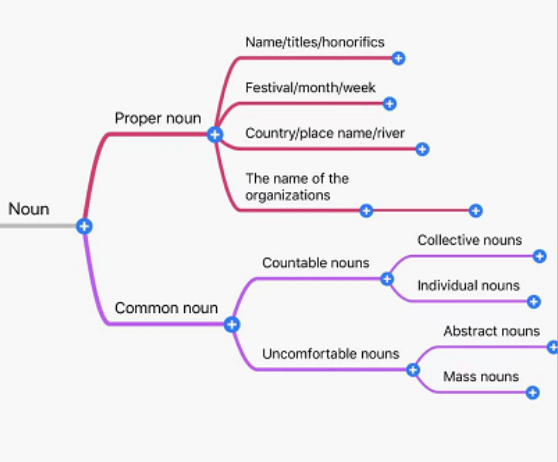


1. 专有名词

  专有名词表示特定的人或物,如人名、地名、机构组织名称等,如句(2)中的Microsoft,另外诸如Jack、September、London等也是专有名词。

  专有名词首字母须大写,有些须带定冠词。

2.普通名词

  普通名词表示某类人或某类事物的名称,又可分为

四类。

(1) 个体名词:指人或物的个体,可以计数。

如句(1)中的student、year,句(2)中的college,句(3)

中的mistake、subject。

又如:a book, two books; a teacher, several 

teachers。

(2) 集体名词:指一群人或一些事物的总称,有些可数,

有些不可数,而有些总以复数形式出现。

可数集体名词,如:class, team, family

不可数集体名词,如:furniture, equipment, machinery

复数形式的集体名词,如:people, police, clothes


(3) 物质名词:表示不能分为个体的物质,为不可数名词。如:paper, water, rice, milk, gold等。


(4) 抽象名词:表示人或物的品质、状态等抽象概念,为

不可数名词。如句(1)中的e-mail、advice、education,

句(3)中的chance、range 和education。

三、名词的分类

       按照名词是否有复数形式,还可以把名词分为可数名词和不可数名词,比如,上面例句中的可数名词包括:student、year、college、mistake、chance、range、subject,不可数名词包括:advice、education、Microsoft 和people。

可数名词的复数形式构成有规则变化与不规则变化之分。