
1、四六级相关饮食文化真题
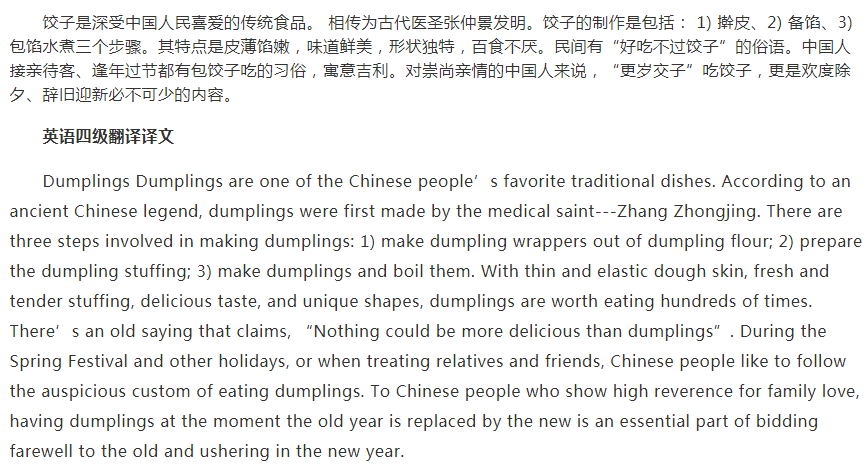
(1)翻译
范例:
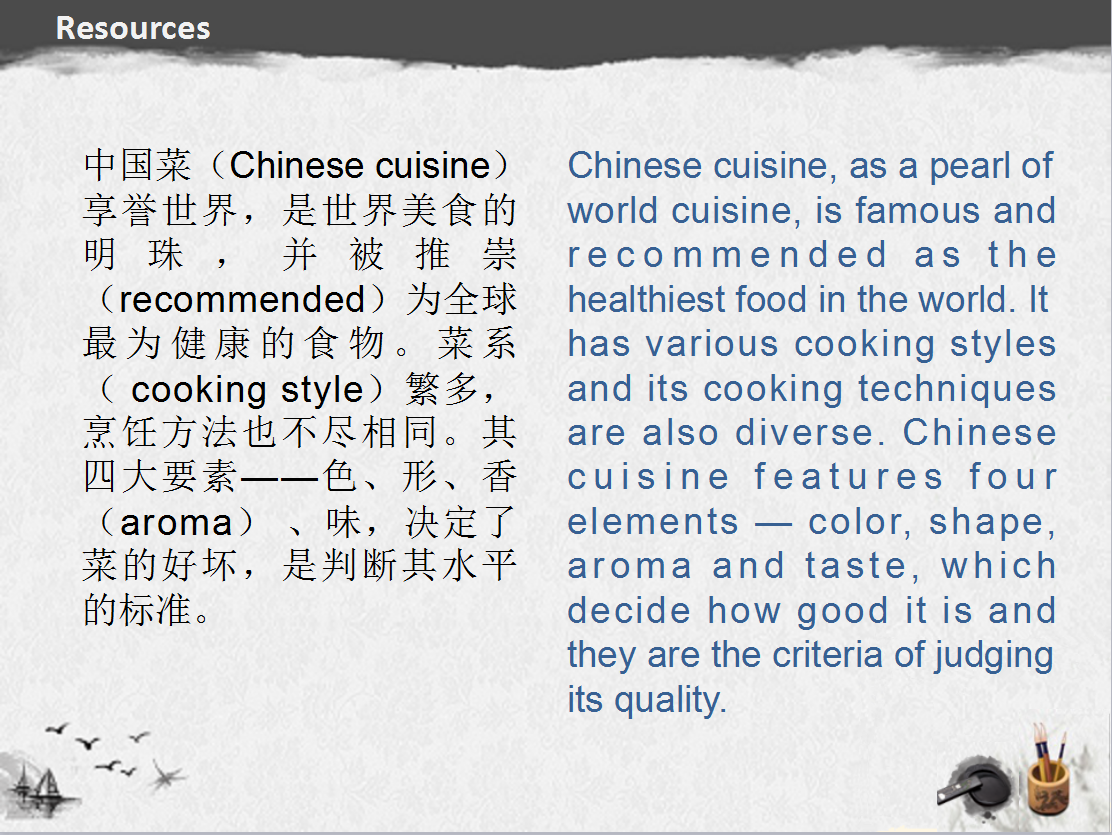
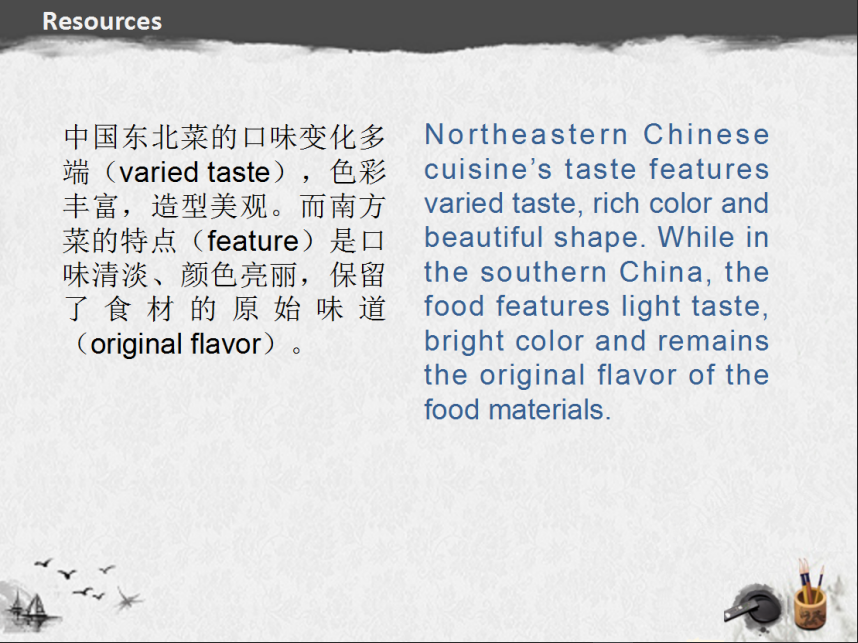
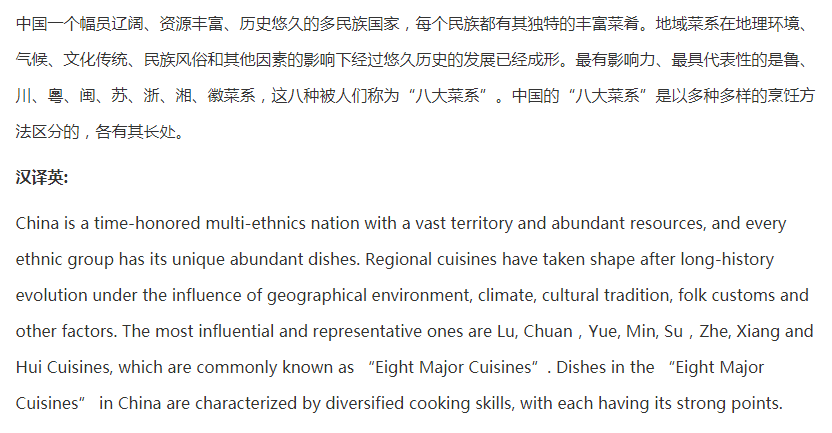
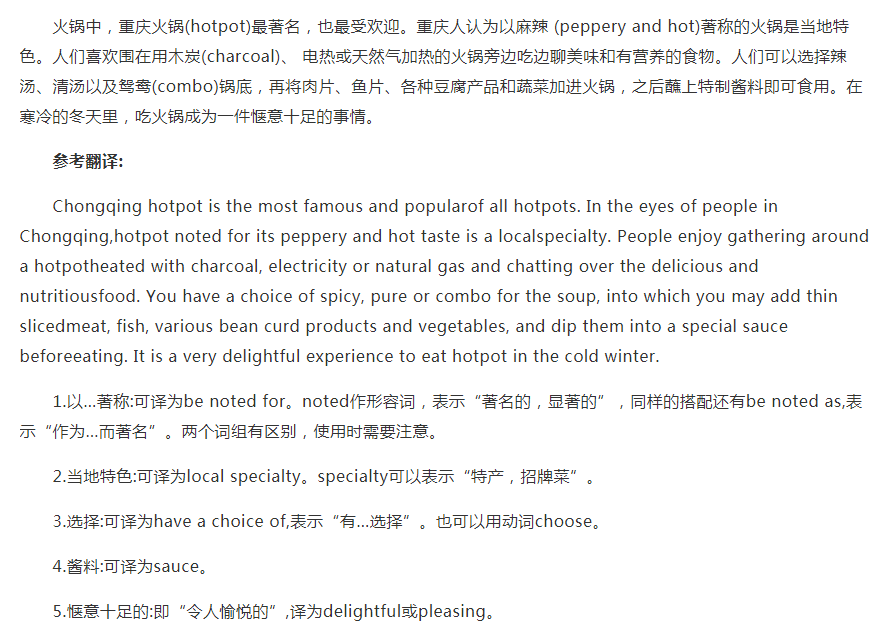
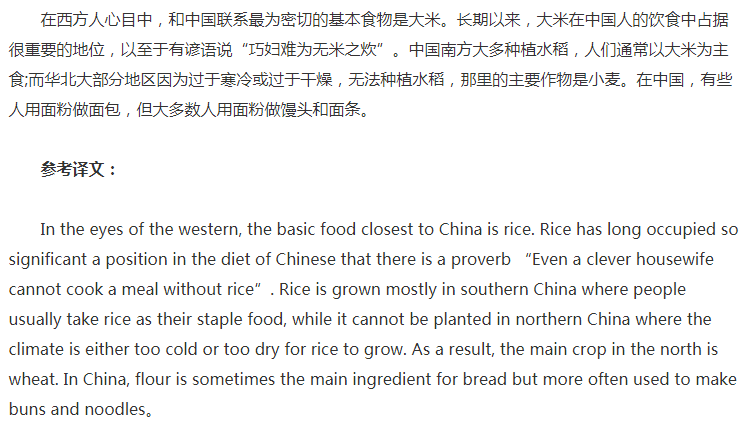
(2)阅读
(3)作文
2、实用口语100句
3、课外阅读
(1)快餐的上餐速度正在变慢(CET-4 reading comprehension)
Fast food turns out isn’t quite as fast as it used to be。 A new study finds that MacDonald posted its slowest drives through times since this survey was first conducted fifteen years ago。 As MacDonald’s, customers were spent on average three minutes and nine seconds from the time they placed their orders until they received their food。 That‘s about ten seconds more than the industry average and a lot slower than a decade ago, according to the study, which was commissioned by QSR, an industry trade publication。 And MacDonalds wasn’t alone in slowing down。 Other chains also saw their drive through performance slowing down。 Q4: Among the reasons for the slower service, today there are more choices on the menu, and the products themselves are more complex and take longer to prepare。 Speed, of course, is essential to the drive through experience, and drive throughs are hugely important to chains such as MacDonalds, Burger King, and Tucle Bell。 Usually, the drive through accounts for sixty to seventy percent of all business that goes through a fast food restaurant, notes Sam Ochers, editor of QSR。 Of course, consumers also want their orders prepare correctly and on that score, Ochers says accuracy is still really high。
(2)澳大利亚和新西兰文化礼仪文化简介
(3)大明湖导游词(旅管专业学习)

4. Case study
案例一:
Jay is a Chinese business man. Once upon a time, he went to Saudi Arabia for business trip. He knew that it’s proper to give the waiters or waitresses tips for being grateful for their service. But when the middleman did the service for them, he said “thank you” and then found the atmosphere was a little bit embarrassing, but he didn’t know why. Besides, Jay found the Saudis didn’t use any tools for having dinner but used their right hands for food, he couldn’t have more food because he felt it weird.
Reference:
Getting Frustrated
This case can reflect the problems appearing during intercultural communication and how ignoring cultural differences can affect communication. Jay was frustrated in large part because many of the norms he was used to didn't apply in Saudi Arabia, and many Saudi norms did not make sense to him. Much of the business done in Saudi Arabia depends on baksheesh, a type of kickback to a middleman (and it is a man), who facilitates contacts between potential business partners. The middleman is doing a service and expects to get paid for it. The more baksheesh the person gives, the more likely it is that the person will succeed, because the middleman will be sure to treat him very well. Giving baksheesh is a norm in the Saudi business community. In addition, Saudis believe that God gave us multifunctional hands and that the hand is our best tool for eating. However, they are also concerned with hygiene. They reserve the left hand for cleaning themselves and use the right hand for eating. Saudis have a number of norms related to restricting male and female interaction that, within the context of their religious beliefs, make perfect sense but would be very inappropriate to most Westerners.
变得沮丧
本案例反映了跨文化交流中出现的问题,忽略文化差异如何影响沟通。杰很沮丧在很大程度上是因为许多规范他被用于不适用于沙特阿拉伯,和许多沙特规范对他没有意义。大部分的工作在沙特阿拉伯取决于小费,一个类型的回扣中间人(这是一个人),促进潜在业务合作伙伴之间的联系。中间人做的服务,希望得到报酬。小费给的人越多,越有可能是,人会成功,因为中间商一定会对他很好。给小费是沙特商界的规范,不仅需要给餐饮服务的服务员。
此外,沙特人相信上帝给了我们多功能的手,用于吃饭的手也是我们最好的工具。然而,他们也关心卫生。他们储备清洗自己的左手,认为它是不能用来传递食物的。用右手吃饭。沙特有许多规范与限制男女互动,他们的宗教信仰等文化,但大多数西方人会很不恰当。
案例二:

案例三:
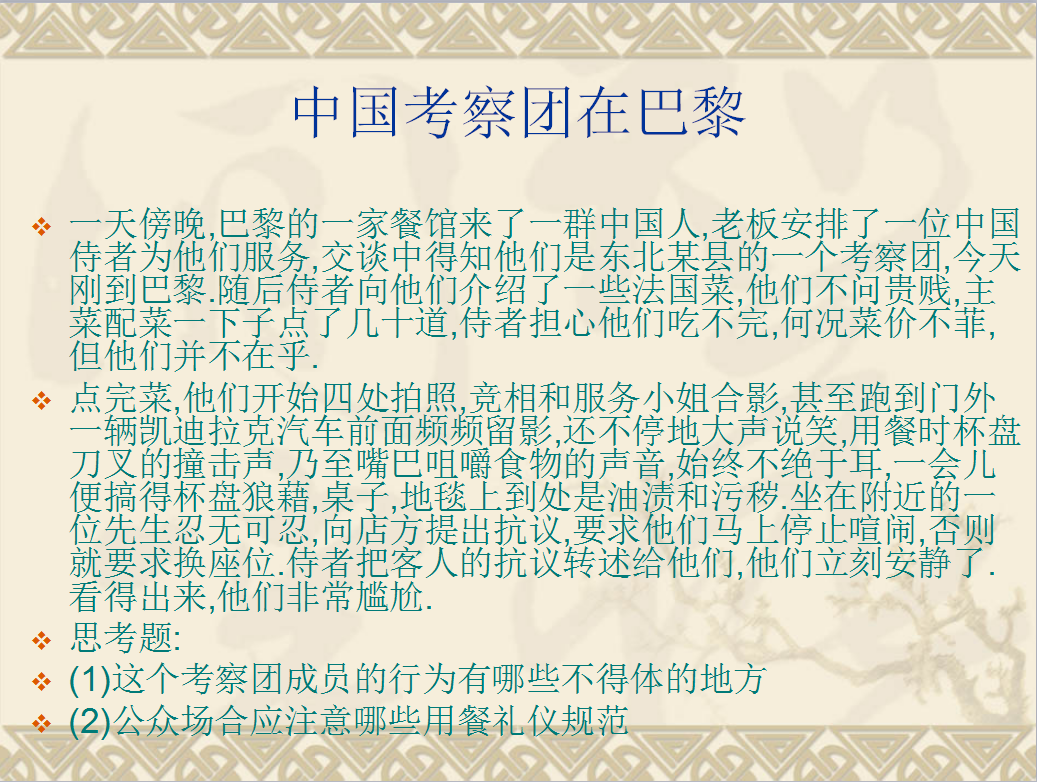
案例四: