
目录

  • 1 Introduction
    • 1.1 Coursr Introduction
    • 1.2 warm up
    • 1.3 final presentation
  • 2 C1. Overview of the Meetings Profession
    • 2.1 课程内容
    • 2.2 讨论题
    • 2.3 小组作业
    • 2.4 章节总结和测试
    • 2.5 阅读
    • 2.6 第一章学习笔记上传
  • 3 C2. Strategic Meetings: Aligning with the Organization
    • 3.1 上周作业汇报及点评
    • 3.2 课程内容
    • 3.3 讨论题
    • 3.4 任务
    • 3.5 章节总结和测试
    • 3.6 阅读
    • 3.7 本章节笔记上传
  • 4 C3. Blending Project and Meeting Management
    • 4.1 课程内容
    • 4.2 讨论题
    • 4.3 章节总结和测试
    • 4.4 小组作业
    • 4.5 阅读
    • 4.6 第三章学习笔记上传
  • 5 C4. Designing the Meeting Experience
    • 5.1 课程内容
    • 5.2 讨论题
    • 5.3 章节总结
    • 5.4 作业
    • 5.5 阅读
    • 5.6 请上传第四章笔记
  • 6 C5. Budgeting Basics for Meeting Professionals
    • 6.1 课程内容
    • 6.2 讨论题
    • 6.3 章节总结
    • 6.4 作业
    • 6.5 阅读
    • 6.6 第五章课堂笔记上传
  • 7 C6. Site and Venue Selection
    • 7.1 课程内容
    • 7.2 讨论题
    • 7.3 章节总结
    • 7.4 作业
    • 7.5 阅读
    • 7.6 第六章学习笔记上传
  • 8 C7. Risk Management: Meeting Saftey and Security
    • 8.1 课程内容
    • 8.2 案例讨论题
    • 8.3 章节总结
    • 8.4 作业
    • 8.5 阅读
    • 8.6 第七章学习笔记上传
  • 9 C8. Negotiations, Contracts, adn Liability
    • 9.1 课程内容
    • 9.2 讨论题
    • 9.3 章节总结
    • 9.4 作业
    • 9.5 阅读
    • 9.6 第八章学习笔记上传
  • 10 C9. Marketing the Meeting
    • 10.1 课程内容
    • 10.2 讨论题
    • 10.3 章节总结
    • 10.4 作业
    • 10.5 阅读
    • 10.6 第九章学习笔记上传
  • 11 C10. Registration and Housing
    • 11.1 课程内容
    • 11.2 讨论题
    • 11.3 章节总结
    • 11.4 作业
    • 11.5 阅读
    • 11.6 第十章学习笔记上传
  • 12 C11. Exhibitions and the Role of Face-to-face Marketing
    • 12.1 课程内容
    • 12.2 讨论题
    • 12.3 章节总结
    • 12.4 作业
    • 12.5 阅读
    • 12.6 第十一章学习笔记上传
  • 13 C12. Bring Meetings to Life: Event Technology
    • 13.1 课程内容
    • 13.2 讨论题
    • 13.3 章节总结
    • 13.4 作业
    • 13.5 阅读
    • 13.6 第十二章笔记上传
  • 14 C13. Food and Beverage Fundamentals
    • 14.1 课程内容
    • 14.2 讨论题
    • 14.3 章节总结
    • 14.4 作业
    • 14.5 阅读
    • 14.6 第十三章笔记上传
  • 15 C14. Onstie Management
    • 15.1 课程内容
    • 15.2 讨论题
    • 15.3 章节总结
    • 15.4 作业
    • 15.5 阅读
    • 15.6 第十四章笔记上传
  • 16 C15. Post-Meeting Follow-up
    • 16.1 课程内容
    • 16.2 讨论题
    • 16.3 章节总结
    • 16.4 作业
    • 16.5 阅读
    • 16.6 笔记上传
章节总结


         CHAPTER 7

§ 

Risk Management: Meeting Safety & Security


LEARNER OUTCOMES

§ 


A. Identify six meeting assets that require protection.

B. Explain the difference between risk, emergency, crisis, and disaster, specifically as they relate to meetings.

C. Describe three categories of threats/hazards to meetings that require risk management.

D. List four strategies for dealing with meeting and security risks.

E. Identify six types of security personnel that may be part of an emergency response team.


Chapter Summary

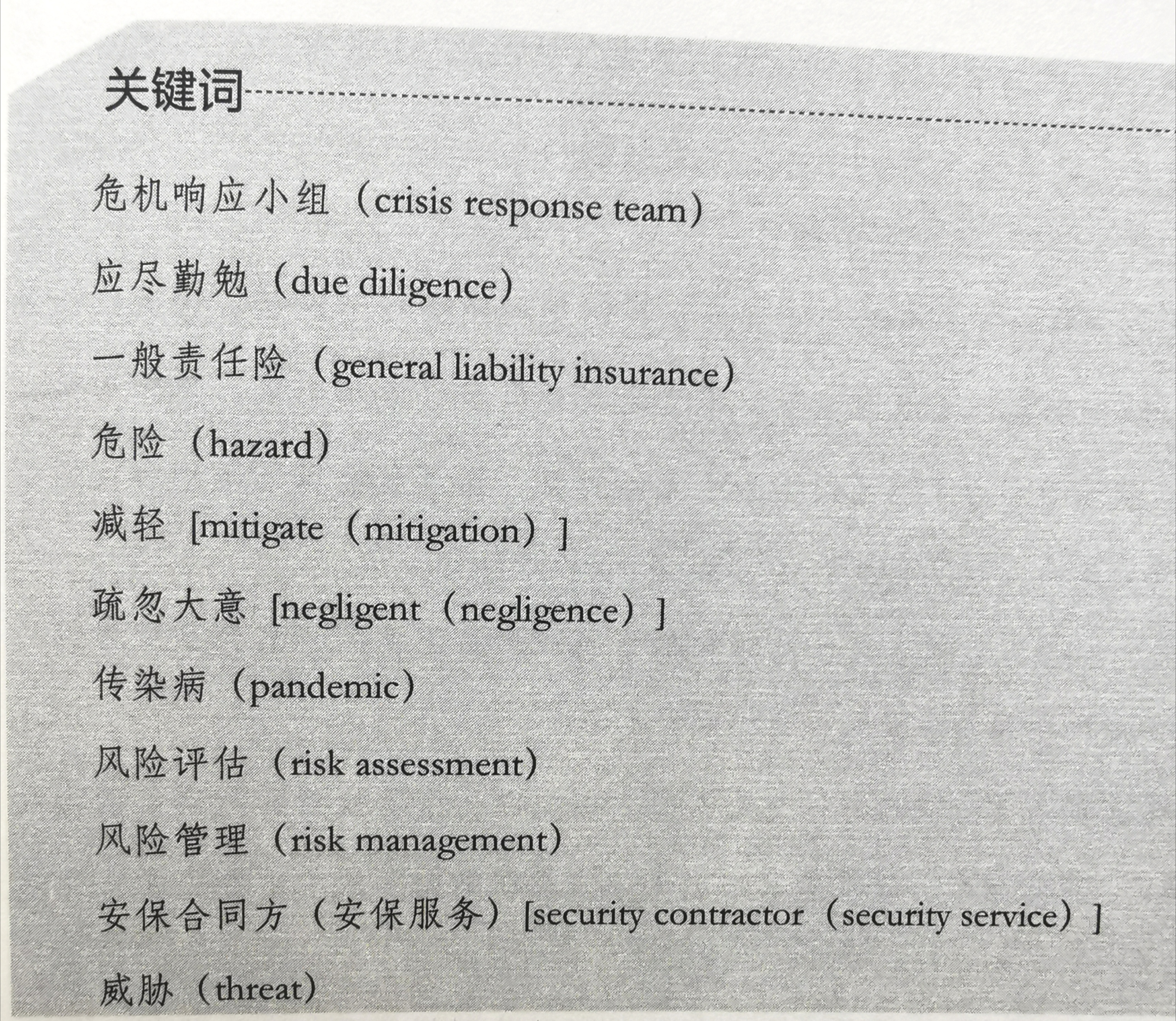
Risk Management is designed to safeguard the meeting elements of any conclave that might include threats to the execution of that gathering. Meeting professionals will prioritize potential risks and a devise a risk management plan. Meeting professionals should make appropriate decisions about, safety & security that are shared with the venue and other suppliers.


The goal of risk management is to minimize the amount of severity of harmful events that could occur. The required protection is for people, information, property, financial investment, the organization’s image, and professional reputation.


Realizing that all risks cannot be eliminated, the meeting professional recognizes that hazards to a meeting equals a threat. Hazards are grouped into three categories: 1) Naturally-occurred, 2) Technological, and 3) Human-caused.


A meeting professional recognizes that threat response strategies are the most logical approach to risk management: A) Accept the risk, B) Reduce, mitigate, and manage, C) Transfer the risk, and D) Avoid the risk.

As the meeting professional identifies potential risks, they then identify potential risks and move towards a plan. Risk management consists of each team member, a crisis communication plan, contingency plan for high probability, disruptions, and a description of when and how disruption should be implemented.


People are always the first focus of the meeting professional. They must consider security and safety at every stage of the planning, the managing, hosting, and servicing of their meeting. It is the professional way of executing a professional event.