
Toni Morrison
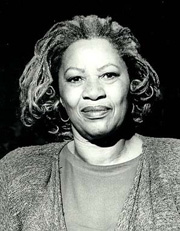
The Lifeof Toni Morrison
Toni Morrison was born Chloe Anthony Wofford in Lorain, Ohio after herparents moved to the North to escape the problems of southern racism. On bothsides of her family were migrants and sharecroppers. She spent her childhood inthe Midwest and read avidly, from Jane Austen to Tolstoy. Morrison's father,George, was a welder, and told her folktales of the black community,transferring his African-American heritage to her generation. In 1949 sheentered Howard University in Washington, D.C. one of America's mostdistinguished black college. Morrison continued her studies at CornellUniversity in Ithaca, New York where she received her M.A. in 1955.
During 1955-57 Morrison was an instructor in English atTexas Southern University, at Houston, and taught in the Englishdepartment at Howard. She married Harold Morrison, a Jamaican architect, in1958. Together they had two children, Harold Ford and Slade Kevin. After 6years of marriage she divorced Harold in 1964. While working and caringfor her children, Morrison wrote her first novel, The Bluest Eyes, whichappeared in 1970. She continued to write novels and later Morrison wasappointed the position Robert F. Goheen Professor of the Council of the Humanitiesat Princeton University in the spring of 1989, becoming the first blackwoman ever to hold a chair at an Ivy League school. Morriso now continuesto teach fiction and live in Princeton, New Jersey.
Awardsand Novels
In1970 Morrison’s literary career began when The Bluest Eye was published. Set in Morrison’shometown, the novel received critical acclaim but failed to attract thepublic’s interest. Sula,Morrison’s second novel, was published in 1973, and because of her insightfulportrayal of the African-American lifestyle; Sula wasnominated for National Book Award and received the Ohioana Book Award. Her nextnovel, Songof Solomon(1977), was apaper back best seller. Its homage to the richness of the black culturalheritage helped Morrison win two more awards: National Book Critics CircleAward and American Academy and Institute of Arts and Letters Award. Later, in1987 Morrison published Beloved.The novel illustrated the horrifying lives of slaves and how one ex-slave’spast haunts her. The novel received international success and was honoredwith the Pulitzer Prize. Beloved alsowon other awards including New York State Governor's Arts Award, Firstrecipient of the Washington College Literary award, National Book Awardnomination and National Book Critics Circle Award nomination.
In 1993, Morrison won theNobel Prize for Literature as an author "who in novels characterized byvisionary force and poetic import, gives life to an essential aspect of Americanreality". She became the eighth woman and the first African-American towin the prize. After hearing the news from a colleague at Princeton Universityshe was happy and honored by her achievement. She further explained, “What ismost wonderful for me, personally, is to know that the Prize at last has beenawarded to an African-American. Winning as an American is very special-butwinning as a Black American is a knockout.” After receiving the highest honorin literature, Morrison continued her success and reentered the best sellerslist with the publication of Paradise andlater wrote with her son The Big Box.
Morrison'sWriting Style
Morrison's writings concentrate on rural Afro-American communitiesand on their cultural inheritance, which she explores with cold-blooded detailand vivid vocabulary. Her intricate writing style does not just tell thereader about issues concerning African- Americans instead she shows them. In Beloved, set in Ohio and a plantation in Kentucky,Morrison shows slavery through flashbacks and stories told by characters. Herword choices give the reader the sense on how slave masters viewed theirslaves as savage animals. Her work is described as breath taking, leaving Beloved more than a story; it is a history, and itis a life of its own.
Also growing up in Ohio gives Morrison a distinction as writer. Morrisonplaces the setting in some of her novels there. Morrison explained “I am fromthe Midwest so I have a special affection for it. My beginnings are alwaysthere (Ohio) ... No matter what I write, I begin there ... Ohio also offers anescape from stereotyped black settings. It is neither plantation nor ghetto."
“Vivid dialogue, capturing the drama and extravagance of blackspeech, gives way to an impressionistic evocation of physical pain or anironic, essay-like analysis of the varieties of religious hypocrisy" --Margo Jefferson (Newsweek).
“Toni Morrison is animportant novelist who continues to develop her talent. Part of her appeal, ofcourse, lies in her extraordinary ability to create beautiful language andstriking characters. However, Morrison's most important gift, the one whichgives her a major author's universality, is the insight with which she writesof problems all humans face.... At the core of all her novels is a penetratingview of the unyielding, heartbreaking dilemmas which torment people of allraces" -- Elizabeth B. House (Dictionary of Literary Biography Yearbook).
“(Morrison) works her magiccharm above all with a love of language. Her ... style carries you like ariver, sweeping doubt and disbelief away, and it is only gradually that onerealizes her deadly serious intent" -- Susan Lydon (Village Voice).
Morrisonand Race
ThroughoutMorrison’s novel she does not use whites for main characters. Often she iscriticize for this. She explains her choice of characters by “I look very hardfor black fiction because I want to participate in developing a canon of blackwork. We've had the first rush of black entertainment, where blacks werewriting for whites, and whites were encouraging this kind of self-flagellation.Now we can get down to the craft of writing, where black people are talking toblack people." Furthermore, she stated “the Black narrative has alwaysbeen understood to be a confrontation with some White people. I’m sure thereare many of them. They’re not terribly interesting to me. What is interestingto me is what is going on within the community. And within the community, thereare no major White players. Once I thought, ‘What is life like if they weren’tthere?’ Which is the way I- we lived it, the way I lived it.”
Morrison’s upbringing has additionally contributed to her characterchoice, themes in her novel and how she views white people. Her father was themain contributor towards her outlook on whites. Morrison has described herfather’s racist attitude towards whites and events in her childhood ininterviews. When she was two years old her family’s home was set on fire whilethey were in it. “People set our house on fire to evict us…” said Morrison. Herfather became even more upset with whites after the incident. “He simply felt thathe was better and superior to all white people” explained Morrison. Whenshe was asked if she felt the same way that her father felt she responded “No,I don’t feel quite the same way as he did. With very few exceptions, I feelthat White people will betray me: that in the final analysis, they’ll giveme up.”
托妮·莫里森(1931年2月18日-2019年8月5日),美国黑人女作家,生于俄亥俄州洛雷恩。霍华德大学毕业。20世纪60年代末登上文坛,其作品情感炽热,简短而富有诗意,并以对美国黑人生活的敏锐观察闻名。主要作品有《最蓝的眼睛》(1970)《苏拉》(1974)《所罗门之歌》(1977)和《柏油娃》(1981)等。1989年起出任普林斯顿大学教授,1993年获诺贝尔文学奖。
2019年8月5日夜里,美国作家托妮·莫里森逝世,享年88岁。
作家有双重生命,一重是他的肉身,另一重是他创造过的精神世界。人生不过百年,寄居一世,肉身总会消亡,可他陈述过的历史、他所展示过的人性的幽深和天地的广阔,却会因剥除了他自身生命的象征意义和影响力,而被放置到一个更为客观的位置。
托妮·莫里森就是这样一个人物。作为一名黑人女作家,她是绝对的少数族裔——有色人种、女性。20世纪60年代她初登文坛时,正是美国平权运动和妇女运动风起云涌的年代。她将她的身份视为创作的母题。1988年,托妮获得普利策文学奖,1993年,她获得诺贝尔文学奖。当时瑞典文学院给的评价是这样的:“她的作品想象力丰富,富有诗意,显示了美国现实生活的重要方面。”
1931年,托妮出生于美国俄亥俄州,父亲是工厂工人,母亲是白人家的女佣。一方面,她从小接受黑人文化的熏陶,包括歌曲和民间传说;另一方面,她又因自身的肤色和她认同的文化而受到社会的不公正待遇。因热爱而被边缘化,对于一个普通人来说或许只有痛苦,而对一个作家而言,这份痛苦可以酿造成源源不断的灵感和素材。托妮在60年的写作生涯中,共创作了11部小说、五本儿童读物、两部戏剧、一组歌曲和一部歌剧。处女作《最蓝的眼睛》中,女主角在假想中抛弃了黑人身份;成名作《宠儿》中,女主角在反抗命运无果、对黑奴前途绝望的情况下杀死了自己的女儿;《所罗门之歌》里,出生于白人医院的黑人婴儿奶娃,在两种文化的矛盾交织中成长,最终拥抱了内心深处的黑人灵魂……她谈论的大部分内容都和黑人生活相关,涉及黑人生存境遇、少数族裔文化的消失和民族解放。更重要的是,托妮的笔触并没有停留在不同肤色人群的分裂和对抗上,她的文字反思了亲情与自由的关系,探讨了黑人应如何摆脱白人文化的精神控制、实现真正自由等一系列问题。
这种自我剖析,使她的作品进入了文学范畴,也使她本人成为了反对种族歧视、倡导男女平权运动的意见领袖。在纽约兰登书屋担任高级编辑期间,她主编了讲述美国黑人史的百科全书《黑人之书》,1969年起她常应邀撰写社会评论,为黑人与女性利益奔走呼号。哪怕到了84岁,她依然是一位斗士,写作了描述黑人女孩童年创伤的小说《上帝保佑小孩》,并对美国社会事实上存在的种族不平等现象做了猛烈抨击。当时密苏里州的一名白人警察枪杀了一名未携带武器的黑人青年,最后陪审团放弃了对警察的起诉。

