
艾萨克·巴什维斯·辛格(Isaac Bashevis Singer)
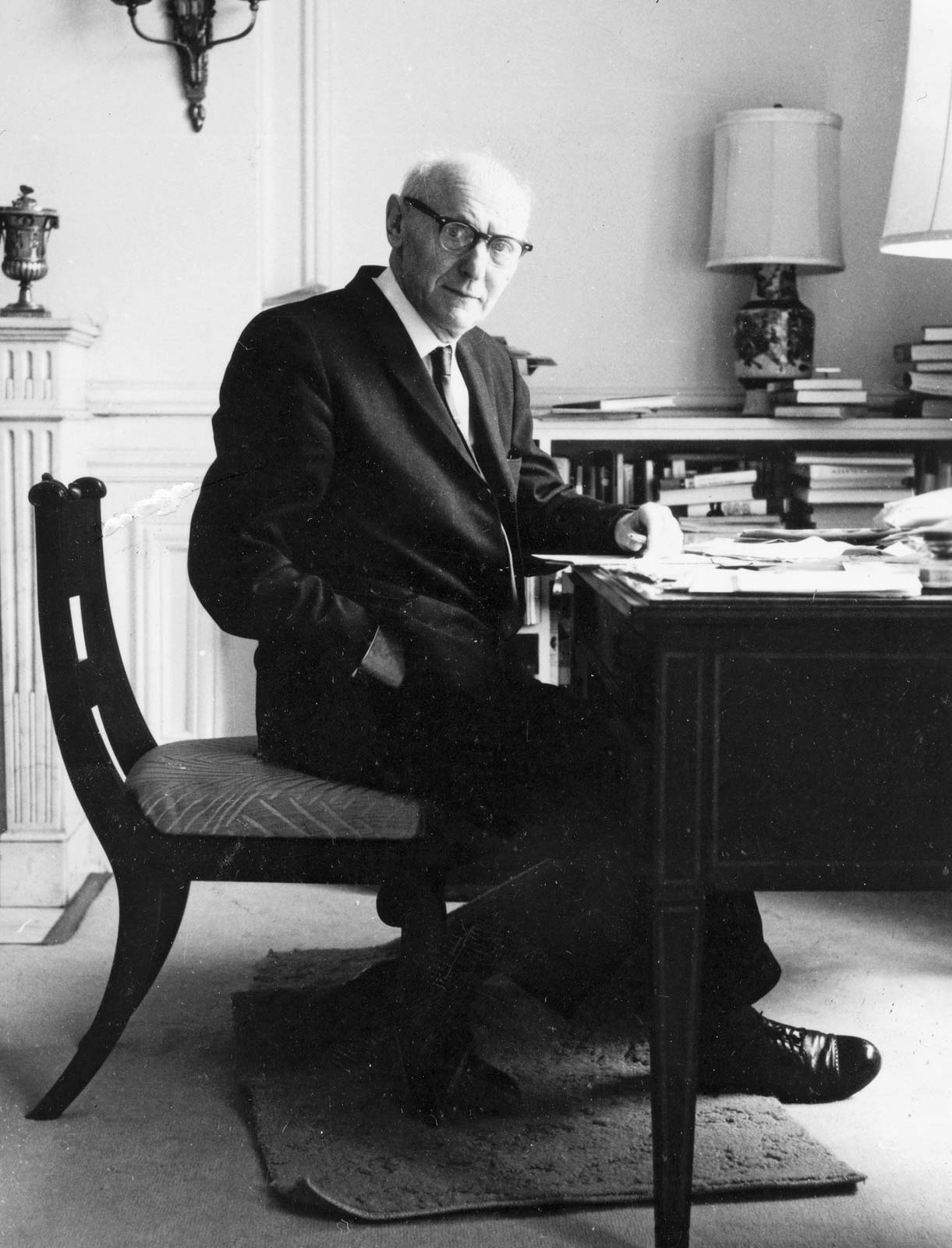
Isaac Bashevis Singer, Yiddish in full Yitskhok Bashevis Zinger, (born July 14?, 1904, Radzymin, Pol., Russian Empire—died July 24, 1991, Surfside, Fla., U.S.), Polish-born American writer of novels, short stories, and essays in Yiddish. He was the recipient in 1978 of the Nobel Prize for Literature. His fiction, depicting Jewish life in Poland and the United States, is remarkable for its rich blending of irony, wit, and wisdom, flavoured distinctively with the occult and the grotesque.
Singer’s birth date is uncertain and has been variously reported as July 14, November 21, and October 26. He came from a family of Hasidic rabbis on his father’s side and a long line of Mitnagdic rabbis on his mother’s side. He received a traditional Jewish education at the Warsaw Rabbinical Seminary. His older brother was the novelist I.J. Singer and his sister the writer Esther Kreytman (Kreitman). Like his brother, Singer preferred being a writer to being a rabbi. In 1925 he made his debut with the story “Af der elter” (“In Old Age”), which he published in the Warsaw Literarishe bleter under a pseudonym. His first novel, Der Sotn in Goray (Satan in Goray), was published in installments in Poland shortly before he immigrated to the United States in 1935.
Settling in New York City, as his brother had done a year earlier, Singer worked for the Yiddish newspaper Forverts (Jewish Daily Forward), and as a journalist he signed his articles with the pseudonym Varshavski or D. Segal. He also translated many books into Yiddish from Hebrew, Polish, and, particularly, German, among them works by Thomas Mann and Erich Maria Remarque. In 1943 he became a U.S. citizen.
Although Singer’s works became most widely known in their English versions, he continued to write almost exclusively in Yiddish, personally supervising the translations. The relationship between his works in these two languages is complex: some of his novels and short stories were published in Yiddish in the Forverts, for which he wrote until his death, and then appeared in book form only in English translation. Several, however, later also appeared in book form in the original Yiddish after the success of the English translation. Among his most important novels are The Family Moskat (1950; Di familye Mushkat, 1950), The Magician of Lublin (1960; Der kuntsnmakher fun Lublin, 1971), and The Slave (1962; Der knekht, 1967). The Manor (1967) and The Estate (1969) are based on Der hoyf, serialized in the Forverts in 1953–55. Enemies: A Love Story (1972; film 1989) was translated from Sonim: di geshikhte fun a libe, serialized in the Forverts in 1966. Shosha, derived from autobiographical material Singer published in the Forverts in the mid-1970s, appeared in English in 1978. Der bal-tshuve (1974) was published first in book form in Yiddish; it was later translated into English as The Penitent (1983). Shadows on the Hudson, translated into English and published posthumously in 1998, is a novel on a grand scale about Jewish refugees in New York in the late 1940s. The book had been serialized in the Forverts in the 1950s.
Singer’s popular collections of short stories in English translation include Gimpel the Fool, and Other Stories (1957; Gimpl tam, un andere dertseylungen, 1963), The Spinoza of Market Street (1961), Short Friday (1964), The Seance (1968), A Crown of Feathers (1973; National Book Award), Old Love (1979), and The Image, and Other Stories (1985).
Singer evokes in his writings the vanished world of Polish Jewry as it existed before the Holocaust. His most ambitious novels—The Family Moskat and the continuous narrative spun out in The Manor and The Estate—have large casts of characters and extend over several generations. These books chronicle the changes in, and eventual breakup of, large Jewish families during the late 19th and early 20th centuries as their members are differently affected by the secularism and assimilationist opportunities of the modern era. Singer’s shorter novels examine characters variously tempted by evil, such as the brilliant circus magician of The Magician of Lublin, the 17th-century Jewish villagers crazed by messianism in Satan in Goray, and the enslaved Jewish scholar in The Slave. His short stories are saturated with Jewish folklore, legends, and mysticism and display his incisive understanding of the weaknesses inherent in human nature.
Schlemiel Went to Warsaw, and Other Stories (1968) is one of his best-known books for children. In 1966 he published In My Father’s Court, based on the Yiddish Mayn tatns besdn shtub (1956), an autobiographical account of his childhood in Warsaw. This work received special praise from the Swedish Academy when Singer was awarded the Nobel Prize. More Stories from My Father’s Court, published posthumously in 2000, includes childhood stories Singer had first published in the Forverts in the 1950s. His memoir Love and Exile appeared in 1984.
Several films have been adapted from Singer’s works, including The Magician of Lublin (1979), based on his novel of the same name, and Yentl (1983), based on his story “Yentl” in Mayses fun hintern oyvn (1971; “Stories from Behind the Stove”).
艾萨克·巴什维斯·辛格(1904-1991)美国著名作家。祖父与父亲都是犹太教的“拉比”。他从小接受正统犹太教教育,学习希伯来文和意第绪文,熟悉犹太教的经典和宗教仪式以及犹太民族的风俗习惯等,这一切都铸就了他作品的重要特色。
由于受到哥哥的影响,他违背父命,走进了华沙犹太人文学界。在哥哥的帮助下,1935年迁居美国纽约。
辛格15岁开始文学创作。迄今为止已创作30余部作品,全都用意第绪文写成,大部分已译成英文。 长篇小说《莫斯卡特一家》(195o)、《庄园》(1967)和《农庄》(1969)等主要写在现代文明和排犹主义双重压力下,波兰犹太社会的解体过程,其中《庄园》是这类作品的代表作。 另一类小说主要写爱情与宗教问题,主要作品有《撒旦在戈雷》(1955)、《卢布林的魔术师》(196o)、《奴隶》(1962)、《仇敌;一个爱情故事 )(1972)和《童爱)(1979)等。 其中最著名的是《卢布林的魔术师》,西方评论家说它是辛格最佳的长篇小说。
辛格的短篇小说创作也很突出,I0余部短篇小说集:
重要的有:《傻瓜吉姆佩尔及其他故事》(1957)
《市场街的斯宾诺莎》(1961)
《羽毛的王冠》(1973)
《短篇小说集》(1982)
《意象集》(1985)
《梅休塞拉赫之死及其他故事》(1988)等。
此外还有 2个剧本、 3部回忆录。11部儿童故事集。
1978年,由于“他的充满激情的叙事艺术,这种艺术既扎根于波兰犹太人的文化传统,又反映了人类的普遍处境”,辛格获诺贝尔文学奖。
辛格被称为当代最会讲故事的作家。在创作上,他尊重传统,又吸收了意第绪文学中的营养,创造出自己的独特风格。他的小说有不少以性爱为题材,他认为“在爱情和性爱中比在任何其他关系中,人的本性显露得更充分”。但他不耽于色情描写,而重在探索和揭示激情对个人命运的影响。他主张作家创作要起到娱乐读者的作用,让读者得到艺术享受。所以他的故事叙述生动,文笔轻松幽默,作品中丰富的成语和活泼的句法受到评论界的高度赞扬,认为那是任何译文无法传达的。

