
Kate Chopin(凯特·萧邦)
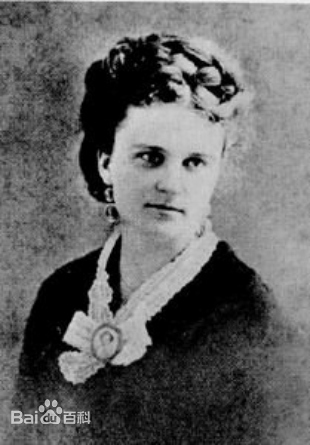
Kate Chopin, née Katherine O’Flaherty, (born Feb. 8, 1851, St. Louis, Mo., U.S.—died Aug. 22, 1904, St. Louis), American novelist and short-story writer known as an interpreter of New Orleansculture. There was a revival of interest in Chopin in the late 20th century because her concerns about the freedom of women foreshadowed later feminist literary themes. Her novel The Awakening and her short stories are read today in countries around the world, and she is widely recognized as one of America’s essential authors.
Her short stories were well received in in the 1890s and were published by some of America’s most prestigious magazines—Vogue, the Atlantic Monthly, Harper’s Young People, the Youth’s Companion, and the Century. A few stories were syndicated by the American Press Association. Many of her stories also appeared in her two published collections, Bayou Folk (1894) and A Night in Acadie (1897), both of which received good reviews from critics across the country who praised them for their graceful descriptions of the lives of Creoles, Acadians, African-Americans, and other people in Louisiana. Twenty-six of her stories are children’s stories—those published in or intended for children’s or family magazines—the Youth’s Companion and others. By the late 1890s Kate Chopin was well known among American readers of magazine fiction.
Her early novel At Fault (1890) was not much noticed, but The Awakening (1899) was widely condemned. Critics called it morbid, vulgar, and disagreeable. Chopin’s work was mostly forgotten after her death, but, beginning in the 1950s, scholars rediscovered it and praised it for its truthful depictions of women’s lives.
凯特·萧邦,又名凯特肖邦,美国女作家,本名凯萨琳·欧福拉赫蒂(Katherine O'Flaherty)。
自1889年至1902年间,她撰写供成人和孩童阅读的短篇小说,刊载于《大西洋月刊》、《时髦》、《世纪》和《哈伯青年手册》等杂志。主要作品为《河口人们》(1894年)和《阿卡迪亚之夜》(1897年)两部短篇小说集。重要的短篇小说包含《黛泽蕾的婴孩》,其内容为南北战争前路州境内异族通婚的故事。另有《一小时的故事》和《暴风》。
十九世纪末,肖邦试图直白的描写女性在与男性、儿童的关系及她们本身性欲中的感受和情绪。这一点被认为是冒犯了当时上流社会的读者。1885年母亲去世后,她停止了天主教的实践并开始接受达尔文主义对人类进化的观点。在自然而不是教堂中寻求上帝,肖邦大量描写性与爱的主题。她为美国作家们悲哀,认为由环境所致,艺术上的局限性阻碍了完整且本能的叙述。那些挑战传统社会行为的作品,如《一小时的故事》,常常被杂志编辑拒绝。然而半个多世纪后,女权主义评论家却大力提倡。
凯特·萧邦以她特有的细腻笔触于1882—1885年间出版了小说《困惑》及百余篇脍炙人口的短篇小说。到1899年其主要作品《觉醒》发表前,她已是一位颇具盛名的,具有浓厚地方色彩的女作家了。而《觉醒》的问世非但未给这位女作家带来荣耀和欢愉,却使她身心疲惫,深受伤害。各报刊杂志大肆抨击《觉醒》“污秽粗俗”,“怪异病态”。图书馆不予收藏,作家的文艺社社员资格亦被撤销。1906年《觉醒》由纽约杜菲尔德公司再版亦告失败。至此作家及其作品均遭到被“流放”的命运。幸而本世纪50、60年代两位欧洲学者慧眼识珠,《觉醒》才得以重见天日。 《觉醒》之所以掀起这样一场轩然大波,是于当时的文化背景休戚相关的。长期以来,由于艺术创造性被视为男性的基本特征,写作被视为男性的活动。妇女在文学中的形象更被视为男性幻想的产物;妇女作家被剥夺了创造女性形象的权利,而必须服从传统父权制的标准。
The Story of an Hour
The story The Story of an Hour, written by Kate Chopin is a short but powerful story. The ending of the story of an hour halts sharply, without much space between the climax and the ending. The ending reveals the themes of the short story, epitomizes the writing techniques the writer used, reinforces the plot and the ironic relationship between characters, makes the element—heart disease a clue throughout the whole story, and leaves us readers much margin to think about such as the natureof the protagonist.
The story begins with two nonperson subject sentences. “Knowing that Mrs. Mallard was afflicted with a hearttrouble, great care was taken to break to her as gentle as possible the news of her husband’s death.” This tells us the situation with Mrs. Mallard: troubled with heart disease, fragile, unable to bear any shock and carefully protected.The protection is restriction as well. In the first sentence the narrator revealed Mrs. Mallard’s heart trouble. And there are several repetitions of the disease in whole story.The second place is “Josephine was kneeling before the closed door with her lips to the keyhole, imploring for admission. ‘Louise, open the door! I beg; open the door---you will make yourself ill. What are you doing, Louise? For heaven’s sake open the door.’” The third place is “‘Go away. I am not making myself ill.’ No; she was drinkingin a very elixir of life through that open door.” The fourth is “She breathed a quick prayer that life might be long. It was only yesterday she had thought with a shudder that life might be long.” The fifth is in the ending “when the doctor came they said she had died of heart disease----of joy that kills.” The first revelation is at the very beginning of the story. The last one is at the end. Mrs. Mallard’s heart trouble is an important clue that goes though the whole article. It’s the center of the story. But these are not simply repetition. The point of view and the way of presenting are different. The first place is narrated from the limited omniscient point of view and centers on how people regard the disease and how will they treat her. The second quotation is from the perspective of Mrs. Mallard’s sister’s and shows her concern. The third and the fourth are from the protagonist herself. The third one is stated through dialogue and the fourth contains a compare showing Mrs. Mallard’s attitude toward life before and after the news. The repressed marriage makes her life wearing on rather slowly and she does not want to live along life with this condition. But the news brings her hope and imagination. Each repetition carries with it some other related information which enrichesthe plot of the story.
“He had only taken the time to assure himself of its truth by a second telegram, and had hastened to forestall any less careful, less friend in bearing the sad message.” Richard is Mr. Mallard’s friend. He knew about the disease and he is also the one trying to protect Mrs. Mallard. His hastiness is because of the disease. These two are closely related. In a hasty he came to tell the bad message. That why the mistake was made. He was not even sure of the husband’s death. This chain of events---Richard came back hastily, they happened to tell Mrs. Mallard before they saw the body and it was only an hour before her husband came back---might be coincident. This hastiness makes the reappearance of the husband possible and reasonable.
In the end the doctors said Mrs. Mallard died of joy that kills. But actually it is not hard to think that the reason for her death is not joy but sorrow that kills. She was shocked to see her husband came back. In the shattering disappointment and sorrow the heart disease as repeated previously killed her. She was very joyful when she carried herself out of the room, like a goddess of victory. But no one knows. There is a conflict between Mrs. Mallard and society. All they knew were she had heart disease and she supposed to be sad at the news of her husband’s death. But no one thought it weird that she did not die of sadness but joy. They guessed the reason according to the traditional moral principles and from the perspective of man. While the reader know what’s happening. But the characters in the story don’t. The ending seems to be reasonable but actually is a fallacy. This presents us a dramatic irony, sharpening the surprise ending and lending us a lot to think.
The end of the story leaves us enough margins to think about why is Mrs. Mallard so happy at her husband’s death? And so sad at his return? Is she really a vile woman that curses her husband to die? If the answer is affirmative, what makes her so cold-blooded? Does the couple really love each other? Mrs. Mallard lived superficially a happy life in other people’s eyes according to the conventional and secular criteria. Her husband was gentle. When the door opened, “it was Brently Mallard who entered, a little travel-stained, composedly carrying his gripsack and umbrella.” This was the only direct description of Mr. Mallard. He should be a considerate gentleman. Mrs. Mallard had “two powerless white slender hands”, so she did not have to work very hard to live. She is not impoverished in material life, but her ego is swamped in the then patriarchal society. She is not equally treated as man.
“And yet she had loved him----sometimes. Often she had not. What did it matter! What could love, the unsolved mystery, count for in face of this possession of self-assertion which she suddenly recognized as the strongest impulse of her being.” This sentence answers the question whether she loves her husband or not. She loved him to some degree. But compared with freedom and self-assertion, love does not count for much. She is deep inside inhibited. She lived a two-facet life. But she is not vile or cruel, because she repressed herself from the feeling, the ecstasy. “She was striving to beat it back with her will ---as powerless as her white slender hands would have been.” However, it was also because of her weakness. Her desire for freedom and self-realization is outclassed by the moral principles that had manipulated her for many years. Unconsciously, she knew it was “a monstrous joy that held her.”
Maybe there are some other kinds of endings. But the ending given by Kate liberates the protagonist in a real sense, though it is somewhat a tragedy that she died of “joy”. The ending int his sense intensifies the themes and the author’s intention again.
一般的突变,都离不开较长篇幅的“渐变”过程的铺垫,否则便不容易处理好“量变”到“质变”的飞跃。这篇小说却在极短的篇幅(中译本,两千个汉字)里,浓缩进如此大起大落的两次突变,并目把这两次方向截然相反的突变安排在如此集中的时间(如标题所强调,一小时)、如此集中的空间(没有越出住宅一步。甚至可以说,是集中到一扇已经打开的窗户和一扇意外打开的门的前面)里,不能不令人惊叹。但是,没有谁会指责情节的发展有悖常理。相反,“出乎意料”,又在“情理之中”它是那样精确无误地符合生活的逻辑。奥妙何在呢?原来,肖班注重的并不是表面情节的戏剧性变化,也不是一般意义上的文意变化,而是把精细的笔触探伸到主人公的心灵深处,着意刻划马拉德夫人心理历程上的两次大升大降。作者层次感很强地、细致入微地描写了她的心理活动,其中包括一点闪回式的回忆性插叙。于是女主人公长期以来附属于一个平庸男人的毫无生气的生活,以及她不甘平庸,追求独立人格和自我价值的心底呼唤,便为突变时刻的到来作了最充分、最令人信服的铺垫。不仅如此,连看似随意点染的“洋溢着初春活力的轻轻摇曳着的树梢”,也为主人公命运的突变作着又含蓄又鲜明的烘托呢!小说的文笔是简洁的,场景是集中的,景物描写是出色的,不露痕迹的插叙手法是巧妙的。我们把这些出色而巧妙的描写与作者努力展示人物复杂多变的心理流程的主旨联系起来,便发现,这篇小说的情节突变不仅在数量上呈密集化,在方式上呈多样化,而且具有一种穿透性的深度。
马拉德夫人死了。她曾经象死了一样地活过好多好多年。当她终于从墓穴中睁开眼睛,准备用一个独立的自由的女人的双臂去拥抱属于她自己的整个生活的时候,她却死了。这无疑是个悲剧。但是,悲剧的最深刻的意义远不止此。读者会沉思:除了心脏病,在这个女人的体内,是不是潜伏着另一种鲜为人知的衰弱症,使即使象她这样已经站到打开的樊笼门口的鸟儿,也终于没有机会和权利飞向自由的天空呢?遇到类似的情况,市俗的旧女人不会死,勇敢的新女性不肯死,唯有马拉德夫人“这一个”,才无可避免地非死不可。应该怎样估价她那觉醒的自我意识的质量,又如何理解她为这片刻的觉醒而付出的沉重代价呢?小说结尾写道,人们都说她是“因为极度高兴致死的”。这种合乎常情,绝对无可挑剔却又荒谬绝伦的误解,将伴随着马拉德夫人的姓名一道,永远接受亲人们的纪念。这又是何等深刻的社会悲剧?当女读者和男读者纷纷抬起头来,用批判的目光审视着自己和扫视起周围的时候,这篇诞生在十九世纪末叶的短篇小说,便会因为结尾这处点睛之笔对主题深度和广度所作的全方位的升华,而进一步获得更加强大的生命力了。

