PLC原理及应用

孙行衍,康朝海,杨莉,姜寅令,霍凤财,张志强

目录

  • 1 PLC是什么?它和自动化有何关系?
    • 1.1 什么是PLC?
    • 1.2 在没有PLC之前,它的位置是谁替代的呢?
    • 1.3 被我们所忽视的继电器
    • 1.4 PLC的诞生
    • 1.5 常见PLC的品牌及对比
    • 1.6 AB PLC的历史
    • 1.7 PLC的未来
    • 1.8 PLC、ISA95、 IEC 62443
  • 2 我校自动化专业PLC课程的发展历史
    • 2.1 我校上世纪80-90年代的课程教材
  • 3 常用低压控制电器基础
    • 3.1 继电器
    • 3.2 电工知识
    • 3.3 低压电器在电机控制中的应用
  • 4 基本电气控制线路
    • 4.1 继电器控制功能电路
  • 5 PLC基本概念
    • 5.1 PLC的输入输出类型
    • 5.2 PLC的工作原理
    • 5.3 PLC的编程方式
  • 6 Micro800PLC硬件介绍
    • 6.1 micro800系列PLC
  • 7 CCW编程软件介绍
    • 7.1 CCW简介
  • 8 Micro800基本指令
    • 8.1 基本编程元素
    • 8.2 计时
    • 8.3 计数
    • 8.4 移位
    • 8.5 PPT课件
  • 9 和利时LE5118国产PLC
    • 9.1 硬件介绍
    • 9.2 编程软件及指令
    • 9.3 实验设备功能介绍
      • 9.3.1 基于Modbus RTU的变频器触摸屏控制功能
      • 9.3.2 基于Modbus TCP通讯实现与Factory IO连接
      • 9.3.3 LE5118与factoryIO模拟锅炉汽包液位控制
    • 9.4 校企共建教材(仅供内部学习)
    • 9.5 和利时PLC发展动态
  • 10 汇川H5U国产PLC
    • 10.1 数字孪生Demo箱
  • 11 中控G5国产PLC
    • 11.1 中控PLC介绍
  • 12 PLC编程方法
    • 12.1 IEC61131-3标准语言
    • 12.2 GRAFCET编程国家标准
    • 12.3 西门子PLC四种编程语言LAD/FBD/STL/SCL之间的比较
    • 12.4 编程规范
  • 13 通信
    • 13.1 Micro850与Micro820的三种通信方式
    • 13.2 RS232、RS485
    • 13.3 Fieldbus
    • 13.4 Profibus DP
    • 13.5 Modbus
    • 13.6 HART
    • 13.7 ControlNet和DeviceNet
    • 13.8 EtherCAT
    • 13.9 Ethernet/IP
    • 13.10 各类总线及工业以太网
    • 13.11 OPC通信
  • 14 外围设备
    • 14.1 伺服电机
    • 14.2 工业触摸屏
      • 14.2.1 AB与MCGS连接
    • 14.3 变频器
  • 15 应用案例
    • 15.1 PLC与matlab通信
    • 15.2 Micro850与FT Optix连接
    • 15.3 Factory IO环境下利用Control IO进行控制仿真
    • 15.4 Factory IO进行modbus tcp通信
    • 15.5 Factory IO环境下使用西门子PLC-SIM进行仿真
    • 15.6 利用西门子TIA portal和PLC-SIM与EES虚拟电梯进行仿真
    • 15.7 Micro820实现温度采集、变频器控制及触摸屏组态设计
    • 15.8 PLC,Matlab与Thingworx互联
    • 15.9 CCW中micro850-48QWB-SIM与Factory IO连接
    • 15.10 PLC与Unity 3D软件的联合仿真
    • 15.11 OPC通信实现PLC与EMSO连接
    • 15.12 利用Node Red实现PLC数据采集
    • 15.13 PLC与机器人仿真软件联合仿真
    • 15.14 西门子PLC+NX MCD虚拟仿真
    • 15.15 台达PLC-ES2与ES3采用Modbus通信
    • 15.16 Factory IO与Micro850仿真器液位PID控制
    • 15.17 Siemens 1200和HMI仿真
    • 15.18 Siemens与Factory io液位PID控制
    • 15.19 Micro800与Factory io液位PID控制
    • 15.20 步进电机机械臂视觉控制
    • 15.21 利用串口服务器实现和利时LE5118串口与factory io连接
    • 15.22 Factory IO与Python\Matlab间modbus tcp通信
    • 15.23 Unity与菲尼克斯2151 modbus tcp 通信
    • 15.24 Unity,Rviz,ROS2与DOBOT数字孪生
    • 15.25 RobotStudio与Siemens PLC连接
  • 16 菲尼克斯电气PLCnext
    • 16.1 介绍及基础使用方法
    • 16.2 设备连接
    • 16.3 AXF C 2152modbus rtu步进电机控制
    • 16.4 AXF C 3152
    • 16.5 2152与simulink
  • 17 内容串讲
    • 17.1 面向企业员工培训视频
  • 18 同学们在学科专业竞赛中的成绩
    • 18.1 AB、西门子、台达 、菲尼克斯、施耐德、三菱
  • 19 NVIDIA Isaac Sim
    • 19.1 简介
    • 19.2 入门视频
PLC的诞生


The Birth of the PLC

The Original Challenge 

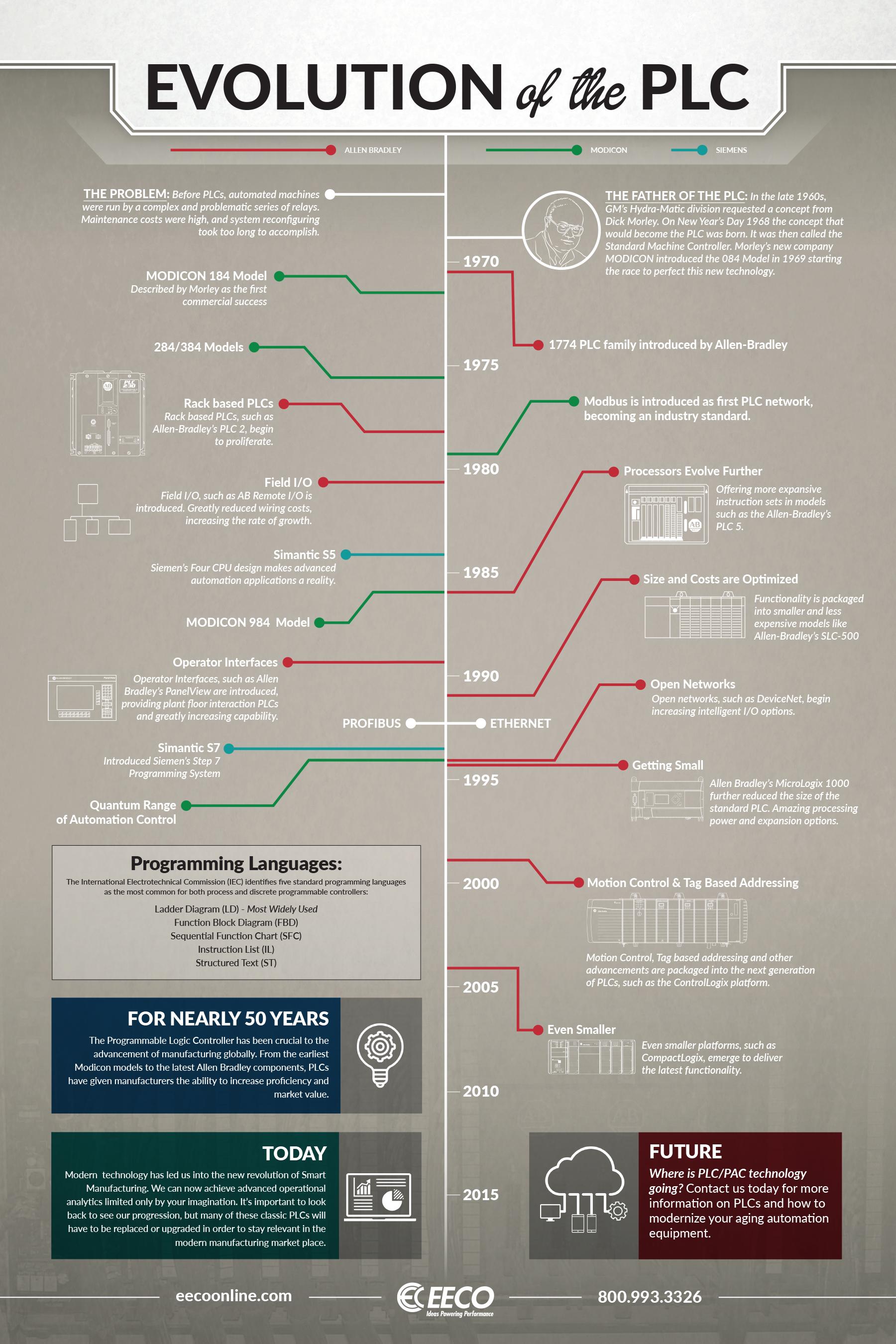
The early history of the PLC is fascinating.  Imagine if you will a fifty foot long cabinet filled with relays whose function in life is to control a machine.  Wires run in and out of the system as the relays click and clack to the logic.  Now imagine there is a problem or a small design change and you have to figure it all out on paper and then shut down the machine, move some wires, add some relays, debug and do it all over again.  Imagine the labor involved in the simplest of changes.  This is the problem that faced the engineers at the Hydra-matic division of GM motors in the late 1960's.

Fortunately for them the prospect of computer control was rapidly becoming a reality for large corporations as themselves.  So in 1968 the GM engineers developed a design criteria for a "standard machine controller".  This early model simply had to replace relays but it also had to be:

  • A solid-state system that was flexible like a computer but priced competitively with a like kind relay logic system.

  • Easily maintained and programmed in line with the all ready accepted relay ladder logic way of doing things.

  • It had to work in an industrial environment with all it's dirt, moisture, electromagnetism and vibration.

  • It had to be modular in form to allow for easy exchange of components and expandability.

The Race is On 

This was a tall order in 1968 but four companies took on the challenge.

  1. Information Instruments, Inc. (fully owned by Allen-Bradley a year later).

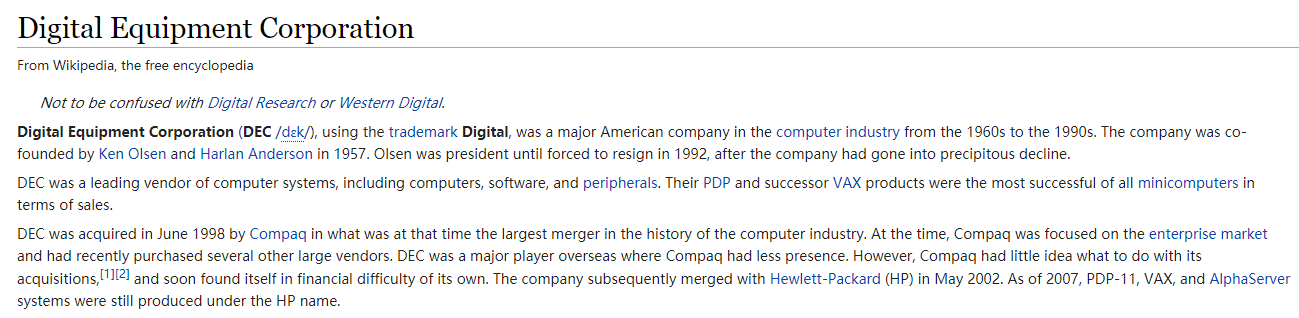
  2. Digital Equipment Corp. (DEC)

  3. Century Detroit

  4. Bedford Associates

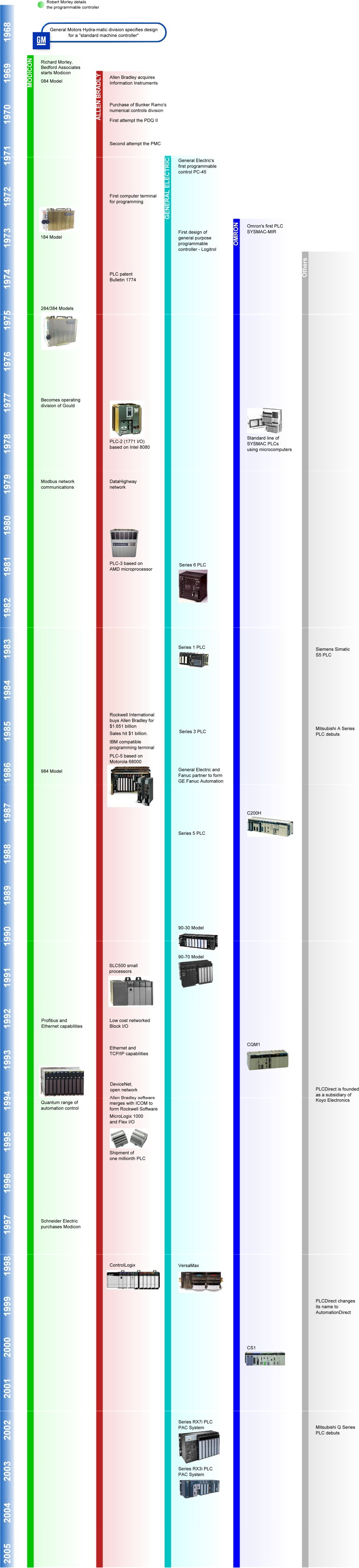
Bedford Associates, run by Richard Morley, won the contract and quickly formed a new company around the technology called MODICON after Modular Digital Control.  By June of 1969 they were selling the first viable Programmable Controller the "084" (their 84th project) which sold over one thousand units.  These early experiences gave birth to their next model the "184" in 1973 which set Modicon as the early leader in programmable controllers.

Not to be outdone, the powerhouse Allen-Bradley (all ready known for it's rheostats, relays and motor controls) purchased Information Instruments in 1969 and began development on this new technology.  The early models (PDQ-II and PMC) were deemed to be too large and complex.  By 1971 Odo Struger and Ernst Dummermuth had begun to develop a new concept known as the Bulletin 1774 PLC which would make them successful for years to come.  Allen-Bradley termed their new device the "Programmable Logic Controller" (patent #3,942,158) over the then accepted term "Programmable Controller".  The PLC terminology became the industry standard especially when PC became associated with personal computers.