Learning Objectives
•Know something about the author and his works.
•Gather some background information about racism and sexism in the US.
•Learn to appreciate the short story.
•Master the language items listed.
•Understand the story and appreciate its subtlety as much as possible.
•Think about the themes of the story and form your own opinions.
Song - Love is Color Blind
Tobias Wolff (1945-)
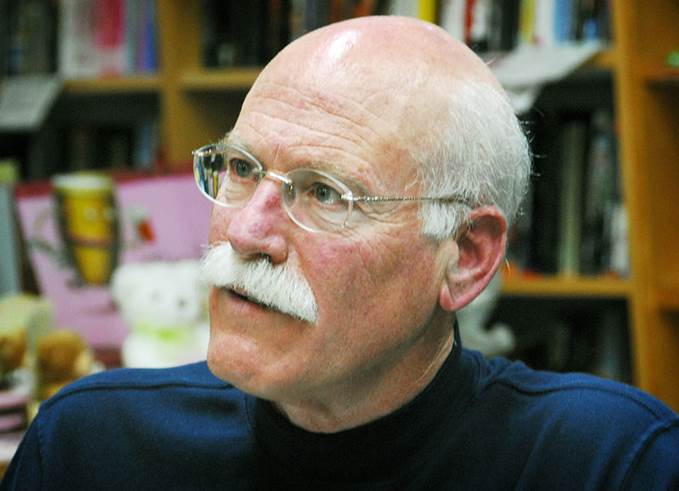
•Bornin Alabama USA in 1945.
•Parents divorced whenhe was a boy; traveled widely with his mother; soon forced to endure life underhis strictand cruel stepfather.
•From1964 to 1968, lieutenant withthe U.S. Army Special Forces (Green Berets) in Vietnam.
•B.A.(1972) and M.A.(1975) from OxfordUniversity with First Class Honors in English, a second M.A. from Stanford.
•Arevered writer& teacher ofcreative writing and literature in Stanford and elsewhere.
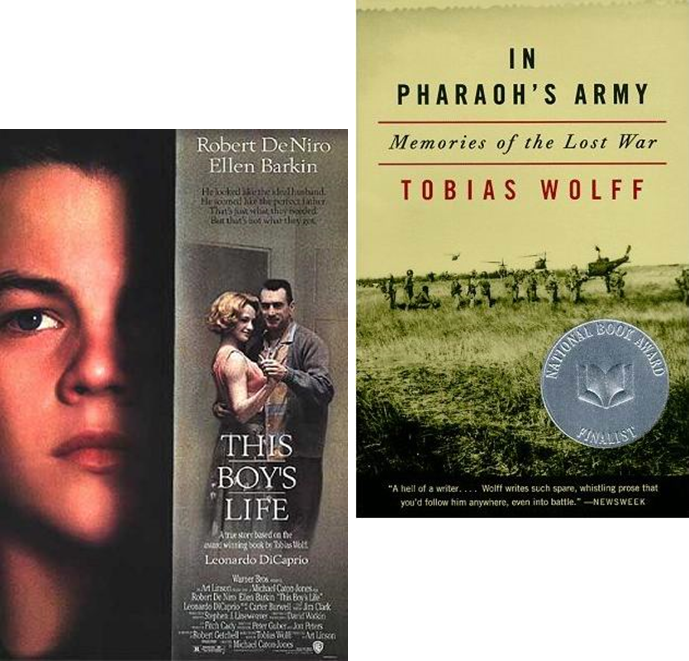
Short stories (O Henry Award):
•“Inthe Garden of the North American Martyrs” (1981)
•“NextDoor” (1982)
•“Sister”(1985)
•Our Story Begins(short story collection in 2003, The Story Prize in 2004)
Memoirs:
•This Boy’s Life: A Memoir (1989)•In Pharaoh's Army: Memories of the LostWar(1994)
Novels:
•The Barrack's Thief (1984,PEN/FauknerAward for Fiction)
•Old School (2003)
His Writing Style
•Adirectwriting style, obeying the “show, don’t tell” maxim, leaving much to thereader’s intuition
•Non-dramatic,focusing more on the psychological dimensions of a character in dilemmas thanon plot development
•Oftenunderstated, forcing readers to become engaged inthe collection of strands that will result in the full comprehension of astory.
•Exploring alienation,the nature of lying, and the essential foundations of relationships
•Hopingto instruct and inspire people to triumph over their situationsthrough character change and development
The Republican Years
•The1980s was a decade led by Republicanpolicy. RonaldReagan tookoffice as president of the United States in 1980, served two terms, and thenwas succeeded by his vice president, George Bush.
•Reaganheld conservativepolitical beliefs,both on the domestic front and when it came to foreign policy. Although hiseconomic programs brought the national inflation rate down, they also seemed tofavor the wealthy.
•Bythe 1980s, as the United States and the Soviet Union built up a stockpile ofnuclear weapons, the cold warhad been ongoing for almost forty years. Reagan, an ardent opponent ofcommunism, encouraged his administration to greatly increase military spending.
Culture Tips
Racism
•Definition:Racism is prejudice or discrimination based on the belief that race is theprimary factor determining human traits and abilities. Racism includes thebelief that genetic or inherited differences produce the inherent superiorityor inferiority of one race over another.
•Institutional racism: e.g. the Jim Crow laws in the US from 1876 to1965 mandating segregation in all public facilities in the southern states ofthe former Confederacy with a supposedly “separate but equal” status for theblack Americans; officially overruled with the Civil Rights Act of 1964 and theVoting Rights Act of 1965.
•Overt and subtle racism: The Civil Rights Movement did awaymuch overt racism, but racism persists in many subtle forms, in many aspectsand on many levels.
Race & Marriage
•Despitethe public opposition to interracial marriage, in 1948, theCaliforniaSupreme Courtbecame the first state high court to declare a ban oninterracial marriage unconstitutional.
•Thedecision was controversial, courageous and correct. At that time, 38 statesstill forbade interracial marriage, and six didso by state constitutional provision.
•Then,in1967, theU.S.Supreme Court struck down the remaining interracial marriage laws nation-wide.
Sexism
As with racism, overt sexism is not verymuch on display now in much of the world. But subtle sexism persists and can befound everywhere at all time. It is a cluster of social expectations andpractices that reinforce sex-based inequality. For example:
•Atschool: moreboys in science classes and more girls in arts classes (boys are logical whilegirls are imaginative)
•Atwork: amale boss and a female secretary, and rarely the other way around (we have“career women” and “family men” but no “career men” and “family women”)
•Athome:housework regarded as the wife’s responsibility whether she has a full-time jobor not (the husband reputed as a considerate one because he “pitched in on thehousework”)
Genre
A Short Story
•Setting:kitchen, cleaning up after dinner, USA, 1980s
•Characters:husband & wife, white, middle-aged, middle-class
•Conflict:different views on interracial marriages
•Plot:casual talk, argument, fight, hurt feelings, failed attempt at reconciliation
•Narrativepoint of view: 3rd person, the husband
•Characterization:showing instead of telling
Theme
The theme of this story iseverybody’s guess. So what is yours?
•Attitudestowards interracial marriages (racism)?
•Man-womanrelationships (feminism)?
•Theunreasonable nature of women?•Thearrogance of men?
•Theimpossibility of effective communication? / Alienation in modern society?