目录

  • 1 Getting Started
    • 1.1 Academic Calendar
    • 1.2 Courseware
  • 2 Unit 1 Language and Language Learning
    • 2.1 Period 1
    • 2.2 Period 2
  • 3 Unit 2 Communicative Principles and TBLT
    • 3.1 Period 1
    • 3.2 Period 2
  • 4 Unit 3 The National English Curriculum
    • 4.1 Period 1
    • 4.2 Period 2
    • 4.3 New Curricula
  • 5 Unit 4 Lesson Planning
    • 5.1 Period 1
    • 5.2 Period 2
  • 6 Unit 5 Classroom Management
    • 6.1 Period 1
    • 6.2 Period 2
  • 7 Unit 6 Teaching Pronunciation
    • 7.1 本课程教学实践参考要求
    • 7.2 英语1512
    • 7.3 英语1612
    • 7.4 英语1712
    • 7.5 英语181、182
    • 7.6 英语191
    • 7.7 英语202
  • 8 Unit 7 Teaching Grammar
    • 8.1 英语1512
    • 8.2 英语1612
    • 8.3 英语1712
    • 8.4 英语181、182
    • 8.5 英语191
    • 8.6 英语202
  • 9 Unit 8 Teaching Vocabulary
    • 9.1 英语1512
    • 9.2 英语1612
    • 9.3 英语1712
    • 9.4 英语181、182
    • 9.5 英语191
    • 9.6 英语202
  • 10 Unit 9 Teaching Listening
    • 10.1 英语1512
    • 10.2 英语1612
    • 10.3 英语1712
    • 10.4 英语181、182
    • 10.5 英语191
    • 10.6 英语202
  • 11 Unit 10 Teaching Speaking
    • 11.1 英语1512
    • 11.2 英语1612
    • 11.3 英语1712
    • 11.4 英语181、182
    • 11.5 英语191
    • 11.6 英语202
  • 12 Unit 11 Teaching Reading
    • 12.1 英语1512
    • 12.2 英语1612
    • 12.3 英语1712
    • 12.4 英语181、182
    • 12.5 英语191
    • 12.6 英语202
  • 13 Unit 12 Teaching Writing
    • 13.1 英语1512
    • 13.2 英语1612
    • 13.3 英语1712
    • 13.4 英语181、182
    • 13.5 英语191
    • 13.6 英语202
  • 14 Unit 13 Integrated Skills
    • 14.1 英语1712
    • 14.2 英语191
    • 14.3 英语202
  • 15 Unit 14 Moral Learning
    • 15.1 Period 1
    • 15.2 Period 2
  • 16 Unit 15 Assessment in Language Teaching
    • 16.1 Period 1
    • 16.2 Period 2
  • 17 Unit 16 Learner Differences and Learner Training
    • 17.1 Period 1
    • 17.2 Period 2
  • 18 Unit 17 Using and Creating Resources
    • 18.1 Period 1
    • 18.2 Period 2
  • 19 Unit 18 Evaluating and Adapting Textbooks
    • 19.1 Period 1
    • 19.2 Period 2
Period 1
  • 1 课程内容
  • 2 课件
  • 3 教案
  • 4 练习
  • 5 拓展


Step 1. Revision


Step 2. Lead-in

Ask the students to brainstorm the advantages and disadvantages of our textbooks


Step 3. New Text
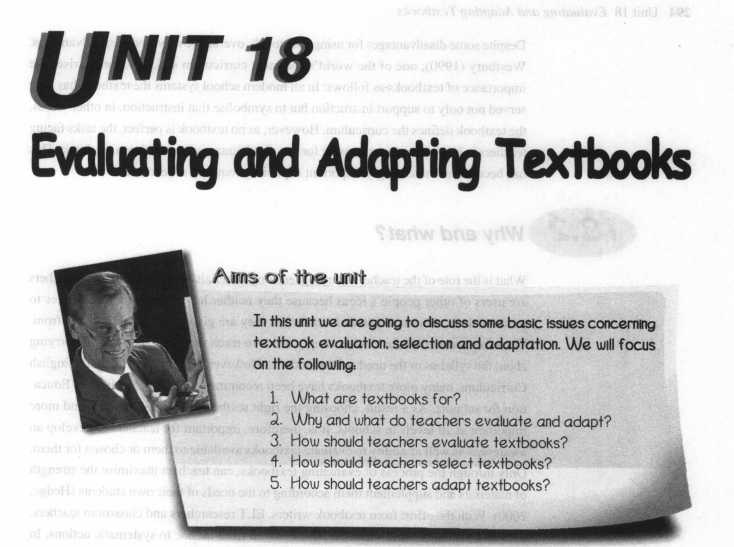
I. What are textbooks for?

    Despite some disadvantages for using a textbook, overall we may find more advantages. Westbury (1990), one of the world's formost curriculum scholars, summarises the importance of textbooks as follows:
    In all modern school systems the textbook as long served not only t support instruction but to symbolise that instruction, in other words, the textbook defines the curriculum. Howcver, as no textbook is perfect, the tasks facing teachers is how we can compesate for the desavantages when using a textbook.


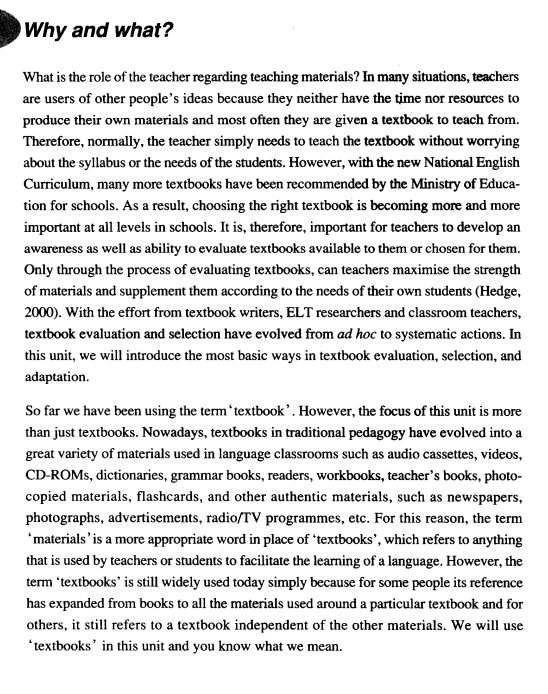
II. Why and What
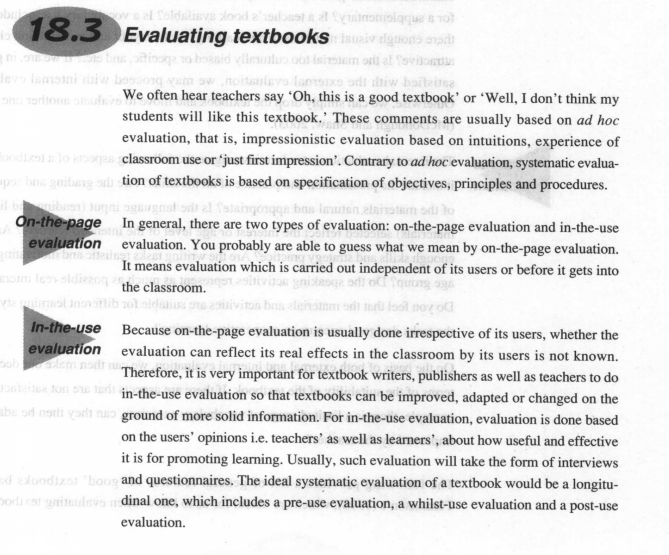
III. Evaluating textbooks


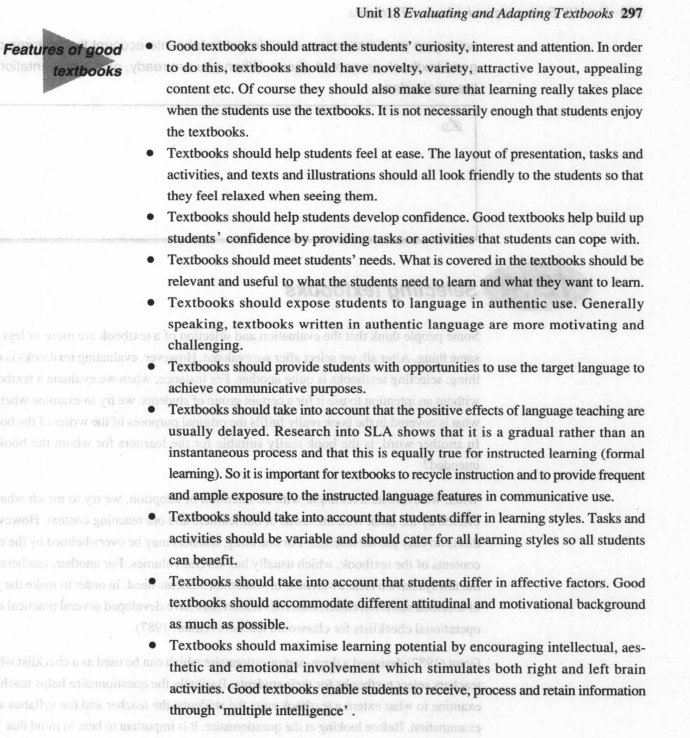
3. Features of good textbooks
1) attract the students' curiosity, interest and attention
2)help students feel at ease
3)help students develop confidence.
4)meet students' needs
5)expose studetns to language in authentic use
6)provide students with opportunities to use the target language to achieve communicative purpose
7)take into account that the positive effects of language teaching are usually delayed
8)take into account that students differ in learning styles
9)take into account that students differ in affective factors
10)maximise learning potential by encouraging intelllectual, aesthetic and emotional involvement which stimulates both right and left brain activities.