目录

  • 1 Getting Started
    • 1.1 Academic Calendar
    • 1.2 Courseware
  • 2 Unit 1 Language and Language Learning
    • 2.1 Period 1
    • 2.2 Period 2
  • 3 Unit 2 Communicative Principles and TBLT
    • 3.1 Period 1
    • 3.2 Period 2
  • 4 Unit 3 The National English Curriculum
    • 4.1 Period 1
    • 4.2 Period 2
    • 4.3 New Curricula
  • 5 Unit 4 Lesson Planning
    • 5.1 Period 1
    • 5.2 Period 2
  • 6 Unit 5 Classroom Management
    • 6.1 Period 1
    • 6.2 Period 2
  • 7 Unit 6 Teaching Pronunciation
    • 7.1 本课程教学实践参考要求
    • 7.2 英语1512
    • 7.3 英语1612
    • 7.4 英语1712
    • 7.5 英语181、182
    • 7.6 英语191
    • 7.7 英语202
  • 8 Unit 7 Teaching Grammar
    • 8.1 英语1512
    • 8.2 英语1612
    • 8.3 英语1712
    • 8.4 英语181、182
    • 8.5 英语191
    • 8.6 英语202
  • 9 Unit 8 Teaching Vocabulary
    • 9.1 英语1512
    • 9.2 英语1612
    • 9.3 英语1712
    • 9.4 英语181、182
    • 9.5 英语191
    • 9.6 英语202
  • 10 Unit 9 Teaching Listening
    • 10.1 英语1512
    • 10.2 英语1612
    • 10.3 英语1712
    • 10.4 英语181、182
    • 10.5 英语191
    • 10.6 英语202
  • 11 Unit 10 Teaching Speaking
    • 11.1 英语1512
    • 11.2 英语1612
    • 11.3 英语1712
    • 11.4 英语181、182
    • 11.5 英语191
    • 11.6 英语202
  • 12 Unit 11 Teaching Reading
    • 12.1 英语1512
    • 12.2 英语1612
    • 12.3 英语1712
    • 12.4 英语181、182
    • 12.5 英语191
    • 12.6 英语202
  • 13 Unit 12 Teaching Writing
    • 13.1 英语1512
    • 13.2 英语1612
    • 13.3 英语1712
    • 13.4 英语181、182
    • 13.5 英语191
    • 13.6 英语202
  • 14 Unit 13 Integrated Skills
    • 14.1 英语1712
    • 14.2 英语191
    • 14.3 英语202
  • 15 Unit 14 Moral Learning
    • 15.1 Period 1
    • 15.2 Period 2
  • 16 Unit 15 Assessment in Language Teaching
    • 16.1 Period 1
    • 16.2 Period 2
  • 17 Unit 16 Learner Differences and Learner Training
    • 17.1 Period 1
    • 17.2 Period 2
  • 18 Unit 17 Using and Creating Resources
    • 18.1 Period 1
    • 18.2 Period 2
  • 19 Unit 18 Evaluating and Adapting Textbooks
    • 19.1 Period 1
    • 19.2 Period 2
Period 2
  • 1 课程内容
  • 2 课件
  • 3 教案
  • 4 练习
  • 5 拓展


      When we talk about resources we often think about things that are tangible and observable. In fact ,there are a lot of resources that exist around us in the classrooom (hidden resources). They include things like our own gestures, facial expressons, imagination, creativity, our own emotions, our environment, and our knowledge and skills.

     In the following session, we are going to provide some ideas for your reference to show how you can create your own resources for teaching and learning.
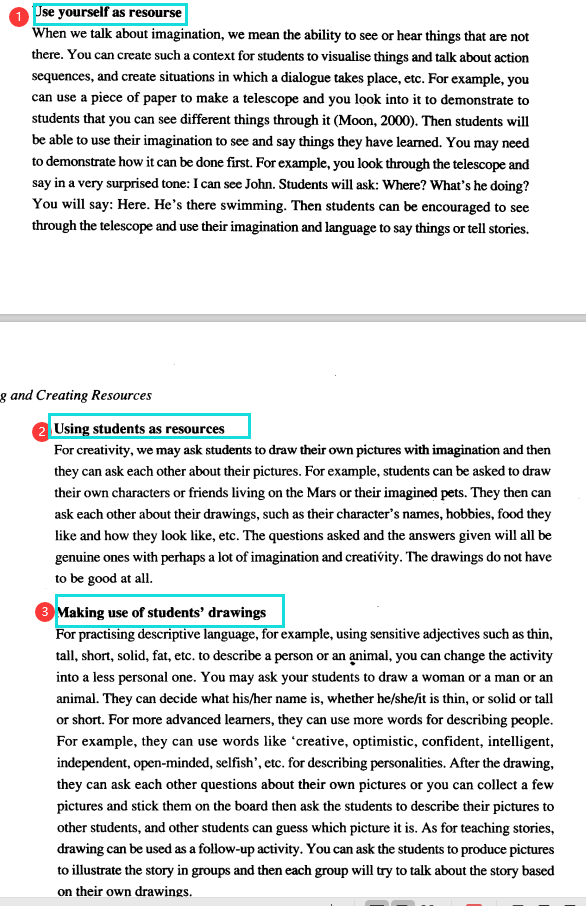
In brief:

1. Use yourself as resources
2.Using students as resources
3. Making use of students' drawing
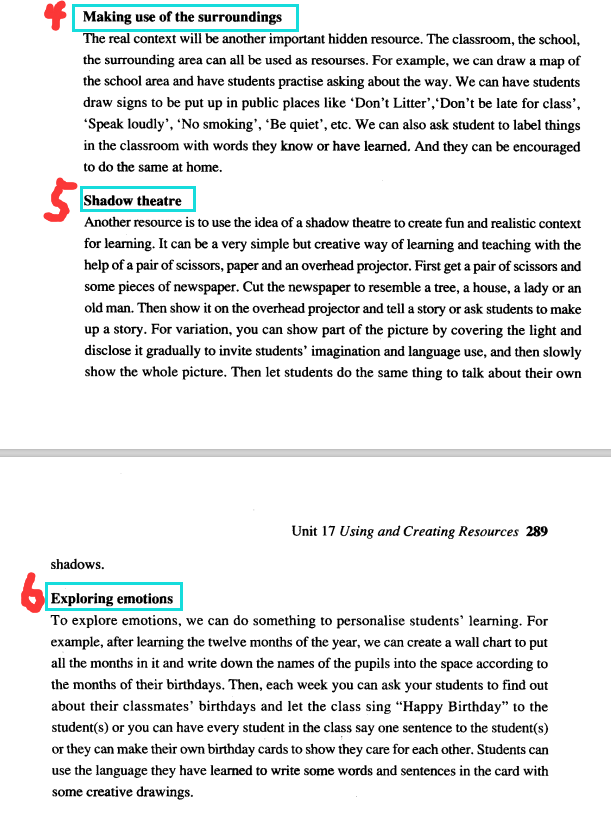
4. Making use of the surroundings
5. Shadow theatre
6. Exploring emotions
7. Getting students to make their own dictionaries
8. Letting students make up their own quizzes
9. Makinng better use of your video resources
    a. Freeze frame   b. Silent viewing   c. Listening withour viewing
10. Using songs for learning
    a. Gap fill       b. Wrong words      c. Comprehension
11.Internet as an important resource


Step 4. Conclusion
1. Traditional teaching and learning resources.
2. Resources in the Information Era.
3. Ways to find or create some resources yourself.
4. Ways to explore the hidden resources.

Some special websites:(P291)
Some international teachers' associations:
1. Asia TEFL (Teaching English as a Foreign Language)
2. IATEFL: International Association for Teachers of English as a Foreign Language
3. TESOL: Teaching English to Speakers of Other Languages
     Nationally, we have NFLTRA.


Step 5. Homework

1. Review the details of  Unit 17
2. Preview Unit 18
3. Finish the tasks in Unit 17
4. Prepare for the final examination