目录

  • 1 Getting Started
    • 1.1 Academic Calendar
    • 1.2 Courseware
  • 2 Unit 1 Language and Language Learning
    • 2.1 Period 1
    • 2.2 Period 2
  • 3 Unit 2 Communicative Principles and TBLT
    • 3.1 Period 1
    • 3.2 Period 2
  • 4 Unit 3 The National English Curriculum
    • 4.1 Period 1
    • 4.2 Period 2
    • 4.3 New Curricula
  • 5 Unit 4 Lesson Planning
    • 5.1 Period 1
    • 5.2 Period 2
  • 6 Unit 5 Classroom Management
    • 6.1 Period 1
    • 6.2 Period 2
  • 7 Unit 6 Teaching Pronunciation
    • 7.1 本课程教学实践参考要求
    • 7.2 英语1512
    • 7.3 英语1612
    • 7.4 英语1712
    • 7.5 英语181、182
    • 7.6 英语191
    • 7.7 英语202
  • 8 Unit 7 Teaching Grammar
    • 8.1 英语1512
    • 8.2 英语1612
    • 8.3 英语1712
    • 8.4 英语181、182
    • 8.5 英语191
    • 8.6 英语202
  • 9 Unit 8 Teaching Vocabulary
    • 9.1 英语1512
    • 9.2 英语1612
    • 9.3 英语1712
    • 9.4 英语181、182
    • 9.5 英语191
    • 9.6 英语202
  • 10 Unit 9 Teaching Listening
    • 10.1 英语1512
    • 10.2 英语1612
    • 10.3 英语1712
    • 10.4 英语181、182
    • 10.5 英语191
    • 10.6 英语202
  • 11 Unit 10 Teaching Speaking
    • 11.1 英语1512
    • 11.2 英语1612
    • 11.3 英语1712
    • 11.4 英语181、182
    • 11.5 英语191
    • 11.6 英语202
  • 12 Unit 11 Teaching Reading
    • 12.1 英语1512
    • 12.2 英语1612
    • 12.3 英语1712
    • 12.4 英语181、182
    • 12.5 英语191
    • 12.6 英语202
  • 13 Unit 12 Teaching Writing
    • 13.1 英语1512
    • 13.2 英语1612
    • 13.3 英语1712
    • 13.4 英语181、182
    • 13.5 英语191
    • 13.6 英语202
  • 14 Unit 13 Integrated Skills
    • 14.1 英语1712
    • 14.2 英语191
    • 14.3 英语202
  • 15 Unit 14 Moral Learning
    • 15.1 Period 1
    • 15.2 Period 2
  • 16 Unit 15 Assessment in Language Teaching
    • 16.1 Period 1
    • 16.2 Period 2
  • 17 Unit 16 Learner Differences and Learner Training
    • 17.1 Period 1
    • 17.2 Period 2
  • 18 Unit 17 Using and Creating Resources
    • 18.1 Period 1
    • 18.2 Period 2
  • 19 Unit 18 Evaluating and Adapting Textbooks
    • 19.1 Period 1
    • 19.2 Period 2
Period 1
  • 1 课程内容
  • 2 课件
  • 3 教案
  • 4 练习
  • 5 拓展


Step 1. Revision


Step 2. Lead-in

Ask the students to brainstorm the resources available for teaching.


Step 3. New Text
I. What resources are available for teaching    

      Resources refer to books, any person, animals, or any object, that make teaching and learning easier, clearer and nore interesting(Baker and Westrup, 2000:115). In English teaching,we will need different kinds of resources, such as textbook, pictures and photos, real objects,online reference materials, newspapers, multimedia packaged courses, CD-ROMs or DVDs(audio and video materials)
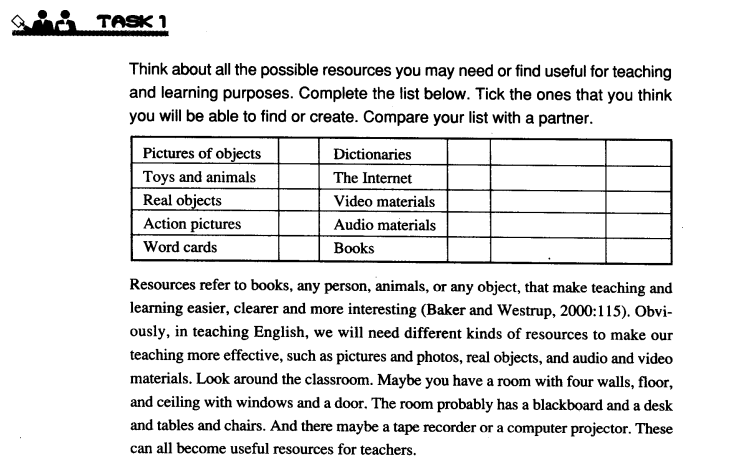
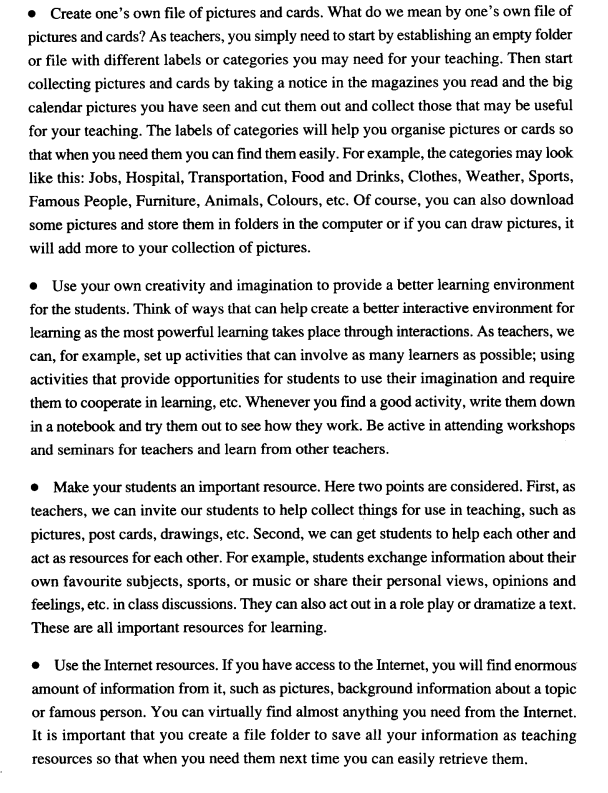
 Besides the resources publishers provided with the textbooks (flashcads, pictures, storybooks, tapes or CD-ROMs, etc.), the teachers themselves should also have their own particular teaching resources:
1. Create one's own file of pictures and cards.
2. Use you own creativity and imagination to provide a better learning environment for the students.
3. Make your students an important resource.
4. Use the Internet resource.

II. Exploring hidden resources