-
1 课程内容
-
2 课件
-
3 教案
-
4 练习
-
5 拓展
Step 1. Revision
1.
2.
Revision of Unit 5---Questioning in the classroom
Step 2. Lead-in
Step 3. New Text
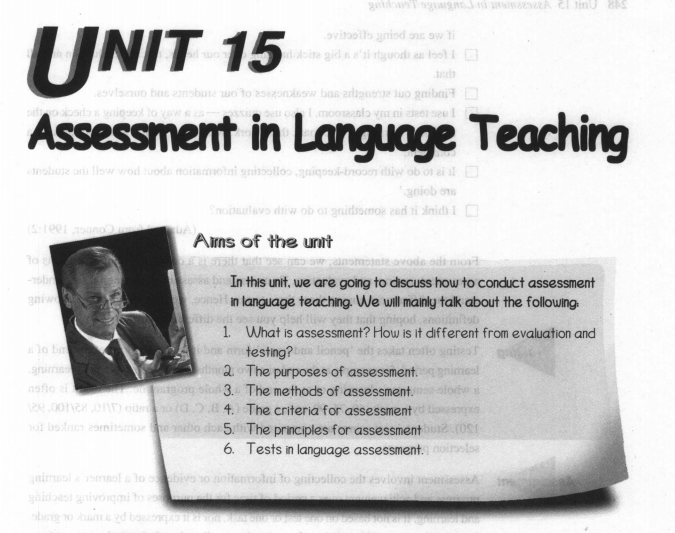
I. Understanding assessment
Test, assessment and evaluation
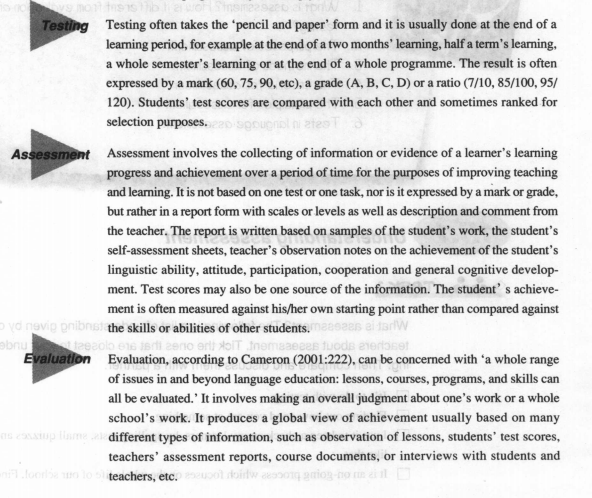
Test: “pencil and paper” form, the results is often expressed by a mark, a grade or a ratio. Students' test scores are compared with each other and sometimes ranked for selection purposes.
Assessment: collecting of information or evidence of a learner's learning progress and achievement over a period of time for the purposes of improving teaching and learning.
Evaluation: a whole range of issues in and beyond language education: lessons, courses, programs, and skills. It involves making an overall judgment about one's work or a whole school's work.
II. Assessment purposes
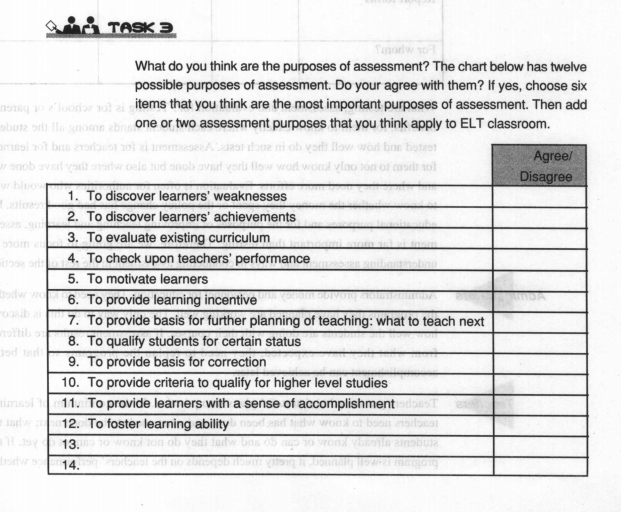
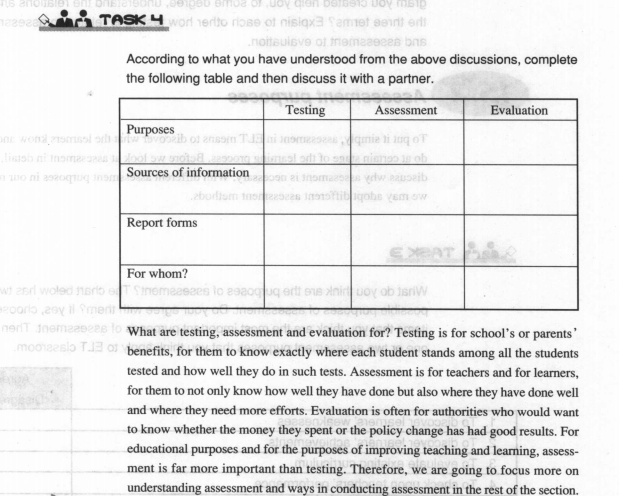
A close study of the asssessment purposes will make it clear that all the people involved in education have some reasons to consider assessent necessary. they are administrator, teachers, parents and students.
administrators: provide money and personnel for education
2. teachers: put the administrators' plans iinto practice.
3. parents: cherish the feedback about their children's performance
4. students: know what they've accomplished, be aware of what they need to work on next
III. Methods for assessment
1. Summative and formative assessment: testing, formal, standardised/ information, to improve teaching and learning, in classroom.
Besides testing, formal or informal, there are many other alternative ways to gather information, such as:
2. Teacher's observations: strength & weakness, accurate and fair
3. Continuous assessment:
4. Self-assessment and peer assessment: clear criteria and weighting system agreed on beforehand
5. Project work: a set of tasks designed to explore a certain idea or concept.
6. Portfolios: purposeful collection of materials to asses students' ability to apply knowledge.