目录

  • 1 Getting Started
    • 1.1 Academic Calendar
    • 1.2 Courseware
  • 2 Unit 1 Language and Language Learning
    • 2.1 Period 1
    • 2.2 Period 2
  • 3 Unit 2 Communicative Principles and TBLT
    • 3.1 Period 1
    • 3.2 Period 2
  • 4 Unit 3 The National English Curriculum
    • 4.1 Period 1
    • 4.2 Period 2
    • 4.3 New Curricula
  • 5 Unit 4 Lesson Planning
    • 5.1 Period 1
    • 5.2 Period 2
  • 6 Unit 5 Classroom Management
    • 6.1 Period 1
    • 6.2 Period 2
  • 7 Unit 6 Teaching Pronunciation
    • 7.1 本课程教学实践参考要求
    • 7.2 英语1512
    • 7.3 英语1612
    • 7.4 英语1712
    • 7.5 英语181、182
    • 7.6 英语191
    • 7.7 英语202
  • 8 Unit 7 Teaching Grammar
    • 8.1 英语1512
    • 8.2 英语1612
    • 8.3 英语1712
    • 8.4 英语181、182
    • 8.5 英语191
    • 8.6 英语202
  • 9 Unit 8 Teaching Vocabulary
    • 9.1 英语1512
    • 9.2 英语1612
    • 9.3 英语1712
    • 9.4 英语181、182
    • 9.5 英语191
    • 9.6 英语202
  • 10 Unit 9 Teaching Listening
    • 10.1 英语1512
    • 10.2 英语1612
    • 10.3 英语1712
    • 10.4 英语181、182
    • 10.5 英语191
    • 10.6 英语202
  • 11 Unit 10 Teaching Speaking
    • 11.1 英语1512
    • 11.2 英语1612
    • 11.3 英语1712
    • 11.4 英语181、182
    • 11.5 英语191
    • 11.6 英语202
  • 12 Unit 11 Teaching Reading
    • 12.1 英语1512
    • 12.2 英语1612
    • 12.3 英语1712
    • 12.4 英语181、182
    • 12.5 英语191
    • 12.6 英语202
  • 13 Unit 12 Teaching Writing
    • 13.1 英语1512
    • 13.2 英语1612
    • 13.3 英语1712
    • 13.4 英语181、182
    • 13.5 英语191
    • 13.6 英语202
  • 14 Unit 13 Integrated Skills
    • 14.1 英语1712
    • 14.2 英语191
    • 14.3 英语202
  • 15 Unit 14 Moral Learning
    • 15.1 Period 1
    • 15.2 Period 2
  • 16 Unit 15 Assessment in Language Teaching
    • 16.1 Period 1
    • 16.2 Period 2
  • 17 Unit 16 Learner Differences and Learner Training
    • 17.1 Period 1
    • 17.2 Period 2
  • 18 Unit 17 Using and Creating Resources
    • 18.1 Period 1
    • 18.2 Period 2
  • 19 Unit 18 Evaluating and Adapting Textbooks
    • 19.1 Period 1
    • 19.2 Period 2
Period 1
  • 1 课程内容
  • 2 课件
  • 3 教案
  • 4 练习
  • 5 拓展


Step 1. Revision


Continue with "5.4  discipline in the language classroom"


Step 2. Lead-in

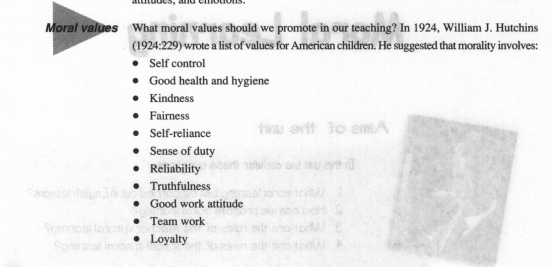
     There is a Chinese saying that “Teachers are engineers of the soul”. This suggests that we are not just responsible for students' intellectual or physical development; teachers are also responsible for students' moral development. The word “education” comes from the Latin verb educare, which means to “bring out”. In other words, teachers should try to bring out the full potential of their students as human beings, so they can live meaningful, fulfilling and responsible lives.


Step 3. New Text

I. Moral learning and English


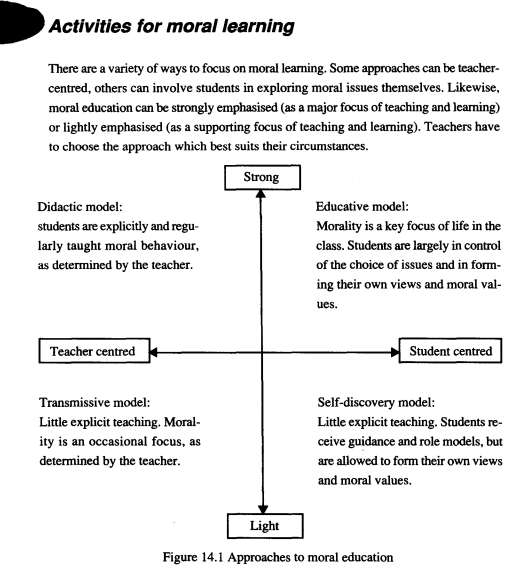
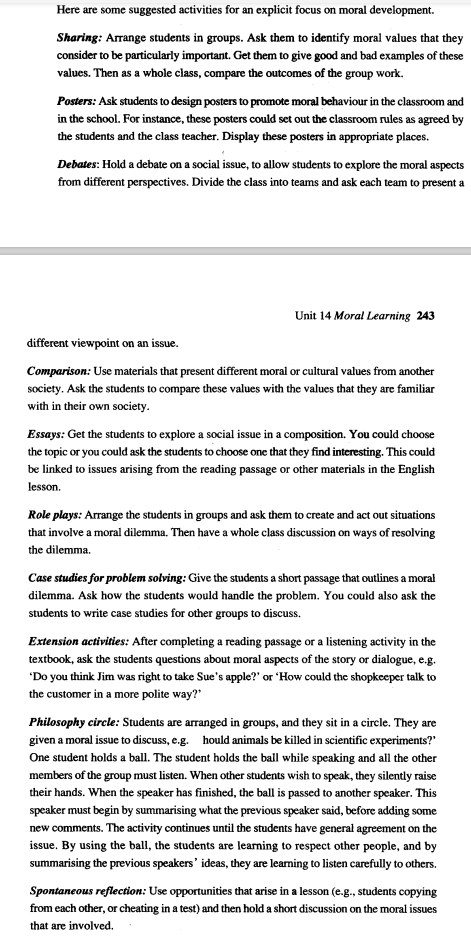
II. Activities for moral learning