
-
1 课程内容
-
2 课件
-
3 教案
-
4 练习
-
5 拓展
III. Goals and objectives of English language teaching
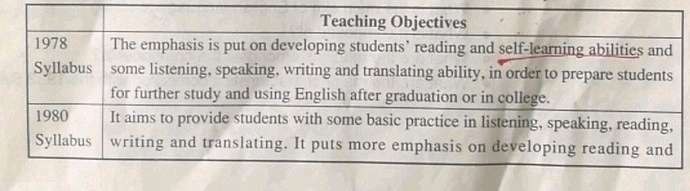
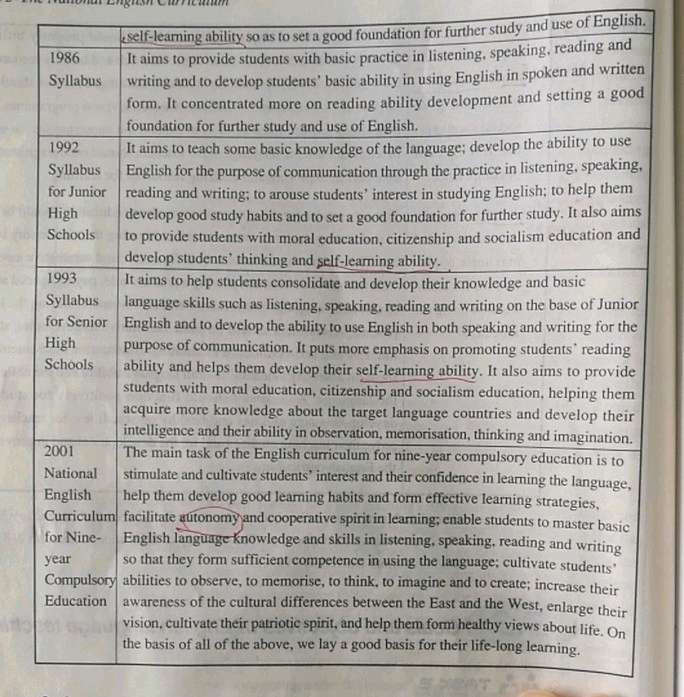
2001 National English Curriculum for Nine-year Compulsory Education
The main task of the English curriculum for nine-year compulsory education is to stimulate and cultivate students’ interest and their confidence in learning the language, help them develop good learning habits and form effective learning strategies, facilitate autonomy and cooperative spirit in learning; enable students to master basic English language knowledge and skills in listening, speaking, reading and writing so that they form sufficient competence in using the language; cultivate students’ abilities to observe, tomemories, to think, to imagine; and to create; increase their awareness of the cultural differences between the East and the West, enlarge their vision, cultivate their patriotic spirit, and help them form healthy views about life. On the basis of all of the above, we lay a good basis for their life-long learning.
IV. Designing of the National English Curriculum
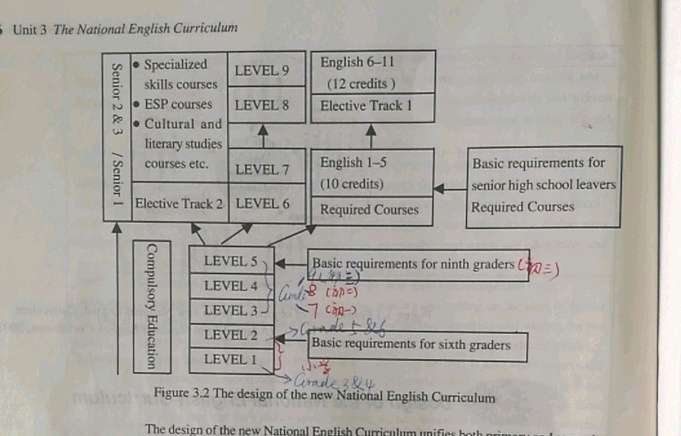
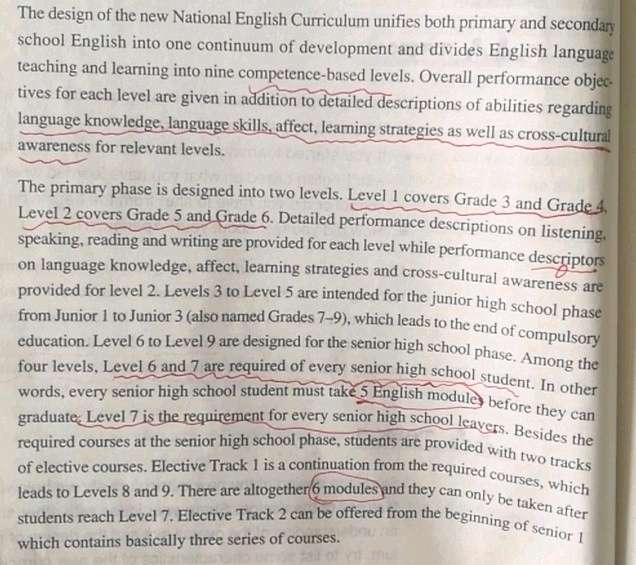
9 levels
Level 1~2 — coverthe primary phase (Grade3-6)
Level 3~ 5 — cover the junior phase (Grade1-3)
Level6~ 8 (9) — cover the senior phase (Grade1-3)
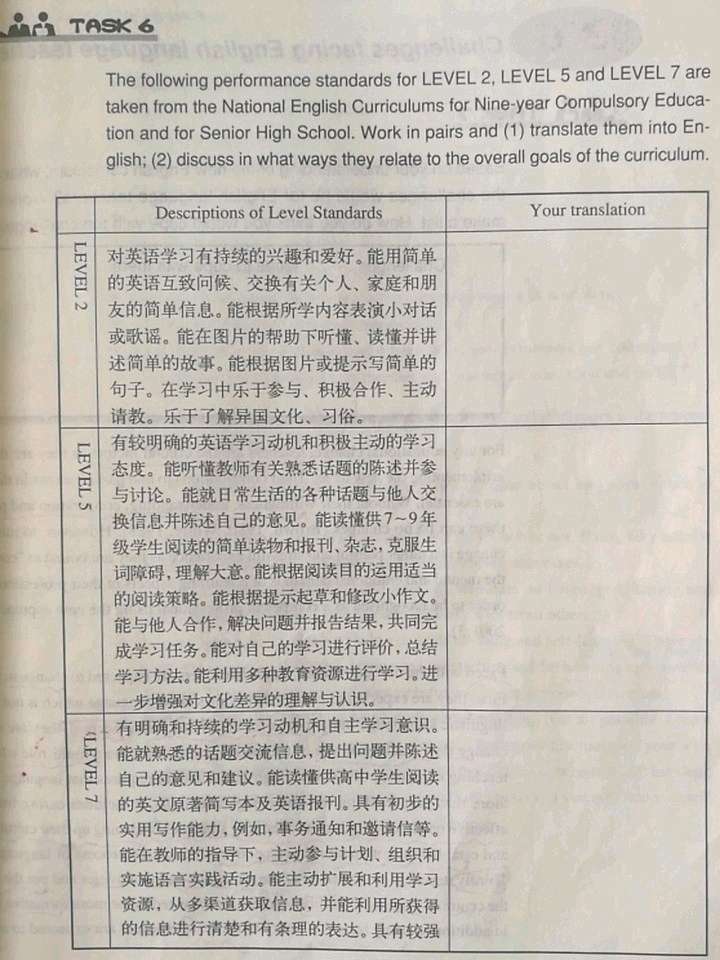
V. Performance standards for different levels of competence

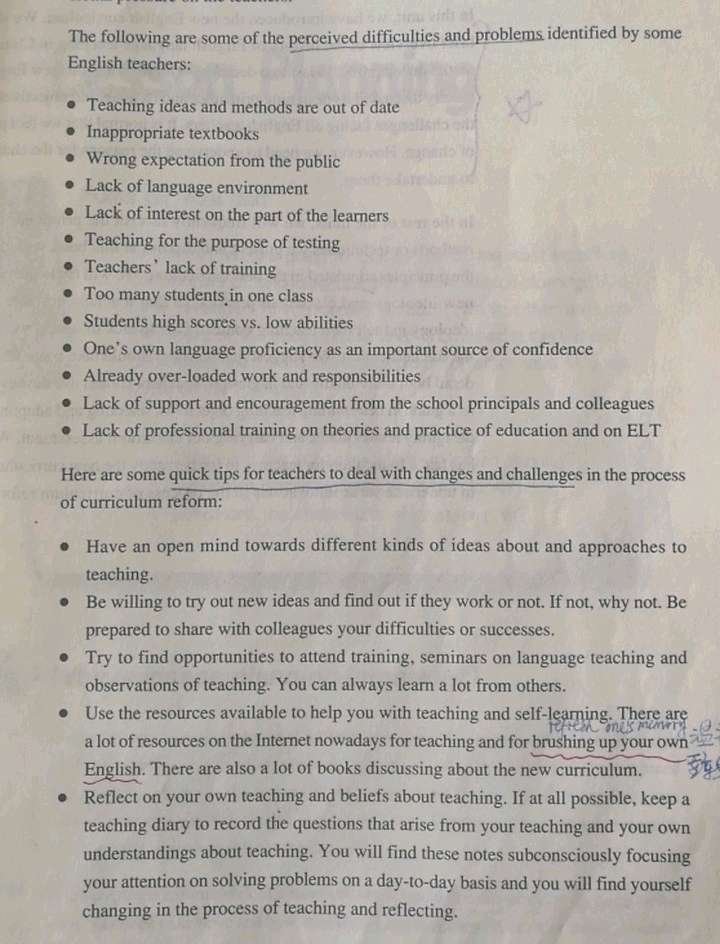
VI. Challenges facing English language teachers
Faced with the new curriculum, English teachers are expected to change in many ways.
(1) They are expected to change their views about language which is not a system of linguistic knowledge but a means for communication.
(2) They are expected to change their traditional role of knowledge Transmitter to a multi-role educator.
(3) Teachers are expected to use more task-based activities and put the students in the center of learning.
(4) Teachers are expected to use more for mative assessment in addition to using tests.
(5) Teachers are expected to use modern technology, in teaching, creating more effective resources for learning and for using the language.
Step 3. Conclusion
In this unit, we have introduced the new English curriculum. We learned the history of English language teaching in China with an emphasison the development in last two decades. With regard to the new English curriculum, we mainly discussed its designing principles and its goals and objections. We also discussed the challenges facing all English teachers. It is normal that we feel pressured in the time of change. However, we need to understand the reasons for the change and be prepared to undertake them.
Step 4. Homework Task 3.
1. What is the main aim of English language teaching?
2. What is it composed of?
3. What are the relations among all the components?
4. What are the major characteristics compared withthe 1992 Syllabus?
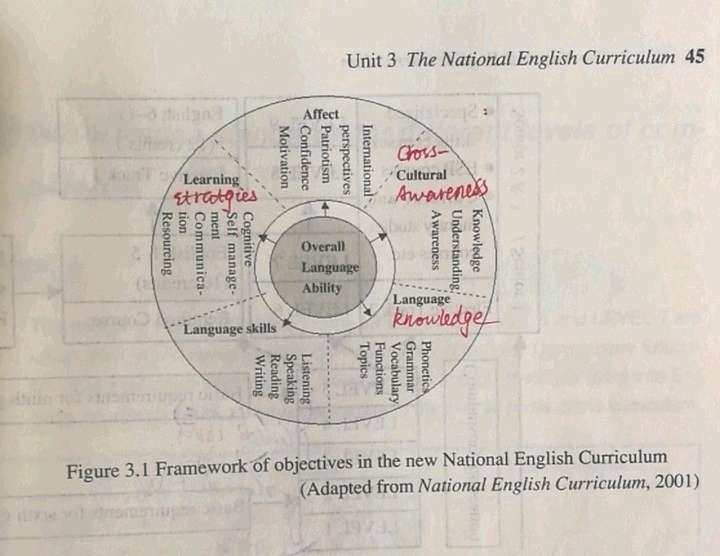
Answers: 1. It is to train the students overalllanguage ability
2. Language skills: Listening, Speaking, Reading, Writing
Language knowledge: Phonetics, Grammar, Vocabulary, Functions, Topics
Learning strategies: Cognitive, Self-management, Communication, Renouncing
Cultural: Knowledge, Understanding, Awareness
Affect: Internationalperspectives 国际视野
Patriotism 祖国意识
Confidence 自信心
Motivation 动机兴趣
3. The design of new national EnglishCurriculum unifies both primary and secondary school English into one continuumof development and divides English language teaching and learning into ninecompetence-based levels. The new curriculum is designed to promote the studentsoverall language ability which is composed of five interrelated componentsnamely Language skills,language knowledge,affects, learning strategies and cultural understanding. Eachcomponent is further divided to a few subcategories as shown in the diagram,language teaching is no longer aimed only for developing language skills andknowledge but expanded to developing learners’ positive attitude, motivation,confidence as well as strategies for life-long learning along withcross-cultural knowledge, awareness and capabilities.