-
1 课程内容
-
2 课件
-
3 教案
-
4 练习
-
5 拓展
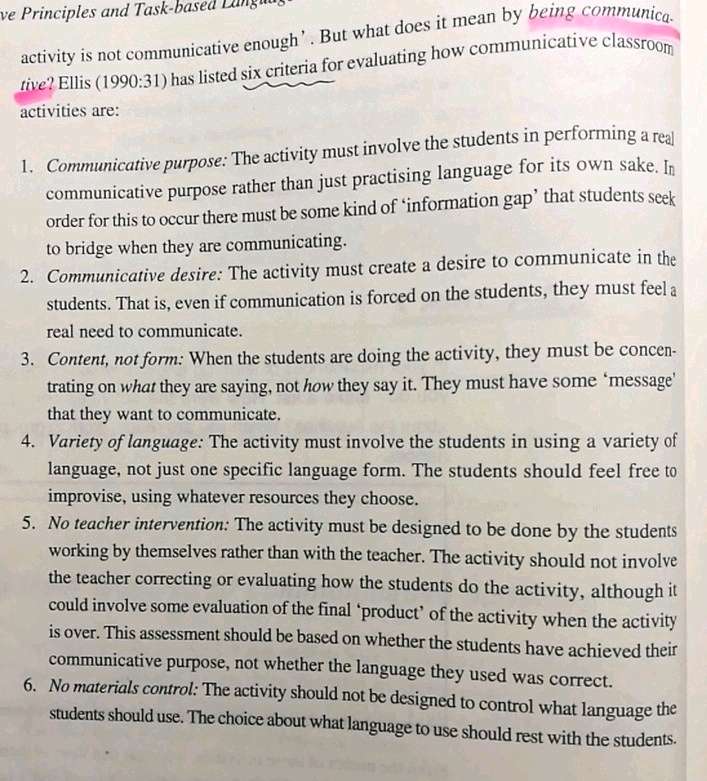
VII.Task-based Language Teaching (TBLT)
1. What is Task-based Language Teaching?
Task-based Language Teaching isa further development of Communicative Language Teaching. It shares the samebeliefs, as language should be learned as close as possible to how it is usedin real life.The key point of it:
It has stressed the importantto combine form-focused teaching with communication –focused teaching.
2. What is a task? P27
Tasks are activities where the target language is usedby the learner for a communicative purpose (goal) in order to achieve onoutcome.
※ From the above definitions we can see that a taskcan hold different meaning for different people (learning language for doingthings)
3.Four components of a task. P28
(1) a purpose: making sure the students have a reason for undertaking the task
(2) a context: this can be real, simulated or imaginary, and involves sociolinguistic issues such as the location, the participants and their relationship, the time, and other important factors
(3)a process: getting the students to use learning strategies such as problem solving, reasoning, inquiring, conceptualising and communicating
(4)a product: there will be some form of outcome, either visible (a written plan, a play, a letter, etc.) or invisible (enjoying a story, learning about another country,etc.)
4.Exercises, exercise-tasks and tasks
(1) Activities and exercises
Focus on individual aspects of language, such asvocabulary grammar or
individual skills.
(2) exercise-tasks
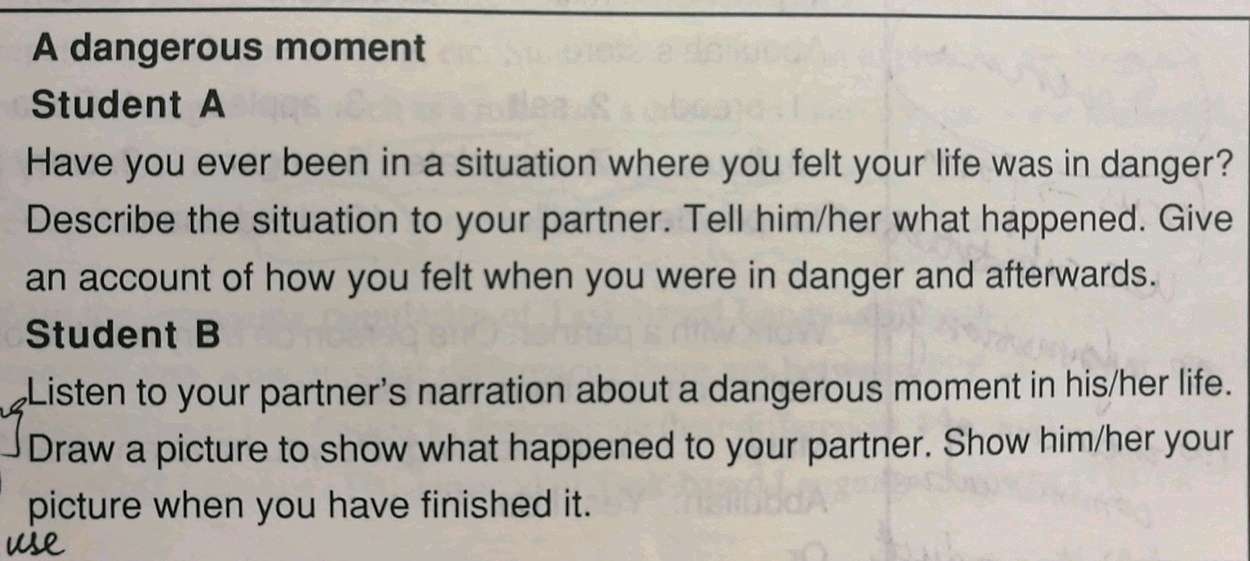
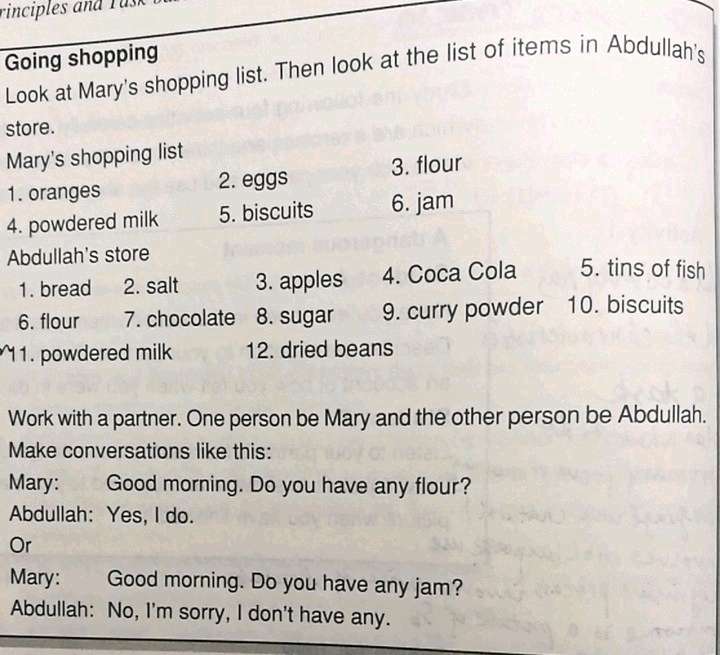
A kindof activity comes halfway between tasks and exercises .This kindof activity consist of contextualized practiceof language items (often on particular grammar point) ※Look at Figure 2.1. P28
(3) task
When students are carrying out a task, they are focusing on the complete act of communication.
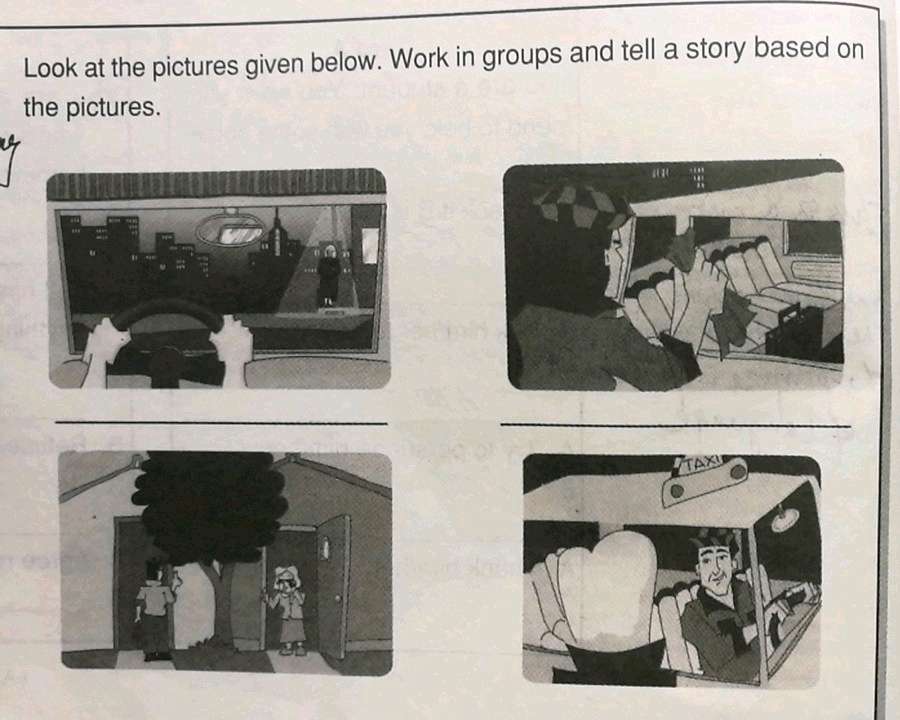
VIII. PPP and Task-based Language Teaching
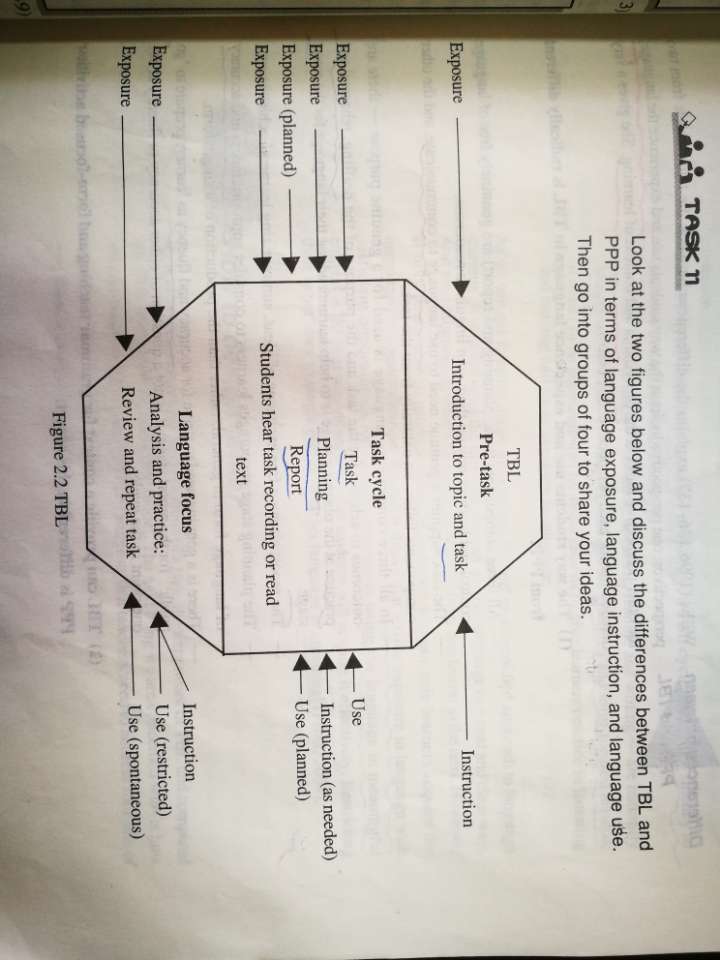
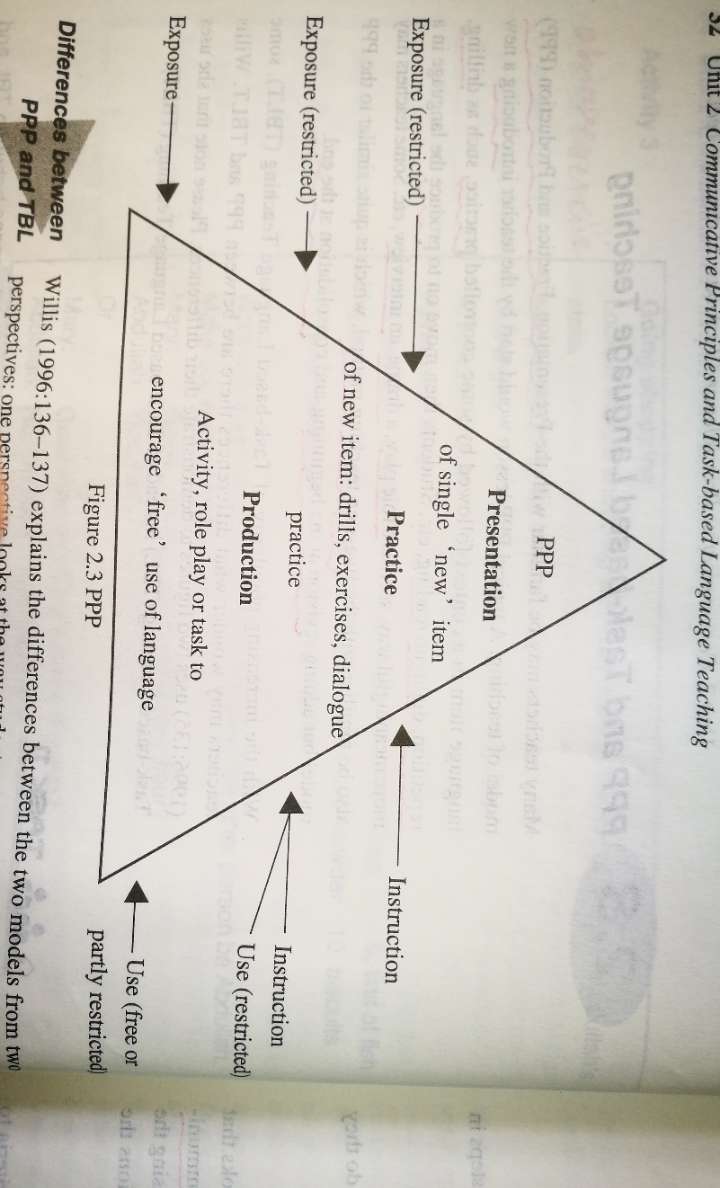
First, look at the Figures on Page 31 and Page 32. And then let's find out the differences between PPP and TBL.
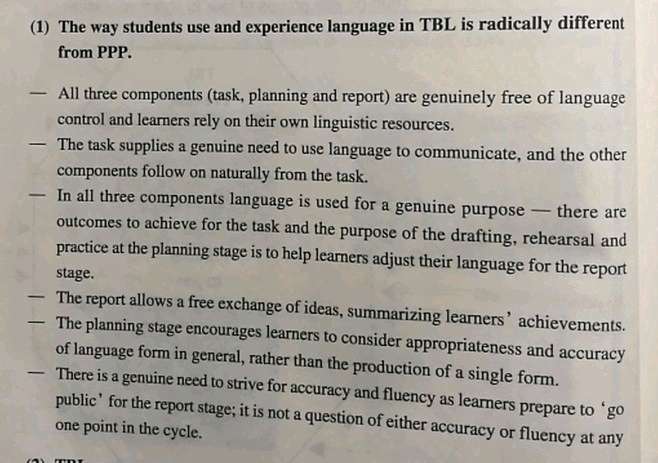
(1) The way students use and experience language in TBL is radically different from PPP(P32)
(2) TBL can provide a context for grammar teaching and form-forced activities. PPP (P32) is different in this aspect.
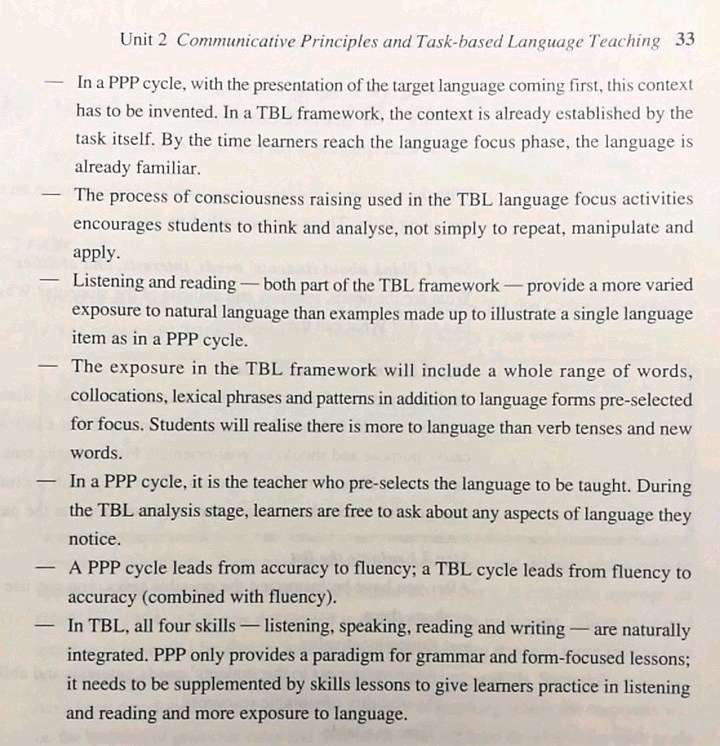
From the above, we can see PPP offers a simplified approach to language learning, it is based upon the idea that you can present language in a neat and clear way. And your language develops by adding new forms from one lesson to the next. However, simply being able to produce forms in isolation will not help lenders acquire the language for communication.
Research shows that a wide exposure to language with sufficient opportunities for students to practice usingthe language in meaningful context is the best way of ensuring that students will acquire it effectively.
IX. How do we design tasks?
※ Teachers need to address four sets of questions when designing tasks:
——What is the objective of the task?
——What is the content of the task?
——How is the task to be carried out?
——In what situation is the task to becarried out?
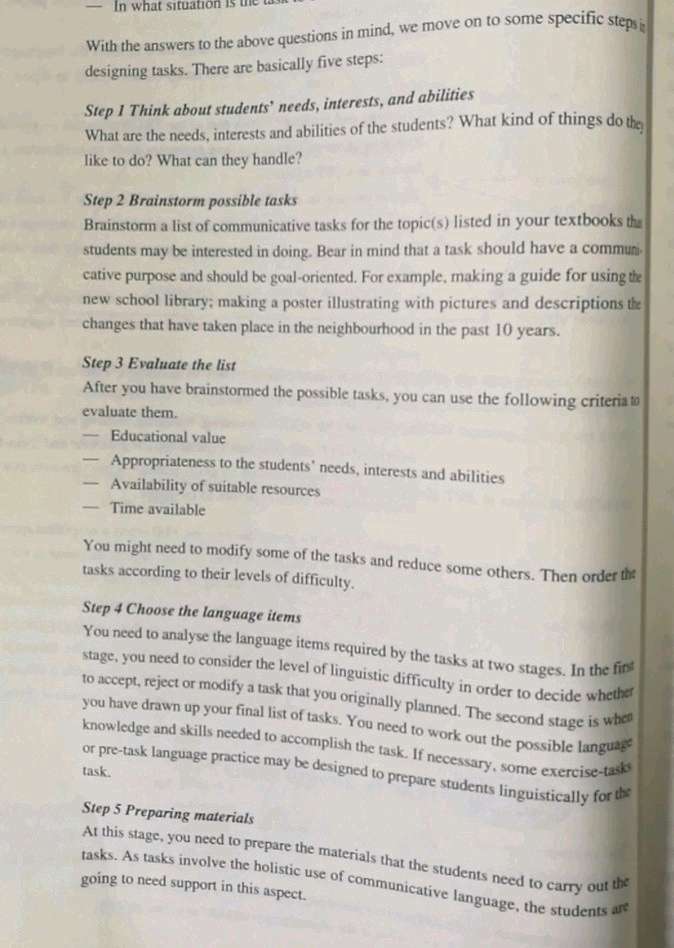
※ Five specific steps in designing tasks
Step 1. Think about students needs, interests and abilities
Step 2. Brainstorm possible tasks
Step 3. Evaluate the list
Step 4. Choose the language item
Step 5. Prepare materials
X. Appropriateness of CLT and TBLT in the Chinese context
Step 3. Conclusion
It is important to remember that a methodsis effective only when it is appropriate to the teaching context. Therefore, when a new method or approach emerges, it is unwise to simply cast away the traditional and fallow the new trend. The best thing to do is to develop one’s ownteaching methods based on the context of where one teaches and integrates themerits of different methodologies to serve the purpose of one’s teaching objectives and the needs of one’s students.
Step 4. Homework
Task 2, Task 11