Unit 1 Ways of Learning
Text A Learning, Chinese-style
I. Lead in
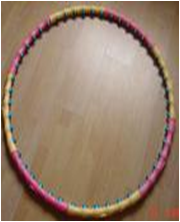
Two children are given two hulahoops, a toy they are unfamiliar with.
ØJaneis given a hula hoop withinstructions on how to use it.
ØMary is given a hula hoop with no instructions.
What kind of outcomes do you expect?
Jane learns to keep the hula hoop in motion by moving her body in certain ways.
Mary explores the hoopand discovers it's big enough to step through. She then balances the hoop between two objects and practices kicking a ball through the hoop.
How do you comment on these two outcomes?
Which one do you think is better indeveloping the children's creativity?
Both outcomes are good.
Jane learns a useful play skill.
Mary uses his hoop in a different, butequally playful way.
II. Education in west
 There is no
common agreement in
the West concerning the best method of education. (trial/exploring)
There is no
common agreement in
the West concerning the best method of education. (trial/exploring)
There are a
variety of views among
parents, teachers and students.
Much of the current debate over
education surrounds the extent to which learning should be teacher-based
or student-based.
It's generally true that Western
methods are more student-centered, expecting students to discover
things for themselves rather than relying on their teachers to tell them.
III. Text organization
| Parts | Para(s). | Main Ideas |
| 1 | 1~5 | The text begins with an anecdote. |
| 2 | 6~13 | The author’s thoughts are mainly about different approaches to learning in China and the West. |
| 3 | 14 | The author winds up the text with a suggestion in the form of a question. |
IV. Language points
1.(P.2) attach: vt. fasten or join (one thing to another)
*She attached an antenna to the radio.
*A tag was attached to each article.
Pattern: attach sth. to sth.
be attached to sth.
2. (P. 4) initial: adj. of or at the beginning; first
最初的会谈是后来达成协议的基础。
(=The initial talks were the base of the later agreement.)
*the initial letter of aword 一个词的首字母
3. (P. 4) await: vt. waitfor
* He was anxiously awaiting her reply.
他早就期待着这个时刻了。
(=He has long awaited this moment.)
4. (P. 4) neglect: vt.give too little attention or care to
离开时别忘了锁门。
(=Don't neglect to lock the door when you leave.)
*Those who neglect their duties should be punished. 玩忽职守者应受惩罚。
*Why do they always neglect the traffic regulation. 他们为什么老是不注意遵守交通规则呢?
5. (P. 5) relevant: adj. directly connected with the subject
该证据与此案有关。
(=The evidence is relevant to the case.)
Pattern: be relevant to
6. (P. 5) throw light on: help understanding
* These facts throw new light on the matter.
这些事实使人进一步了解此事。
7. (P. 6) accomplish: vt.manage to do (sth.)
* She's accomplished agreat deal in the last few weeks.
这项任务不是在一代人的时间里所能完成的。
(=The task will not be accomplished in one generation.)
Collocation: accomplish one's object/goal 达到目的
accomplish one's mission 完成使命
8. (P.7) critical: adj.
1) very important
* A second income is critical to the family's well-being.
接下来的两个礼拜对于公司来说是至关重要的。
(=The next two weeks willbe critical for the company.)
Collocation: a critical decision 重大的决定
critical moment 紧要关头,关键时刻
2)very serious or dangerous
严重短缺食物 (=a critical shortage offood)
Collocation: critical condition 危险状态
a critical illness 重病
9. (P. 7) principal: adj. main; chief
* the principal food of thepeople of India
* the principal rivers ofEurope
CF: principal & principle
principle 仅作名词用,其主要意义指基本的东西或规则和标准。
principal 既是名词又是形容词。作为名词,它一般指居于高位或担任重要角色的人。例如:a meeting among all theprincipals in the transaction。作为形容词,它有主要的或首要的的意思。
10. (P. 7) rear: 1. vt. Bring up and educate; look after (animals)
*rear children
饲养家禽 (=rear poultry)
2. n. back part 后部;背面
* The kitchen is in therear of the house.
停车场在这建筑物的后边。(= The parking lot is at the rear of the building.)
11. (P.9) facility: n.
1) ability to do sth. easily and well
* play the piano with facility
有学习语言的天才 (= have great facility in learning languages)
2) (pl.) equipment, aids, etc. which make iteasy to do things
*sports facilities
*There are facilities for cooking in thekitchen.
娱乐设施 (= entertainment facilities)
12. (P. 10) apply: vi.
1) be relevant; have an effect
Pattern: apply tosb./sth.
*What I have said does not apply to you.
教授的这条建议只适用于一些大学生。
(=The advice given by the professor only appliesto some of the college students.)
2) write a letter or fill in a form inorder to ask formally for sth.
Pattern: apply (to sb.) forsth.
apply to do sth.
*We applied to the authorities for assistance.
他决定申请参加学生会。
(=He decided to apply tojoin the Student Union.)
13. (P. 12) emerge: vi.come out
* Eventually the truth of the matter emerged.)
* Large scale industry emerged gradually as technology evolved.
Pattern: emerge from/out of
太阳从云层背后出现。(=The sun emerges from behind the clouds.)
*New evidence emerged from the investigation.
It emerges that…
*It later emerged that the driver of the car had been drunk.
14. (P. 14) worthwhile: adj. worth doing; worth the trouble taken
* Here is some worthwhile advice to any young businessman.
这本书值得一读。(= It’s a worthwhile book.)
Cf.: worth, worthy, worthwhile
*worthwhile“值得花时间或精力干的”, 在以it为形式主语的句子中, 其后可接动词不定式或动名词。 (beworthwhile doing/be worthwhile to do)
--It is worthwhileto visit/visiting Mount Tai.
*worth“值……钱的”“值得……的”一般只作表语,其后接名词或动名词(主动形式表示被动的意义)。
--The bike is worth 300 yuan.v
--His suggestionis worth considering.
*worthy“值得的”,“配得上的”,与介词of连用, 或接动词不定式, 但不能用在以it作形式主语的句子中:
--The book is worthy to be bought.
--他的行为值得高度赞扬。(=His behavioris worthy of great praise. )
V. After Reading exercises
1) Useful Expressions
1. 被系在…上 be attached to…
2. 探索行为 exploratorybehavior
3. 偶尔 onoccasion
4. 父母的责任 parental duties
5. 揭示,阐明 throw light on
6. 最终目的 anultimate purpose
7. 要做的动作 desired action
8. 所希望的结果 desirable outcome
9. 关键 criticalpoint
10. 育儿观 value of child rearing
11. 弥补某种错误行为 making up for a misdeed
12. 回想起来 inretrospect
13. 善意的 well-intentioned
14. 前来帮助某人 come to sb.’s rescue
15. 极其熟练、温和地 with extreme facility and gentleness
16. 适用于 applyto
17. 发展到 evolveto
18. 发展创造力 promote creativity
19. 值得追求的目标 worthwhile goals
2). Spot Dictation
You probably think you willnever be a ___1___ student. This is notnecessarily so, however. Anyone can become a better___2___ if he or she wantsto. It is true that you may not be ___3___ about everything that you study, but by using your time properlyyou may improve your grades without ___4___ work. Here’s how:
1. ____5____ carefully.
2. Find a good place to study.
3. ___6___ before you read.
4. ___7___ your time in class.
5. Study___8___.
6. Develop___9___ about tests.
There are other ___10___that might help you with your studying. Only a few have been mentioned here.You will probably discover many others after you have tried these.
3) Discussion
1.What do you think is more important, creativity or basic skills?
2.How do you comment on the learning methods you used in high school?
3.Are you employing new learning methods helpful to the study of college courses?What are they?
4.In your opinion, can we find a better way to approach education, which strikesa better balance between the poles of creativity and basic skills?

