
目录

  • 1 课程介绍 Introduction
    • 1.1 课程大纲Unit Specification
    • 1.2 管理会计与财务会计区别 The difference  between management accounting and financial accounting
  • 2 成本分类Classifying costs (Outcome 1)
    • 2.1 课前导读
    • 2.2 知识点讲解
      • 2.2.1 成本目标的确定Assigning costs to cost objects
      • 2.2.2 生产成本与期间成本 Distinguish between product costs and period costs
      • 2.2.3 生产成本分类 Product cost identification for manufacturing firms
      • 2.2.4 直接成本和加工成本​Prime costs and conversion costs
    • 2.3 章节自测题
    • 2.4 课程辅助视频
    • 2.5 课件
  • 3 产品成本核算 Determining costs of products (Outcome 1)
    • 3.1 课前导读
    • 3.2 知识点讲解
      • 3.2.1 Job order costing method
      • 3.2.2 predetermined overheads rate
      • 3.2.3 产品成本核算方法Product costing methods
    • 3.3 章节自测题
    • 3.4 课件
  • 4 利润核算Profit calculation (Outcome 1)
    • 4.1 课前导读
    • 4.2 知识点讲解
      • 4.2.1 利润核算markup and margin
      • 4.2.2 Construction of operating statements
    • 4.3 章节自测题
    • 4.4 课件
  • 5 成本性态分析与使用Costs Behavior:Analysis and Use(Outcome 2)
    • 5.1 课前导读
    • 5.2 知识点讲解
      • 5.2.1 成本性态Cost behavior
      • 5.2.2 贡献式损益表The contribution income statement
      • 5.2.3 边际贡献率Contribution margin ratio
      • 5.2.4 在资源有限的情况下如何选择最优产品组合The Most Efficient Use of Scarce Resources
    • 5.3 课程辅助视频
    • 5.4 课件
    • 5.5 章节自测题
  • 6 本量利分析CVP analysis (Outcome 2)
    • 6.1 课前导读
    • 6.2 知识点讲解
      • 6.2.1 本量利分析Cost-Volume-Profit analysis
      • 6.2.2 敏感性分析Sensitivity analysis
    • 6.3 课程视频
    • 6.4 课件
    • 6.5 课后习题
    • 6.6 思政拓展
  • 7 基于相关成本的商务决策Making decision using relevant information (Outcome 2)
    • 7.1 课前导读
    • 7.2 知识点讲解
      • 7.2.1 相关成本 Relevant costs
      • 7.2.2 基于相关成本的短期决策 Short term decisions with relevant costs
        • 7.2.2.1 是否替换设备的决策Equipment replacement
        • 7.2.2.2 自制还是购买决策Make or buy decision
        • 7.2.2.3 接受特别订单决策Acceptance of a Special Order
        • 7.2.2.4 销售还是进一步加工决策Sell or Process Further Decision
    • 7.3 课程视频
    • 7.4 课件
    • 7.5 章节自测
  • 8 预算与弹性预算Budgeting and flexible budgets (Outcome 3)
    • 8.1 课前导读
    • 8.2 知识点讲解
      • 8.2.1 弹性预算Flexible budget
      • 8.2.2 弹性预算业绩报告The flexible budget performance report
    • 8.3 课程视频
    • 8.4 课件
  • 9 标准成本体系Standard costing (Outcome 3)
    • 9.1 课前导读
    • 9.2 知识点讲解
      • 9.2.1 标准成本 Standardcosting
      • 9.2.2 差异分析 Variance analysis
    • 9.3 课程视频
    • 9.4 课件
    • 9.5 课后习题
    • 9.6 思政拓展
  • 10 传统资本性投资评估方式The capital budget (Outcome 4)
    • 10.1 课前导读
    • 10.2 知识点讲解
      • 10.2.1 资本预算The capital budget: what is it
      • 10.2.2 回收期Payback period
      • 10.2.3 会计回报率Accounting rate of return
    • 10.3 课程视频
    • 10.4 课件
  • 11 Master budget 全面预算
    • 11.1 Master budget
  • 12 贴现现金流的投资评估Discounted Cash flow  (Outcome 4)
    • 12.1 课前导读
    • 12.2 知识点讲解
      • 12.2.1 资金时间价值Time value of Money
      • 12.2.2 净现值Net present value
      • 12.2.3 内部回报率Internal Rate of Return
    • 12.3 课程视频
    • 12.4 课件
    • 12.5 课后习题
    • 12.6 思政拓展
思政拓展

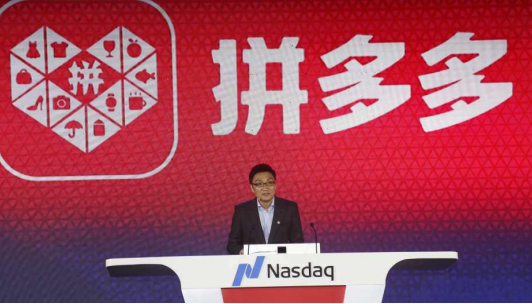
U.S.-listed Pinduoduo (PDD) may not be a big name outside of China. But withinthe world’s second-largest economy, the e-commerce firm is growing faster thanmajor rivals Alibaba and JD.com and gaining sharequickly.

Behind that success has been its “social shopping” model thatencourages users to share links to items they purchase with friends andparticipate in group buying. 

How does PDD work?

A large part of PDD’s appeal is the group buying function. Whena user selects an item on Pinduoduo, they can choose to participate in groupbuying. The more people that join in, the lower the price of the item goes.

This encourages buyers to share links to the item they arebuying with friends and family or over social media. 

Each item has a minimum number of buyers required to completethe purchase. If that number is not met within 24 hours, then the group buy iscancelled and those who have already committed money will be refunded.

There is an option to just buy the item directly but the priceof that product is higher than that of buying it in a group. 

PDD has also focused on making personal recommendations withinits app. 

Business model

Currently, 100% of PDD’s revenue comes from what it calls“online marketplace services.” This is broadly made up of commission PDD takesfrom sales on its platform as well as advertising it runs. 

While Alibaba and JD.com make most of their money frome-commerce, they both have other emerging businesses such as cloud computing.So PDD’s income stream is narrower.

But its revenue is growing faster in percentage terms. In thefourth quarter, 2020, PDD’s revenue hit 10.79 billion yuan ($1.55 billion), anincrease of 91%. In the fourth quarter, Alibaba’s revenue was up 38% from lastyear but it raked in 161.45 billion yuan or $23.19 billion, nearly 15 times asmuch as PDD.

Both Alibaba and JD.com made a net income in the fourth quarterof 2019 while PDD recorded a loss.