目录

  • 1 Unit 2 Two Kinds
    • 1.1 Development of Conflict
  • 2 Unit 3 Goods Move. People Move. Ideas Move.
    • 2.1 Part 8 Alvin Toffler's Views
    • 2.2 Part 9 A Summing-up of Linking
    • 2.3 Part 10 The result of linking is change
    • 2.4 Part 11 Another Example from Shanghai
    • 2.5 Part 12 Conclusion
    • 2.6 Post - reading Discussion
  • 3 Unit 4 Professions for Women
    • 3.1 Pre - reading Tasks
    • 3.2 Part 1 Additional Reading
    • 3.3 Part 2: The 1st obstacle
    • 3.4 Part 3: The 2nd obstacle
    • 3.5 Part 4: Woolf concludes speech
    • 3.6 Post - reading Tasks
  • 4 Unit 5 Love Is A Fallacy
    • 4.1 Pre - reading Tasks
    • 4.2 Part 1 Checking
    • 4.3 Part 2 Dating Part
  • 5 Unit 8 The Merely Very Good
    • 5.1 Pre-reading Tasks
    • 5.2 Paras. 1-2
    • 5.3 Paras. 3-4
    • 5.4 Paras. 5-7
    • 5.5 Paras. 8-9
    • 5.6 Paras. 10-12
    • 5.7 Paras. 13-16
    • 5.8 Paras. 17-20 and Post-reading Tasks
  • 6 Unit 9 Al Gore's Nobel Peace Prize
    • 6.1 Pre-reading Part
Pre - reading Tasks


Pre-reading Questions:

1. How do you interpret the title? What message can you predict from this?

2. What does Max Shulman say about his own essay in the introduction? Is he serious in his remarks?

3. When Shulman writes that this essay undertakes to "demonstrate that logic... is a living, breathing thing, full of beauty, passion, and trauma," how do you think he is going to accomplish this goal?

4. What kind of person is Dobie Gillis considered to be? Try to attribute a few adjectives to each character. 

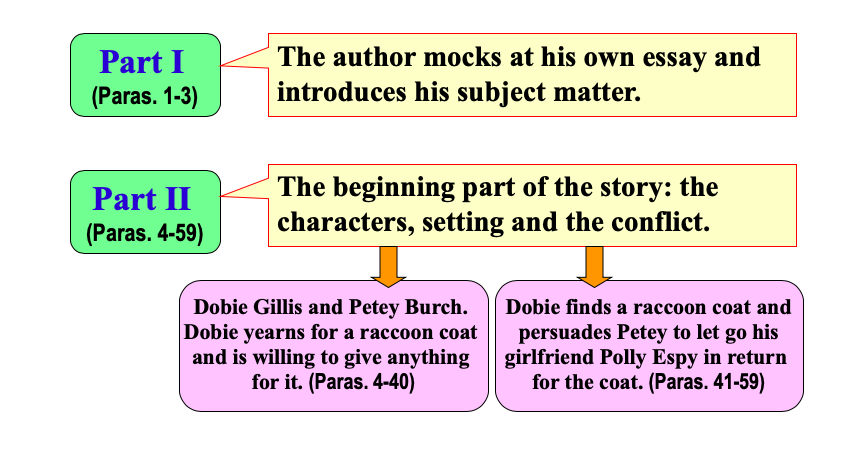
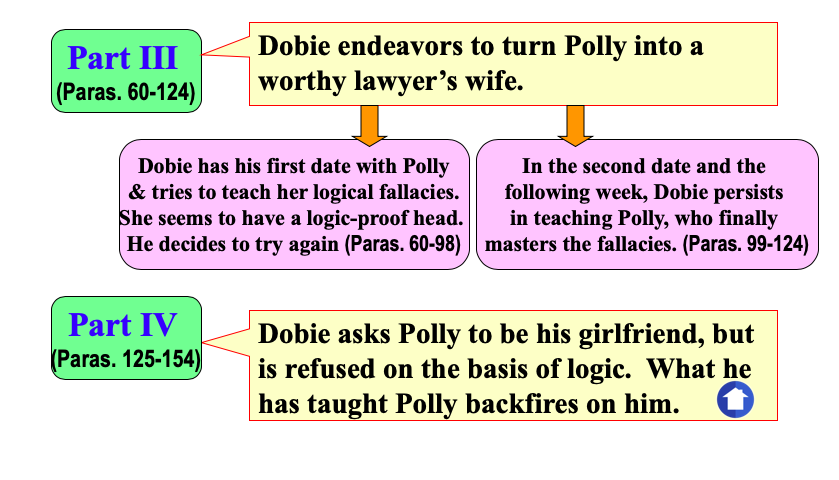
Structure of the article:

Ask students to try to list the logical fallacies that Gillis and Epsy discuss in their meeting together.