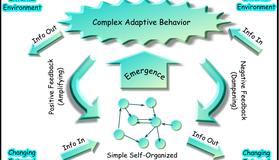
Self-Organization and Cooperation in Economics
Traditional economics
Assumptions:
Perfectly rational self-interested agents
Each has complete knowledge of others’strategies
Each can do deductive reasoning
Result:“ Efficiency”(Best possible situation for all)
Can make predictions with analytic (mathematical) models, assuming “equilibrium” dynamics.
“Complexity” economics
Assumptions:
Self-interested agents with bounded rationality
Limited knowledge of others’strategies
Each does primarily inductive reasoning
Agents adapt over time to ever-changing environment
Analytic models often not possible; equilibria are never reached; often need agent-based models with ability to adapt.
El Farol Problem
How can all the people “cooperate” without communicating and without rational deductive reasoning?
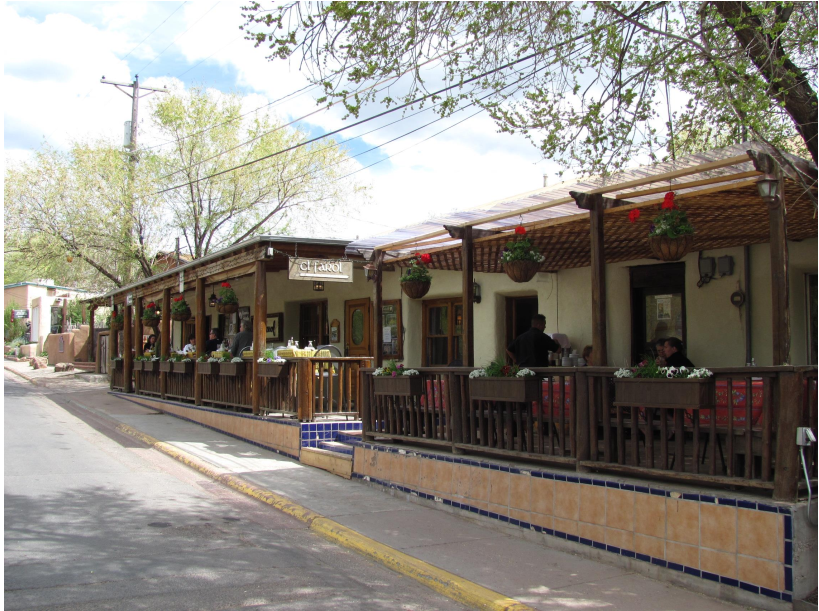
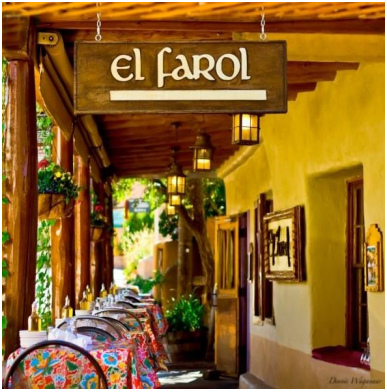
每周四晚上会有爱尔兰音乐的现场演奏(大家都喜欢)
60人刚刚好
100个人想去,但是只有当他们知道要去酒吧的人少于60个才真的想去
人们没有事先联络
每个人知道的信息都是上M个周四分别有多少人去了酒吧
例如,M = 3, 人们得到的信息是上周四去了20个人,大上周四去了76人,三周前的周四去了35人
每个人要做出的决策是:这周四我该去吗?
Netlogo 模型库 -> social science ->El Farol
每个人有N个策略,每个策略都是通过历史数据预测本周四有多少人会去。
每个人都可能有不同的策略组
例如,如果 N = 3, 那么你的策略组可能是:
• Strategy 1: = 上周人数
• Strategy 2: = 100-上周人数
• Strategy 3: = 0.2 * last week + 0.1 * two weeks ago
为了做出决策,你要决定那个策略是“当下最好”的。
使用选出的策略预测本周四将会去的人数,如果超过60,则决定不去,否则就去。
所有人独立的同时进行预测,并且没有沟通。
El Farol 模型的意义
有限理性“ bounded rationality”
不完全信息 limited knowledge
包含适应性Includes adaptation (inductive learning from experience)
El Farol模型显示了自组织合作和效率是可以在没有完美理性、完全信息和演绎推理的形况下存在。

