 系统科学
系统科学
●系统科学是研究系统的结构与功能关系、演化和调控规律的科学,是一门新兴的综合性、交叉性学科。
系统科学以不同领域的复杂系统为研究对象,从系统和整体的角度,探讨复杂系统的性质和演化规律,目的是揭示各种系统的共性以及演化过程中所遵循的共同规律,发展优化和调控系统的方法,并进而为系统科学在科学技术、社会、经济、军事、生物等领域的应用提供理论依据。
 系统学方法论:还原论与整体论的有机结合
●Complex Systems——Beyond the Reductionism
超越还原论
系统科学的目标
Understanding and Engineering Emergence.
| 认识系统(reconstructing and predicting multilevel behavior– from local to global) |
| 设计与控制系统(the design, control and management of complex systems) |
Systems Science-系统科学
To Provide a Systematic (Unified, Universal) View for Varies Complex Systems by a Systematic Approach.
对象:对各个领域的复杂系统,方法:利用系统学的方法, 目标:获得系统的、统一、普适的认识。 |
Science and Complexity
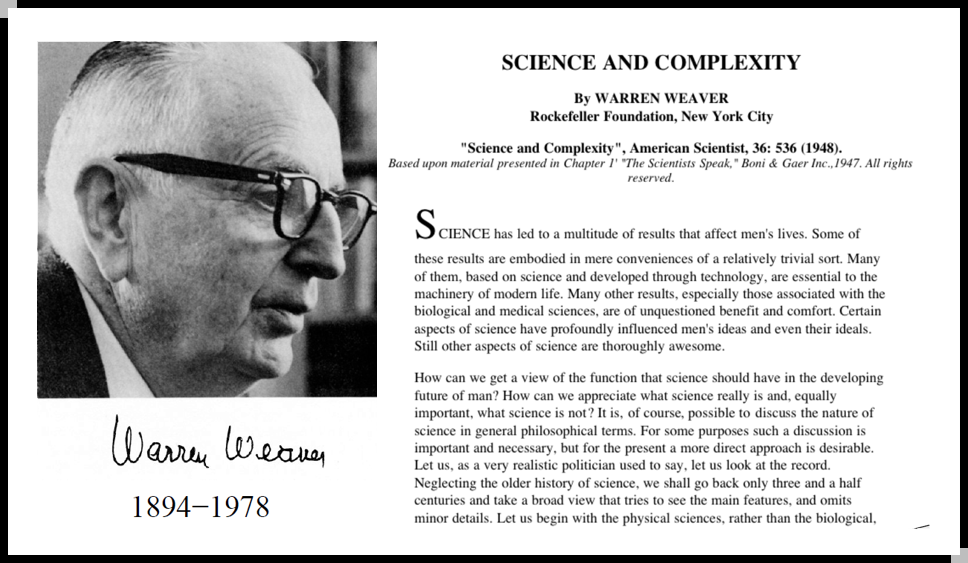
●Problems of Simplicity: a few variables.
●Problems of Disorganized Complexity: billions or trillions of variables.
-Science of Averages, Statistical Mechanics.
●Problems of organized complexity: Moderate numbers of variables.
-Problems which involve dealing simultaneously with a sizable number of factors which are interrelated into an organic whole.
Goals of the Science of Complexity
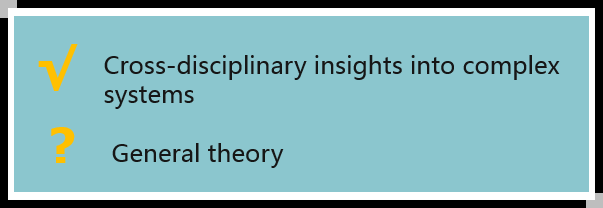
Can we develop a general theory of complex systems?
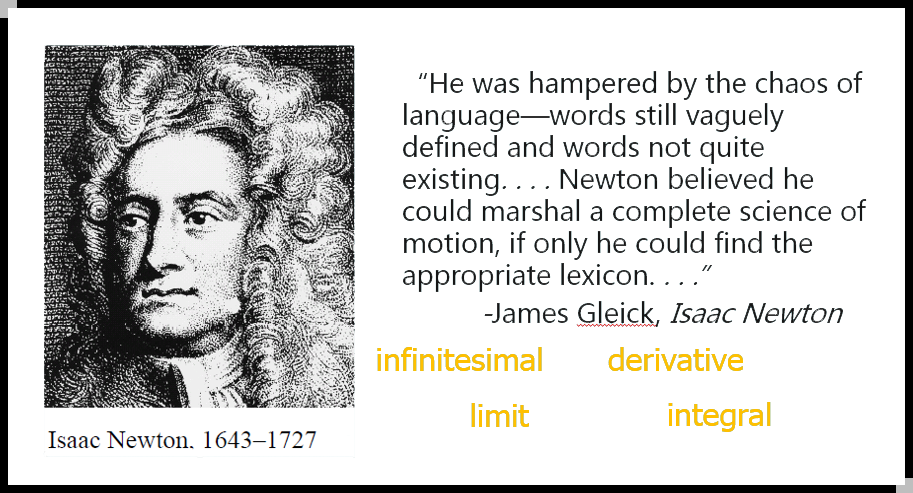
Chaos: Simple Laws, Complex Outcome
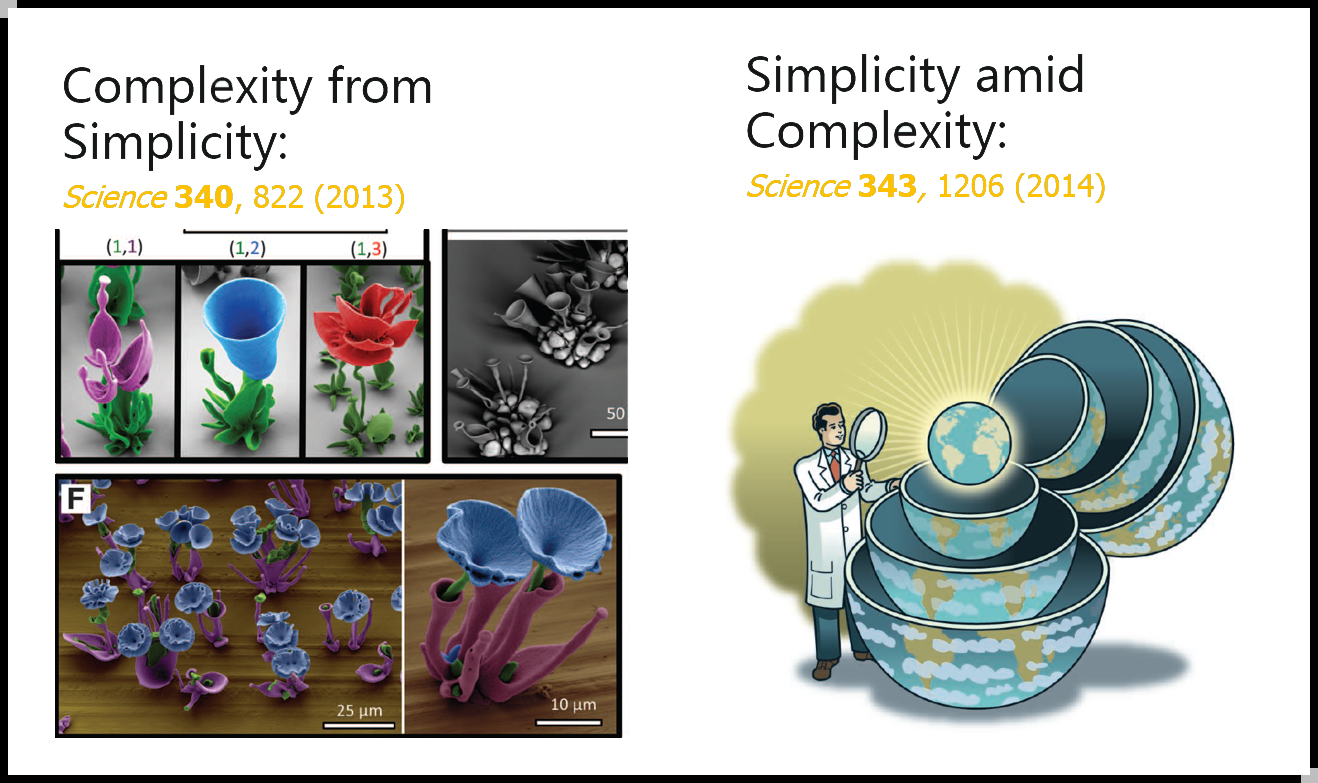
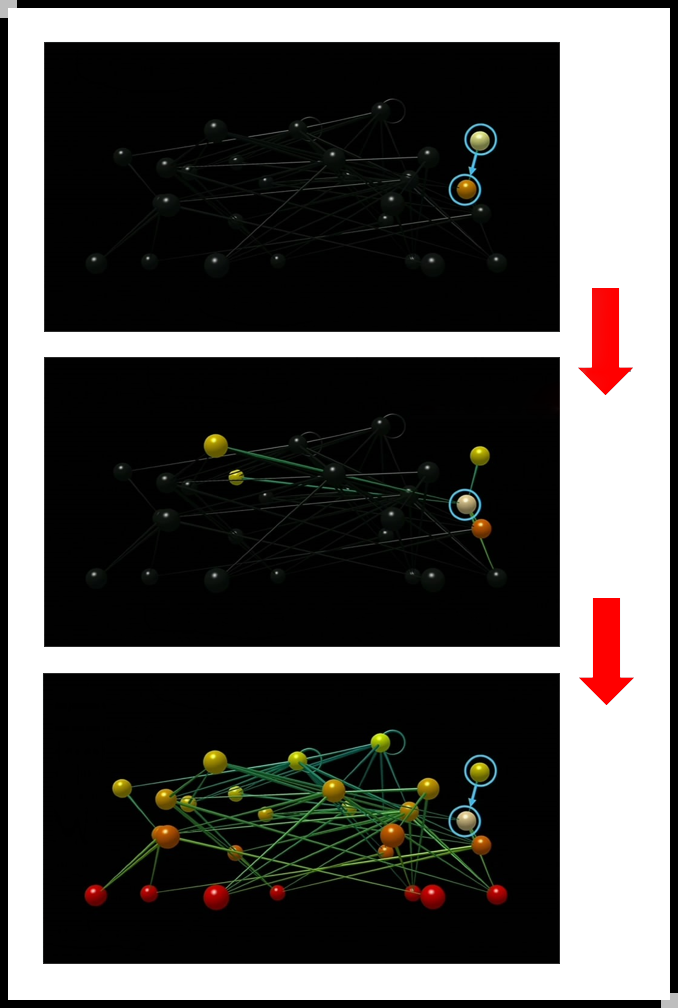
Oliver Wendell Holmes Sr.
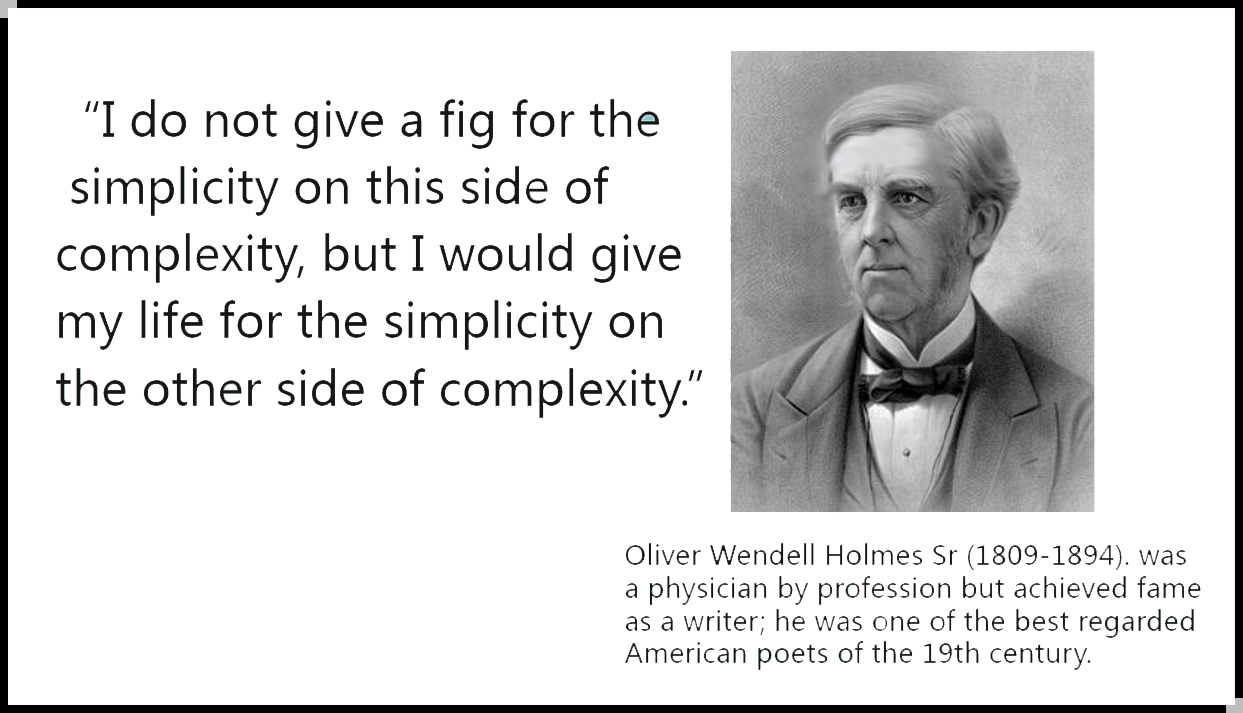
ty on the Other Side of Complexity
●Chaos is order misunderstood. Alexander Pope. |
●Complexity is simplicity misunderstood. Irv & Alison Dardik. |
●Confusion is a word we have invented for an order that is not yet understood. Henry Miller. |
自有人类文明以来的四个重大问题:
| ● 今天中午吃什么? |
| ● 她/他晚上会和我一起去看电影吗? |
● 自然是什么? 20th Century Physics M theory – the 11-dimensional universe that explains everything, but is beyond the scope of experimental verification (requires big bang conditions). |
● 生命是什么? 21st Century Biology+PhysicsComplexity Answer as yet unknown, but approachable. |

