
Word Family II

程华明

目录

  • 1 Starter 开篇
    • 1.1 A    How to use a unit
    • 1.2 B    How to learn new words
    • 1.3 C    Abbreviations and symbols
  • 2 Learning 学习
    • 2.1 1  I can talk about vocabulary learning
    • 2.2 2  I can describe my progress and aims
    • 2.3 3  I can understand a learner’s dictionary
    • 2.4 4  I can talk about English punctuation
    • 2.5 Review
  • 3 People 人
    • 3.1 5  I can talk about appearance
    • 3.2 6  I can talk about character
    • 3.3 7  I can describe my feelings
    • 3.4 8  I can talk about relationships
    • 3.5 9  I can talk about families
    • 3.6 10  I can talk about weddings and funerals
    • 3.7 Review
  • 4 The world around us 周围的世界
    • 4.1 11  I can describe the universe
    • 4.2 12  I can talk about rivers and the sea
    • 4.3 13  I can describe the climate
    • 4.4 14  I can describe natural disasters
    • 4.5 15  I can describe animals and insects
    • 4.6 Review
  • 5 Daily life 日常生活
    • 5.1 16  I can describe a range of food
    • 5.2 17  I can talk about diets and cooking
    • 5.3 18  I can talk about money
    • 5.4 19  I can talk about sleep
    • 5.5 20  I can talk about injuries
    • 5.6 21  I can talk about cars and driving
    • 5.7 22  I can describe travel problems and accidents
    • 5.8 23  I can talk about clothes and fashion
    • 5.9 Review
  • 6 Getting things done 完成每一件事
    • 6.1 24  I can describe a visit to the dentist
    • 6.2 25  I can describe hospital procedures
    • 6.3 26  I can explain household tasks
    • 6.4 27  I can describe housework
    • 6.5 28  I can talk to a hairdresser
    • 6.6 Review
  • 7 Describing things 描述事物
    • 7.1 29  I can describe urban life
    • 7.2 30  I can describe parts of a building
    • 7.3 31  I can describe objects
    • 7.4 32  I can describe the senses
    • 7.5 33  I can describe a painting
    • 7.6 34  I can describe actions
    • 7.7 Review
  • 8 Social and political  issues 社会与政治话题
    • 8.1 35  I can talk about crime
    • 8.2 36  I can describe the justice system
    • 8.3 37  I can discuss health issues
    • 8.4 38  I can talk about politics
    • 8.5 39  I can talk about war and peace
    • 8.6 40  I can talk about events in history
    • 8.7 Review
  • 9 Media and entertainment 媒体与娱乐
    • 9.1 41  I can understand newspapers
    • 9.2 42  I can talk about films
    • 9.3 43  I can talk about art and photography
    • 9.4 44  I can talk about music
    • 9.5 45  I can talk about people and places in sport
    • 9.6 46  I can describe sporting events
    • 9.7 47  I can talk about books
    • 9.8 48  I can describe festivals
    • 9.9 Review
  • 10 Work and study 工作与学习
    • 10.1 49  I can get through exams
    • 10.2 50  I can describe university life
    • 10.3 51  I can apply for a job
    • 10.4 52  I can describe jobs
    • 10.5 53  I can describe a career
    • 10.6 54  I can describe working conditions
    • 10.7 Review
  • 11 Business 商务
    • 11.1 55  I can talk about finance
    • 11.2 56  I can talk about companies
    • 11.3 57  I can describe a successful business
    • 11.4 58  I can discuss marketing
    • 11.5 Review
  • 12 Social English 社交英语
    • 12.1 59  I can express probability
    • 12.2 60  I can explain similarities and differences
    • 12.3 61  I can make arrangements to meet
    • 12.4 62  I can discuss my likes and dislikes
    • 12.5 63  I can give my opinion
    • 12.6 64  I can talk about rules
    • 12.7 65  I can discuss hopes and plans
    • 12.8 66  I can express dissatisfaction
    • 12.9 67  I can understand warnings
    • 12.10 Review
  • 13 Language 语言
    • 13.1 68  I can use link words
    • 13.2 69  I can use a range of adjectives
    • 13.3 70  I can express place and time
    • 13.4 71  I can use prepositions in phrases
    • 13.5 72  I can use prefixes
    • 13.6 73  I can use suffixes
    • 13.7 74  I can use verb patterns
    • 13.8 75  I can use phrasal verbs
    • 13.9 76  I can use a range of adverbs
    • 13.10 Review
  • 14 Styles of English 英语文体
    • 14.1 77  I can recognize informal English
    • 14.2 78  I can write a formal letter
    • 14.3 79  I can understand abbreviations and short forms
    • 14.4 80  I can understand American English
    • 14.5 Review
  • 15 Vocabulary building 构词表
  • 16 Spotlight boxes 词汇要点
  • 17 Word list 单词表
48  I can describe festivals

48   I can describe festivals

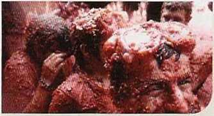
'LA TOMATINA': THE WORLD’S BIGGEST TOMATO FIGHT

The event takes place every August in Bunol, Spain. People come from all over the world to participate in this huge social occasion, which includes music, parades, dancing, and fireworks. The main event is a tomato fight in which 100 tons of over-ripe tomatoes are thrown in the streets. Trucks bring the tomatoes into the town, and the fight begins; it ends after exactly one hour. No one is very sure how or why this festival started!
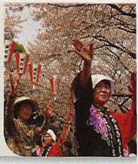
CHERRY BLOSSOM FESTIVAL, JAPAN 

Cherry blossom is the national flower of Japan. And as spring approaches, people make special trips to various viewing sites to see the first signs of the cherry trees in flower. The trees are sometimes lit up at night. The festival includes all sorts of delicious food, games, rides, parades, folk music, religious ceremonies, and a beauty contest.
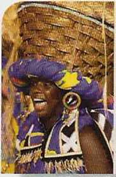
THE RIO CARNIVAL (‘CARNAVAL’)

One of the most spectacular entertainments in the world, Carnival is a wild four-day celebration of music, dance, and food and drink, all over Rio. The event means a lot to the people from the poorest neighbourhoods, who spend months in preparation. It is an opportunity for the whole community to go out and have fun together. It ends with the Samba Parade, for which the performers dress up in the most striking costumes.


spotlight  festival, carnival, parade

A festival is a day or days when people celebrate something, often a religious event. A carnival is like a festival with people dancing and playing music in the streets. A parade is an organized event in which people move (parade V) through the streets, often on special vehicles, wearing costumes (special clothes), and playing music.


Glossary

participate (in sth)  become part of an activity. SYN take part in sth.

occasion  a time when sth happens.

fireworks   objects that burn or explode in the sky with colours and noise.

ton   a unit for measuring weight in Britain (one ton = 1,016 kilograms).

throw sth   use your hand and arm to send an object through the air.

blossom   a flower or mass of flowers especially on fruit trees in spring.

approach sb/sth  come nearer to sb/sth.

light sth up   make sth bright with light. SYN illuminate sth.

contest   a competition to see who is the best (e.g. a beauty contest).

spectacular   very impressive; large, beautiful, and often with lots of colour.

entertainment  an activity that people enjoy watching and listening to, e.g. theatre, film, music (the people who entertain you are entertainers).

wild  exciting and enjoyable.

mean a lot to sb   be very important to sb.

neighbourhood   an area of a town and the people who live there.

community   all the people who live in an area or town.

have fun  enjoy yourself.

dress up  put on special clothes either for fun or for a formal event.

striking  very attractive in a way that causes people to notice.


6    ABOUT YOUR COUNTRY Write your answers to the questions in Exercise 4, or ask another student.

Answers from a German person

1     The ‘Oktoberfest’ in Munich is a very important and popular festival. It was originally a harvest festival.

2     No, they don’t.

3     Yes. There are lots of local bands playing and there’s a fairground.

4     No, I haven’t taken part in a parade.

5     Yes, at ‘Fasching’ in February, when I was small, my mum dressed me up as a mouse!

6     Yes, on New Year’s Eve.

7     Not really, but I can understand why a lot of people like tradition.

8     Yes, I’d like to participate in ‘La Tomatina’ because I think it would be a lot of fun throwing tomatoes at other people!