22 I can describe travel problems and accidents
A Trains and
planes
‘We
had trouble getting to the airport
because we got held up in traffic.’
‘I
wanted to leave at 8:30, but my day return was only valid after 9:30.’
‘The
train was due at 9:42 but it didn’t get in until 10:25.’
‘I
was late because they cancelled my
train without warning.’
‘The
flight from Heathrow was delayed, so I missed my connecting flight to
Palermo.’
‘My
brother was meant to pick me up at the airport, but he didn’t turn up.’
Glossary
trouble (doing
sth/with sth) a situation
that causes a problem.
get/be held up If you get held up or are held up, sth has caused you to be late. SYN be delayed.
day return a ticket to travel to a place and back again
on the same day.
valid acceptable and able to be used.
due expected to arrive or happen.
get in (usually of a train or coach) arrive.
cancel sth decide that sth that has been planned will not
happen.
warning information that sth bad may happen.
connecting flight a flight that leaves soon after another one arrives.
meant to do sth If sb is or was meant to do sth, they have
been asked to do it.
pick sb/sth up go to a place and collect sb/sth (usually in a
car).
turn up arrive or appear (often used in the negative).
3 ABOUT YOUR COUNTRY Write your answers or ask another student.
1 Do most trains get in on time, or are they
often delayed? If delayed, why?
________________
2 When did you last miss a train or plane? Why, and what happened?
________________
Answers
from a British person
1 Trains are often delayed, because of work to repair the track.
2 I have never missed a train or a plane (but
I’ve often missed the ferry to France).
B On the roads
Hi
Sammy
We’ve
just got back from a little trip to
Spain. We stayed overnight in
Malaga, then hired a car and drove up to Seville, stopping off at Osuna on the way. We loved Seville - you really must go there.
We
also went down to Cadiz, via Jerez,
but the journey was a nightmare! We got stuck in a traffic jam for hours, and when we finally ended up on the outskirts of Cadiz, there was more heavy traffic because of the rush hour. Still, it was nice when we got there. We went to...
spotlight way
The way is the route or direction that
you need to take to get somewhere.
Is this the way to the bank?
I went the wrong way and got lost.
We stopped on the way to Scotland.
I saw him on my way to school.
Glossary
trip a journey to a place and back again, for
business or pleasure, often for a short period of time (e.g. a day trip, a business trip).
overnight for one night.
hire a car pay to use a car for a short time. SYN
rent a car.
stop off stop during a journey to do sth.
via going through a place (to get to another
place).
nightmare INF an experience that is very unpleasant.
get/be stuck be unable to move easily.
traffic jam a long line of cars moving very slowly.
end up find yourself in a place or situation you
didn’t plan.
the outskirts (PL N) The outer part of a town or city is called the
outskirts.
heavy traffic a lot of cars on the road at a particular
time.
the rush hour the time when a lot of people are travelling to and from work.
4 Match words above with words below to make eight more words or phrases.
heavy rush hire traffic
the wrong stop get end on
off way traffic stuck up
a car hour the way jam
► heavy traffic
________ ________ ________ ________
________ ________ ________ ________
get stuck
end up
rush hour
traffic jam
stop off
on the way
the wrong way
hire a car
7 ABOUT YOU Write your answers to Exercise 6, or ask
another student.
Answers
from a British person
1 I hired a car in Germany when my boyfriend
came to visit me so we could go to the coast.
2 On really long journeys, I like to stop off
somewhere to have a break, but mostly I prefer to get from A to B as quickly as
possible, so long as it’s not dangerous.
3 I get stuck in traffic in Headington, on the outskirts of Oxford, every evening on my way home.
4 I sometimes go on day trips to London or
Bath.
C A road accident
Here
is the latest travel news...
There’s
been a serious accident on the M3 outside Winchester.
It occurred just after 7.00 a.m., when
a van skidded on the wet road and collided with other vehicles. The accident has blocked two lanes of the motorway. Emergency services are at the scene of the
accident, and motorists are being advised to avoid the area.
And
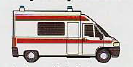
on the M23 at Junction 9 near Gatwick, an ambulance has broken down while taking an injured driver to hospital. This is
causing delays for traffic on the way to the airport...
Glossary
serious accident a bad or dangerous accident.
occur FML happen, especially in a way that has not been
planned.
van

skid suddenly move forwards or sideways without any
control.
collide with sth hit sth very hard while
moving. SYN crash into sth.
vehicle FML e.g. a car, bike, bus, or lorry
block a road, etc. make it difficult for anything to pass.
lane a part of a wide road marked by painted white
lines.
emergency services the police, ambulance, and fire services.
avoid sb/sth stay away from sb/sth.
ambulance
break down (of a vehicle) stop working
injured hurt physically.
9 Replace the underlined word or phrase with a word or phrase that has the same meaning.
► Was it a bad accident? serious
1 Fortunately the driver wasn’t hurt. ____
2 There are too many cars, vans, and lorries on the road. ____
3 The van crashed into another car. ____
4 The car went sideways out of control on the icy road. ____
5 The police and an ambulance arrived within minutes. ____
6 The accident happened late last night. ____
1 injured
2 vehicles
3 collided with
4 skidded
5 emergency services
6 occurred
11 Test yourself. Cover the glossary words and
look at the meanings. Say the words.

