Word Family II

程华明

目录

  • 1 Starter 开篇
    • 1.1 A    How to use a unit
    • 1.2 B    How to learn new words
    • 1.3 C    Abbreviations and symbols
  • 2 Learning 学习
    • 2.1 1  I can talk about vocabulary learning
    • 2.2 2  I can describe my progress and aims
    • 2.3 3  I can understand a learner’s dictionary
    • 2.4 4  I can talk about English punctuation
    • 2.5 Review
  • 3 People 人
    • 3.1 5  I can talk about appearance
    • 3.2 6  I can talk about character
    • 3.3 7  I can describe my feelings
    • 3.4 8  I can talk about relationships
    • 3.5 9  I can talk about families
    • 3.6 10  I can talk about weddings and funerals
    • 3.7 Review
  • 4 The world around us 周围的世界
    • 4.1 11  I can describe the universe
    • 4.2 12  I can talk about rivers and the sea
    • 4.3 13  I can describe the climate
    • 4.4 14  I can describe natural disasters
    • 4.5 15  I can describe animals and insects
    • 4.6 Review
  • 5 Daily life 日常生活
    • 5.1 16  I can describe a range of food
    • 5.2 17  I can talk about diets and cooking
    • 5.3 18  I can talk about money
    • 5.4 19  I can talk about sleep
    • 5.5 20  I can talk about injuries
    • 5.6 21  I can talk about cars and driving
    • 5.7 22  I can describe travel problems and accidents
    • 5.8 23  I can talk about clothes and fashion
    • 5.9 Review
  • 6 Getting things done 完成每一件事
    • 6.1 24  I can describe a visit to the dentist
    • 6.2 25  I can describe hospital procedures
    • 6.3 26  I can explain household tasks
    • 6.4 27  I can describe housework
    • 6.5 28  I can talk to a hairdresser
    • 6.6 Review
  • 7 Describing things 描述事物
    • 7.1 29  I can describe urban life
    • 7.2 30  I can describe parts of a building
    • 7.3 31  I can describe objects
    • 7.4 32  I can describe the senses
    • 7.5 33  I can describe a painting
    • 7.6 34  I can describe actions
    • 7.7 Review
  • 8 Social and political  issues 社会与政治话题
    • 8.1 35  I can talk about crime
    • 8.2 36  I can describe the justice system
    • 8.3 37  I can discuss health issues
    • 8.4 38  I can talk about politics
    • 8.5 39  I can talk about war and peace
    • 8.6 40  I can talk about events in history
    • 8.7 Review
  • 9 Media and entertainment 媒体与娱乐
    • 9.1 41  I can understand newspapers
    • 9.2 42  I can talk about films
    • 9.3 43  I can talk about art and photography
    • 9.4 44  I can talk about music
    • 9.5 45  I can talk about people and places in sport
    • 9.6 46  I can describe sporting events
    • 9.7 47  I can talk about books
    • 9.8 48  I can describe festivals
    • 9.9 Review
  • 10 Work and study 工作与学习
    • 10.1 49  I can get through exams
    • 10.2 50  I can describe university life
    • 10.3 51  I can apply for a job
    • 10.4 52  I can describe jobs
    • 10.5 53  I can describe a career
    • 10.6 54  I can describe working conditions
    • 10.7 Review
  • 11 Business 商务
    • 11.1 55  I can talk about finance
    • 11.2 56  I can talk about companies
    • 11.3 57  I can describe a successful business
    • 11.4 58  I can discuss marketing
    • 11.5 Review
  • 12 Social English 社交英语
    • 12.1 59  I can express probability
    • 12.2 60  I can explain similarities and differences
    • 12.3 61  I can make arrangements to meet
    • 12.4 62  I can discuss my likes and dislikes
    • 12.5 63  I can give my opinion
    • 12.6 64  I can talk about rules
    • 12.7 65  I can discuss hopes and plans
    • 12.8 66  I can express dissatisfaction
    • 12.9 67  I can understand warnings
    • 12.10 Review
  • 13 Language 语言
    • 13.1 68  I can use link words
    • 13.2 69  I can use a range of adjectives
    • 13.3 70  I can express place and time
    • 13.4 71  I can use prepositions in phrases
    • 13.5 72  I can use prefixes
    • 13.6 73  I can use suffixes
    • 13.7 74  I can use verb patterns
    • 13.8 75  I can use phrasal verbs
    • 13.9 76  I can use a range of adverbs
    • 13.10 Review
  • 14 Styles of English 英语文体
    • 14.1 77  I can recognize informal English
    • 14.2 78  I can write a formal letter
    • 14.3 79  I can understand abbreviations and short forms
    • 14.4 80  I can understand American English
    • 14.5 Review
  • 15 Vocabulary building 构词表
  • 16 Spotlight boxes 词汇要点
  • 17 Word list 单词表
57  I can describe a successful business

57   I can describe a successful business

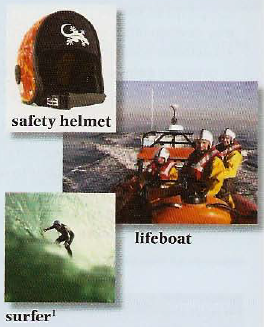
GECKO HEADGEAR Ltd is a designer and manufacturer of safety helmets for use at sea. The company was founded in 1993 by Jeff Sacree and it started by selling surfboards. However, surfing is a seasonal business, and Jeff realized he needed to diversify. Fortunately, he was able to exploit a gap in the market.

‘As a surfer1, I could see the potential for a light helmet that gave protection and retained heat.’ He made one and sold a few to other surfers. He then did some research and discovered that men who worked in lifeboats might also be interested in his helmet. It would have to be adapted for their use, and for that he needed investment: he took out a bank loan and employed more staff. ‘A good relationship with the bank is crucial if you’re developing an innovative product. In our case the process took three years.’

After the contract to supply helmets for the lifeboats was successful. Jeff developed different types of helmet for different uses, and has always used customer feedback to refine the product.

‘Partnerships with suppliers have also been a key factor in our success. We’ve worked closely with different manufacturers, and this has helped us to keep ahead of rivals.’


Glossary

manufacturer  a person or company that makes things using machines.  manufacture V. SYNS producer. produce V.         

found sth  start an organization (the person is the founder).

diversify  introduce a wider range of products.      

exploit sth  make the best possible use of sth. exploitation N.           

a gap in the market  an opportunity to create a new product, which has not been produced by other companies.      

potential  the ability to develop into sth or sth better in the future.   

retain sth  keep or continue to have sth. retention N.   

do research  do a careful study of sth to find out more information.       

investment  the activity of putting money into sth,hoping that you will make more money as a result. invest in sth V.

crucial   very important.

innovative  introducing new ideas. innovate V. innovation N.

case  situation.

contract  a written legal agreement (a person signs acontract).

feedback  information and comments from people who haveused sth.

partnership  a relationship between two people ororganizations.

key  very important.

factor  one of the things that influences a decisionor affects a situation.

keep ahead (of sb)  stay in front of sb.


spotlight  verbs of change         

To alter sth means to change sth, but not completely.            

We’ve had to alter our plans.         

To adapt sth means to change sth so you can use it in a different situation.

We’ve adapted the product for the Asian market.       

To refine sth means to change sth a little to make it better.   

They have refined the products over several years.            


1     Answer these questions (you may need to read the text again).

►   What is Gecko Headgear? A company that manufacture safety helmets.

1     When was it founded? ________________

2     Why did Jeff need to diversify? ________________

3     What qualities did the helmet have to have?

a) it had to be light

b) ________________

c) ________________

4     How did Jeff discover that men in lifeboats were potential users? ________________

5     How did he get the money for extra staff? ________________

6     What does he say about the relationship with a bank? ________________

7     What information has he used to refine the products? ________________

8     What was a key factor in his success? ________________


1     1993.

2     Because surfing was a seasonal business.

3     b) it had to give protection

c) it had to retain heat

4     He did some research.

5     He took out a bank loan.

6     It’s crucial to have a good relationship.

7     Feedback from his customers.

8     A good partnership with suppliers.


5     Test yourself. Cover the glossary meanings and look at the words. What are the meanings?