
Word Family II

程华明

目录

  • 1 Starter 开篇
    • 1.1 A    How to use a unit
    • 1.2 B    How to learn new words
    • 1.3 C    Abbreviations and symbols
  • 2 Learning 学习
    • 2.1 1  I can talk about vocabulary learning
    • 2.2 2  I can describe my progress and aims
    • 2.3 3  I can understand a learner’s dictionary
    • 2.4 4  I can talk about English punctuation
    • 2.5 Review
  • 3 People 人
    • 3.1 5  I can talk about appearance
    • 3.2 6  I can talk about character
    • 3.3 7  I can describe my feelings
    • 3.4 8  I can talk about relationships
    • 3.5 9  I can talk about families
    • 3.6 10  I can talk about weddings and funerals
    • 3.7 Review
  • 4 The world around us 周围的世界
    • 4.1 11  I can describe the universe
    • 4.2 12  I can talk about rivers and the sea
    • 4.3 13  I can describe the climate
    • 4.4 14  I can describe natural disasters
    • 4.5 15  I can describe animals and insects
    • 4.6 Review
  • 5 Daily life 日常生活
    • 5.1 16  I can describe a range of food
    • 5.2 17  I can talk about diets and cooking
    • 5.3 18  I can talk about money
    • 5.4 19  I can talk about sleep
    • 5.5 20  I can talk about injuries
    • 5.6 21  I can talk about cars and driving
    • 5.7 22  I can describe travel problems and accidents
    • 5.8 23  I can talk about clothes and fashion
    • 5.9 Review
  • 6 Getting things done 完成每一件事
    • 6.1 24  I can describe a visit to the dentist
    • 6.2 25  I can describe hospital procedures
    • 6.3 26  I can explain household tasks
    • 6.4 27  I can describe housework
    • 6.5 28  I can talk to a hairdresser
    • 6.6 Review
  • 7 Describing things 描述事物
    • 7.1 29  I can describe urban life
    • 7.2 30  I can describe parts of a building
    • 7.3 31  I can describe objects
    • 7.4 32  I can describe the senses
    • 7.5 33  I can describe a painting
    • 7.6 34  I can describe actions
    • 7.7 Review
  • 8 Social and political  issues 社会与政治话题
    • 8.1 35  I can talk about crime
    • 8.2 36  I can describe the justice system
    • 8.3 37  I can discuss health issues
    • 8.4 38  I can talk about politics
    • 8.5 39  I can talk about war and peace
    • 8.6 40  I can talk about events in history
    • 8.7 Review
  • 9 Media and entertainment 媒体与娱乐
    • 9.1 41  I can understand newspapers
    • 9.2 42  I can talk about films
    • 9.3 43  I can talk about art and photography
    • 9.4 44  I can talk about music
    • 9.5 45  I can talk about people and places in sport
    • 9.6 46  I can describe sporting events
    • 9.7 47  I can talk about books
    • 9.8 48  I can describe festivals
    • 9.9 Review
  • 10 Work and study 工作与学习
    • 10.1 49  I can get through exams
    • 10.2 50  I can describe university life
    • 10.3 51  I can apply for a job
    • 10.4 52  I can describe jobs
    • 10.5 53  I can describe a career
    • 10.6 54  I can describe working conditions
    • 10.7 Review
  • 11 Business 商务
    • 11.1 55  I can talk about finance
    • 11.2 56  I can talk about companies
    • 11.3 57  I can describe a successful business
    • 11.4 58  I can discuss marketing
    • 11.5 Review
  • 12 Social English 社交英语
    • 12.1 59  I can express probability
    • 12.2 60  I can explain similarities and differences
    • 12.3 61  I can make arrangements to meet
    • 12.4 62  I can discuss my likes and dislikes
    • 12.5 63  I can give my opinion
    • 12.6 64  I can talk about rules
    • 12.7 65  I can discuss hopes and plans
    • 12.8 66  I can express dissatisfaction
    • 12.9 67  I can understand warnings
    • 12.10 Review
  • 13 Language 语言
    • 13.1 68  I can use link words
    • 13.2 69  I can use a range of adjectives
    • 13.3 70  I can express place and time
    • 13.4 71  I can use prepositions in phrases
    • 13.5 72  I can use prefixes
    • 13.6 73  I can use suffixes
    • 13.7 74  I can use verb patterns
    • 13.8 75  I can use phrasal verbs
    • 13.9 76  I can use a range of adverbs
    • 13.10 Review
  • 14 Styles of English 英语文体
    • 14.1 77  I can recognize informal English
    • 14.2 78  I can write a formal letter
    • 14.3 79  I can understand abbreviations and short forms
    • 14.4 80  I can understand American English
    • 14.5 Review
  • 15 Vocabulary building 构词表
  • 16 Spotlight boxes 词汇要点
  • 17 Word list 单词表
45  I can talk about people and places in sport

45   I can talk about people and places in sport

A    People

Word  Example  Meaning

referee  ref  INF The referee gave out five yellow cards.  the official person in control in some sports (in tennis this is an umpire).

linesman  The linesman put his flag up for offside, but I think he was wrong.  a person who helps the referee in some sports. SYN referee’s assistant.

manager  Jose Mourinho has been manager of Porto and Chelsea.  the person in control of a football team (also coach in some countries).

coach  Andy Murray has a new tennis coach.  a person who gives practical teaching to make sb better in a sport.

captain  Fabio Cannavaro was the Italian captain in the 2006 World Cup.  the player who is leader of the team.

spectators  Spectators ran onto the pitch (= the area where the game is played). people who watch a game (also the crowd).

supporters  Many football supporters travel all over Europe to see their team.  people who regularly watch a team play. SYN fans. support V.

commentator  I thought the commentator was talking rubbish.  a person who describes a game on TV or the radio.


spotlight  suffix –er and player

We usually add -er or player to a noun or verb for the person who does a sport: golfer, swimmer, skier, racing driver, boxer, tennis player, rugby player.

But: athletics/athlete, gymnastics/gymnast.


B    Places

The Camp Nou Stadium, the ground of Barcelona football club, is the largest stadium in Europe with a capacity of 98,800 spectators.

Hochenheim is a motor-racing circuit where the German Grand Prix sometimes takes place. One lap of the track is 4.574 kms.

The Centre Court at Wimbledon is famous worldwide. Now they have constructed the new roof, the All England Championship won’t be interrupted because of rain.

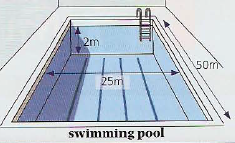
standard Olympic swimming pool is 50 metres long, 25 metres wide, and has a minimum depth of two metres.


Glossary

stadium  a large structure where people sit and watch sport.

ground  an area of land where a game is played and people watch.

club  A football club is the team, the management, and the ground.

capacity  the amount or number that a space or container will hold.

circuit  an area of land, often in a circle, where a race takes place. SYN track.

lap  one journey around a track.

court  a place where tennis, basketball, or badminton are played.

worldwide  everywhere in the world. SYN all over the world.

construct sth  build or make sth. construction N.

championship  a competition to find the best player or team in a sport.

interrupt sth  stop the progress of sth for a short period of time.

standard  normal; average.

minimum  smallest possible or smallest allowed. OPP maximum.


spotlight  long, wide, deep

Long, wide, and deep can describe measurements.

The pool is 50 metres long.

= The length of the pool is 50 metres.

The pool is 25 metres wide.

= The width of the pool is 25 metres.

The pool is 2 metres deep.

= The depth of the pool is 2 metres.

5     Complete the words in each text.

1     Liverpool Football club is planning to c____ a new football s____, with a c____ of over 60,000.

2     The Chinese Grand Prix is raced over 56 l____ of the Shanghai International C____.

It’s the most expensive t____ ever c____, costing $240m.

3     The French Open Tennis C____ at Roland Garros is famous w____ as the only one of the four major tournaments that is played on clay c____s.

4     Unfortunately we don’t have a s____ Olympic swimming p____. The one we use for competitions is only 25 metres l____ and 15 metres w____. The m____ d____ is one metre, and the m____ is two metres. 

1     construct, stadium, capacity

2     laps, Circuit, track, constructed

3     Championship, worldwide, courts

4     standard, pool, long, wide, minimum, depth, maximum