Word Family II

程华明

目录

  • 1 Starter 开篇
    • 1.1 A    How to use a unit
    • 1.2 B    How to learn new words
    • 1.3 C    Abbreviations and symbols
  • 2 Learning 学习
    • 2.1 1  I can talk about vocabulary learning
    • 2.2 2  I can describe my progress and aims
    • 2.3 3  I can understand a learner’s dictionary
    • 2.4 4  I can talk about English punctuation
    • 2.5 Review
  • 3 People 人
    • 3.1 5  I can talk about appearance
    • 3.2 6  I can talk about character
    • 3.3 7  I can describe my feelings
    • 3.4 8  I can talk about relationships
    • 3.5 9  I can talk about families
    • 3.6 10  I can talk about weddings and funerals
    • 3.7 Review
  • 4 The world around us 周围的世界
    • 4.1 11  I can describe the universe
    • 4.2 12  I can talk about rivers and the sea
    • 4.3 13  I can describe the climate
    • 4.4 14  I can describe natural disasters
    • 4.5 15  I can describe animals and insects
    • 4.6 Review
  • 5 Daily life 日常生活
    • 5.1 16  I can describe a range of food
    • 5.2 17  I can talk about diets and cooking
    • 5.3 18  I can talk about money
    • 5.4 19  I can talk about sleep
    • 5.5 20  I can talk about injuries
    • 5.6 21  I can talk about cars and driving
    • 5.7 22  I can describe travel problems and accidents
    • 5.8 23  I can talk about clothes and fashion
    • 5.9 Review
  • 6 Getting things done 完成每一件事
    • 6.1 24  I can describe a visit to the dentist
    • 6.2 25  I can describe hospital procedures
    • 6.3 26  I can explain household tasks
    • 6.4 27  I can describe housework
    • 6.5 28  I can talk to a hairdresser
    • 6.6 Review
  • 7 Describing things 描述事物
    • 7.1 29  I can describe urban life
    • 7.2 30  I can describe parts of a building
    • 7.3 31  I can describe objects
    • 7.4 32  I can describe the senses
    • 7.5 33  I can describe a painting
    • 7.6 34  I can describe actions
    • 7.7 Review
  • 8 Social and political  issues 社会与政治话题
    • 8.1 35  I can talk about crime
    • 8.2 36  I can describe the justice system
    • 8.3 37  I can discuss health issues
    • 8.4 38  I can talk about politics
    • 8.5 39  I can talk about war and peace
    • 8.6 40  I can talk about events in history
    • 8.7 Review
  • 9 Media and entertainment 媒体与娱乐
    • 9.1 41  I can understand newspapers
    • 9.2 42  I can talk about films
    • 9.3 43  I can talk about art and photography
    • 9.4 44  I can talk about music
    • 9.5 45  I can talk about people and places in sport
    • 9.6 46  I can describe sporting events
    • 9.7 47  I can talk about books
    • 9.8 48  I can describe festivals
    • 9.9 Review
  • 10 Work and study 工作与学习
    • 10.1 49  I can get through exams
    • 10.2 50  I can describe university life
    • 10.3 51  I can apply for a job
    • 10.4 52  I can describe jobs
    • 10.5 53  I can describe a career
    • 10.6 54  I can describe working conditions
    • 10.7 Review
  • 11 Business 商务
    • 11.1 55  I can talk about finance
    • 11.2 56  I can talk about companies
    • 11.3 57  I can describe a successful business
    • 11.4 58  I can discuss marketing
    • 11.5 Review
  • 12 Social English 社交英语
    • 12.1 59  I can express probability
    • 12.2 60  I can explain similarities and differences
    • 12.3 61  I can make arrangements to meet
    • 12.4 62  I can discuss my likes and dislikes
    • 12.5 63  I can give my opinion
    • 12.6 64  I can talk about rules
    • 12.7 65  I can discuss hopes and plans
    • 12.8 66  I can express dissatisfaction
    • 12.9 67  I can understand warnings
    • 12.10 Review
  • 13 Language 语言
    • 13.1 68  I can use link words
    • 13.2 69  I can use a range of adjectives
    • 13.3 70  I can express place and time
    • 13.4 71  I can use prepositions in phrases
    • 13.5 72  I can use prefixes
    • 13.6 73  I can use suffixes
    • 13.7 74  I can use verb patterns
    • 13.8 75  I can use phrasal verbs
    • 13.9 76  I can use a range of adverbs
    • 13.10 Review
  • 14 Styles of English 英语文体
    • 14.1 77  I can recognize informal English
    • 14.2 78  I can write a formal letter
    • 14.3 79  I can understand abbreviations and short forms
    • 14.4 80  I can understand American English
    • 14.5 Review
  • 15 Vocabulary building 构词表
  • 16 Spotlight boxes 词汇要点
  • 17 Word list 单词表
43  I can talk about art and photography

43   I can talk about art and photography

A    Painting and drawing

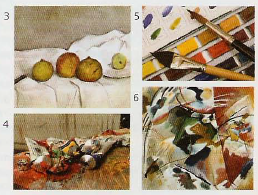
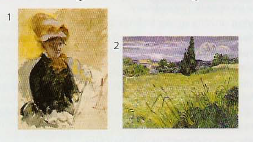
At an art exhibition, a variety of paintings and drawings may be on display: for example, portraits1, landscapes2, and still lifes3 (note the plural here is lifes, not lives). Some artists work in oils (oil paints)4, while others use watercolours5.

Styles vary too: some works of art are realistic, others are abstract6Skilled artists use a range of techniques to create different sorts of effects.


Glossary

exhibition  a collection of paintings, objects, etc. that are shown in public.

variety  a number of different types of the same thing. vary V.

drawing  a picture made with a pencil, pen. etc., but not paint.

on display  being shown in a place where people will see it. SYN on show.

style  the way that sth is painted, drawn, built, etc.

work of art  a very good painting, drawing, book, etc. (a really great work of art. e.g. Mona Lisa by Leonardo da Vinci, is a masterpiece).

realistic  showing things as they are. realism N.

skilled  having the ability and experience to do sth well. SYN expert.

technique  a particular way of doing sth, often needing special skills.

create sth  cause sth new to happen: produce sth new.

sort  a type or kind.


3     Test yourself. Cover the words and look at the picture. Can you remember the words?


B    Photography
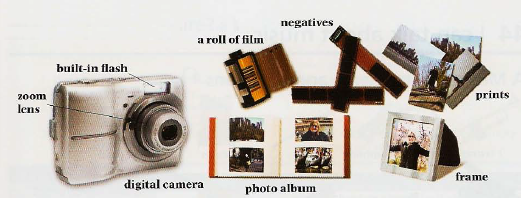
Word    Example      Meaning

out of focus  The photos are out of focus.  not showing things clearly. OPP in focus.

focus on sth   I focused on the girl’s face.  change the camera until the image is clear.

transfer sth (from... to ...)  I transferred the photos from the camera to a laptop.  move sth from one place to another.

develop a film  Could I have this film developed, please?  Make pictures from a piece of film using chemicals.

automatic  With an automatic camera, photos are usually in focus.  able to work by itself without direct human control.

studio  She has a studio where she does fashion photography.  a room where a photographer or artist works.


spotlight  photography, photograph, etc.

Photography is the act of taking pictures or photos/photographs.

Someone who does this as a job is a photographer; someone who does it as a hobby is an amateur photographer.


5     Write the words in the correct order to form sentences.

►   I / film / please? / roll / have / a / could / of  Could I have a roll of film, please?

1     can / studio / in / films / develop / she / her  ________________

2     frame / the / put / photo / I / the / in  ________________

3     negative / two / please / of / can / prints / have / I / this? ________________

4     the / focused / the / in / he / girl / foreground / on  ________________

5     photographers / automatic / often / cameras / amateur / buy  ________________

6     you / computer / to / can / the / transfer / pictures / the  ________________


1     She can develop films in her studio.

2     I put the photo in the frame.

3     Can I have two prints of this negative please?

4     He focused on the girl in the foreground.

5     Amateur photographers often buy automatic cameras.

6     You can transfer the pictures to the computer.


6     ABOUT YOU Write your answers, or ask another student.

1     Are you interested in photography? If so, why? ________________

2     What kind of camera have you got? ________________

3     What features does it have? ________________

4     What kinds of problems do you have when you take pictures? ________________


Answers from a British person

1     I’m interested in taking photographs of beautiful scenery and wildlife.

2     I have a new Japanese digital camera.

3     It has a digital screen and a very good ‘zoom’ feature.

4     I find it hard to stop my hands shaking when I try to take photos at night without the flash.