
Word Family II

程华明

目录

  • 1 Starter 开篇
    • 1.1 A    How to use a unit
    • 1.2 B    How to learn new words
    • 1.3 C    Abbreviations and symbols
  • 2 Learning 学习
    • 2.1 1  I can talk about vocabulary learning
    • 2.2 2  I can describe my progress and aims
    • 2.3 3  I can understand a learner’s dictionary
    • 2.4 4  I can talk about English punctuation
    • 2.5 Review
  • 3 People 人
    • 3.1 5  I can talk about appearance
    • 3.2 6  I can talk about character
    • 3.3 7  I can describe my feelings
    • 3.4 8  I can talk about relationships
    • 3.5 9  I can talk about families
    • 3.6 10  I can talk about weddings and funerals
    • 3.7 Review
  • 4 The world around us 周围的世界
    • 4.1 11  I can describe the universe
    • 4.2 12  I can talk about rivers and the sea
    • 4.3 13  I can describe the climate
    • 4.4 14  I can describe natural disasters
    • 4.5 15  I can describe animals and insects
    • 4.6 Review
  • 5 Daily life 日常生活
    • 5.1 16  I can describe a range of food
    • 5.2 17  I can talk about diets and cooking
    • 5.3 18  I can talk about money
    • 5.4 19  I can talk about sleep
    • 5.5 20  I can talk about injuries
    • 5.6 21  I can talk about cars and driving
    • 5.7 22  I can describe travel problems and accidents
    • 5.8 23  I can talk about clothes and fashion
    • 5.9 Review
  • 6 Getting things done 完成每一件事
    • 6.1 24  I can describe a visit to the dentist
    • 6.2 25  I can describe hospital procedures
    • 6.3 26  I can explain household tasks
    • 6.4 27  I can describe housework
    • 6.5 28  I can talk to a hairdresser
    • 6.6 Review
  • 7 Describing things 描述事物
    • 7.1 29  I can describe urban life
    • 7.2 30  I can describe parts of a building
    • 7.3 31  I can describe objects
    • 7.4 32  I can describe the senses
    • 7.5 33  I can describe a painting
    • 7.6 34  I can describe actions
    • 7.7 Review
  • 8 Social and political  issues 社会与政治话题
    • 8.1 35  I can talk about crime
    • 8.2 36  I can describe the justice system
    • 8.3 37  I can discuss health issues
    • 8.4 38  I can talk about politics
    • 8.5 39  I can talk about war and peace
    • 8.6 40  I can talk about events in history
    • 8.7 Review
  • 9 Media and entertainment 媒体与娱乐
    • 9.1 41  I can understand newspapers
    • 9.2 42  I can talk about films
    • 9.3 43  I can talk about art and photography
    • 9.4 44  I can talk about music
    • 9.5 45  I can talk about people and places in sport
    • 9.6 46  I can describe sporting events
    • 9.7 47  I can talk about books
    • 9.8 48  I can describe festivals
    • 9.9 Review
  • 10 Work and study 工作与学习
    • 10.1 49  I can get through exams
    • 10.2 50  I can describe university life
    • 10.3 51  I can apply for a job
    • 10.4 52  I can describe jobs
    • 10.5 53  I can describe a career
    • 10.6 54  I can describe working conditions
    • 10.7 Review
  • 11 Business 商务
    • 11.1 55  I can talk about finance
    • 11.2 56  I can talk about companies
    • 11.3 57  I can describe a successful business
    • 11.4 58  I can discuss marketing
    • 11.5 Review
  • 12 Social English 社交英语
    • 12.1 59  I can express probability
    • 12.2 60  I can explain similarities and differences
    • 12.3 61  I can make arrangements to meet
    • 12.4 62  I can discuss my likes and dislikes
    • 12.5 63  I can give my opinion
    • 12.6 64  I can talk about rules
    • 12.7 65  I can discuss hopes and plans
    • 12.8 66  I can express dissatisfaction
    • 12.9 67  I can understand warnings
    • 12.10 Review
  • 13 Language 语言
    • 13.1 68  I can use link words
    • 13.2 69  I can use a range of adjectives
    • 13.3 70  I can express place and time
    • 13.4 71  I can use prepositions in phrases
    • 13.5 72  I can use prefixes
    • 13.6 73  I can use suffixes
    • 13.7 74  I can use verb patterns
    • 13.8 75  I can use phrasal verbs
    • 13.9 76  I can use a range of adverbs
    • 13.10 Review
  • 14 Styles of English 英语文体
    • 14.1 77  I can recognize informal English
    • 14.2 78  I can write a formal letter
    • 14.3 79  I can understand abbreviations and short forms
    • 14.4 80  I can understand American English
    • 14.5 Review
  • 15 Vocabulary building 构词表
  • 16 Spotlight boxes 词汇要点
  • 17 Word list 单词表
30  I can describe parts of a building

30   I can describe parts of a building

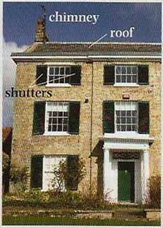
substantial and impressive semi-detached house full of original features, and just a short walk from the town centre.

Inside, the hall leads to two spacious reception rooms and an enormous kitchen. Upstairs there are four bedrooms and two bathrooms on the first and second floors, with a narrow staircase to a further bedroom in the attic. There is also a basement which could be converted into a separate one-bedroom flat, and a cellar currently used to store things.

Outside, the house has pretty shutters either side of the front windows. There is a lawn at the front, and a drive provides plenty of parking. There is also a small walled garden at the back.

Glossary

substantial  large and/or strong.

impressive  (of a building) large and very good to look at.

semi-detached  joined to one other house, forming a pair of houses.

original  existing from the time when sth was first made or done.

feature  an important part of sth, and often a part that you notice.

lead  If sth leads to a place, you can go along it to that place.

spacious  large, and having a lot of space.

enormous  very large. SYN huge. OPP tiny.

staircase  a set of stairs.

attic  the space or room under the roof of a house.

basement  a room or part of a building that is partly or completely below ground level.

convert sth into sth change sth from one form or use to another.

separate  not connected or together.

cellar  an underground room without windows, where things are often kept.

currently  at the moment (NOT actually).

store sth  keep sth in a place for future use. storage N.

lawn  an area of grass in a park or garden.

drive  a wide path for cars that leads to the front door of a house.

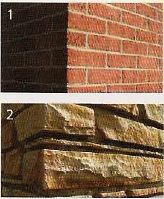
walled  If a garden or other area is walled, it has a wall around it (a wall is usually made of brick1 or stone2).


spotlight  passage, corridor, hall

passage is a long, narrow way with walls on both sides that leads somewhere, e.g. an underground passage.

corridor is a passage in a large building or on a train. A hall is a room or small passage just inside the entrance to a house. 


6     ABOUT YOU Write your answers or ask another student.

1     Have you got shutters at your windows? If so, are they on the outside or inside? ________

2     Have you got a garden with a lawn? If so, what do you use it for? ________

3     Is there an attic in your building? If so, what’s in it? ________

4     Have you got a basement or cellar? If so, what are they used for? ________

5     Is there a drive outside your building? ________

6     Would you describe any rooms in your home as spacious or tiny? ________


Answers from a British person

1     We don’t have shutters on our windows.

2     We do have a lawn. We sit out on it when the weather is warm.

3     Yes, there’s a small room we use for storage and a children’s bedroom.

4     We haven’t got a basement or a cellar, but we have got a garage where we store our bikes and the dustbins.

5     There’s a drive in front of the house.

6     Most of the rooms are quite spacious but the spare room is tiny. 


7     Test yourself. Look at the glossary words and cover the meanings. Can you remember the meanings?