Word Family II

程华明

目录

  • 1 Starter 开篇
    • 1.1 A    How to use a unit
    • 1.2 B    How to learn new words
    • 1.3 C    Abbreviations and symbols
  • 2 Learning 学习
    • 2.1 1  I can talk about vocabulary learning
    • 2.2 2  I can describe my progress and aims
    • 2.3 3  I can understand a learner’s dictionary
    • 2.4 4  I can talk about English punctuation
    • 2.5 Review
  • 3 People 人
    • 3.1 5  I can talk about appearance
    • 3.2 6  I can talk about character
    • 3.3 7  I can describe my feelings
    • 3.4 8  I can talk about relationships
    • 3.5 9  I can talk about families
    • 3.6 10  I can talk about weddings and funerals
    • 3.7 Review
  • 4 The world around us 周围的世界
    • 4.1 11  I can describe the universe
    • 4.2 12  I can talk about rivers and the sea
    • 4.3 13  I can describe the climate
    • 4.4 14  I can describe natural disasters
    • 4.5 15  I can describe animals and insects
    • 4.6 Review
  • 5 Daily life 日常生活
    • 5.1 16  I can describe a range of food
    • 5.2 17  I can talk about diets and cooking
    • 5.3 18  I can talk about money
    • 5.4 19  I can talk about sleep
    • 5.5 20  I can talk about injuries
    • 5.6 21  I can talk about cars and driving
    • 5.7 22  I can describe travel problems and accidents
    • 5.8 23  I can talk about clothes and fashion
    • 5.9 Review
  • 6 Getting things done 完成每一件事
    • 6.1 24  I can describe a visit to the dentist
    • 6.2 25  I can describe hospital procedures
    • 6.3 26  I can explain household tasks
    • 6.4 27  I can describe housework
    • 6.5 28  I can talk to a hairdresser
    • 6.6 Review
  • 7 Describing things 描述事物
    • 7.1 29  I can describe urban life
    • 7.2 30  I can describe parts of a building
    • 7.3 31  I can describe objects
    • 7.4 32  I can describe the senses
    • 7.5 33  I can describe a painting
    • 7.6 34  I can describe actions
    • 7.7 Review
  • 8 Social and political  issues 社会与政治话题
    • 8.1 35  I can talk about crime
    • 8.2 36  I can describe the justice system
    • 8.3 37  I can discuss health issues
    • 8.4 38  I can talk about politics
    • 8.5 39  I can talk about war and peace
    • 8.6 40  I can talk about events in history
    • 8.7 Review
  • 9 Media and entertainment 媒体与娱乐
    • 9.1 41  I can understand newspapers
    • 9.2 42  I can talk about films
    • 9.3 43  I can talk about art and photography
    • 9.4 44  I can talk about music
    • 9.5 45  I can talk about people and places in sport
    • 9.6 46  I can describe sporting events
    • 9.7 47  I can talk about books
    • 9.8 48  I can describe festivals
    • 9.9 Review
  • 10 Work and study 工作与学习
    • 10.1 49  I can get through exams
    • 10.2 50  I can describe university life
    • 10.3 51  I can apply for a job
    • 10.4 52  I can describe jobs
    • 10.5 53  I can describe a career
    • 10.6 54  I can describe working conditions
    • 10.7 Review
  • 11 Business 商务
    • 11.1 55  I can talk about finance
    • 11.2 56  I can talk about companies
    • 11.3 57  I can describe a successful business
    • 11.4 58  I can discuss marketing
    • 11.5 Review
  • 12 Social English 社交英语
    • 12.1 59  I can express probability
    • 12.2 60  I can explain similarities and differences
    • 12.3 61  I can make arrangements to meet
    • 12.4 62  I can discuss my likes and dislikes
    • 12.5 63  I can give my opinion
    • 12.6 64  I can talk about rules
    • 12.7 65  I can discuss hopes and plans
    • 12.8 66  I can express dissatisfaction
    • 12.9 67  I can understand warnings
    • 12.10 Review
  • 13 Language 语言
    • 13.1 68  I can use link words
    • 13.2 69  I can use a range of adjectives
    • 13.3 70  I can express place and time
    • 13.4 71  I can use prepositions in phrases
    • 13.5 72  I can use prefixes
    • 13.6 73  I can use suffixes
    • 13.7 74  I can use verb patterns
    • 13.8 75  I can use phrasal verbs
    • 13.9 76  I can use a range of adverbs
    • 13.10 Review
  • 14 Styles of English 英语文体
    • 14.1 77  I can recognize informal English
    • 14.2 78  I can write a formal letter
    • 14.3 79  I can understand abbreviations and short forms
    • 14.4 80  I can understand American English
    • 14.5 Review
  • 15 Vocabulary building 构词表
  • 16 Spotlight boxes 词汇要点
  • 17 Word list 单词表
26  I can explain household tasks

26   I can explain household tasks

A    Using tools and household objects
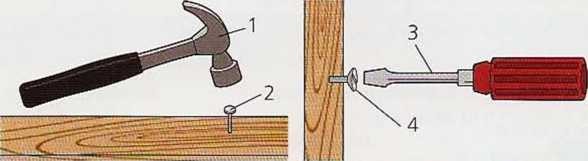
You use a hammer1 to bang a nail2 into a piece of wood.

You use a screwdriver3 to tighten or loosen a screw4.
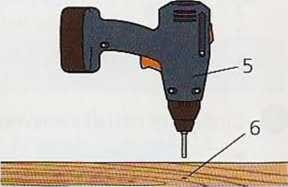
 You use a drill5 to make a hole6.

A hammer, a screwdriver, and a drill are tools.
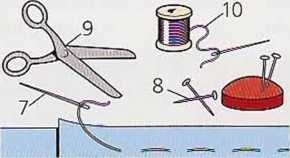
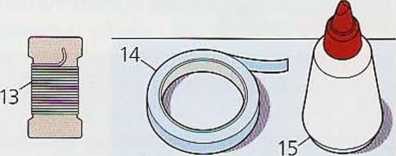
You use a needle7, pins8, scissors9, and cotton/ thread10 when you’re sewing.
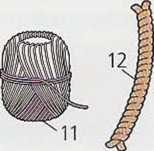
You use string11, rope12, or wire13 to tie things together. 


You use TMSellotape14 or glue15 to stick things together.


spotlight  Nouns

Cotton, thread, string, rope, wire, Sellotape, and glue are all uncountable nouns. Scissors is a plural noun.

Where’s the string?  I need some glue.

Where are the scissors?


3     Test yourself. Look at the text, and cover the meanings. Can you remember the meanings?


B    Common problems

Our flat: things to do

- The lamp isn't working. Try changing the light bulb.

- The radiator's leaking. We'll have to repair it.

- The window's cracked. It needs replacing.

- The TV isn't working properly.

- The radio is faulty.

- The bedroom needs decorating.

- There's something wrong with the door. It keeps sticking.

- The lift's out of order. I hope they fix it soon.

- There's a stain on the carpet which we need to remove.

MEANING

If sth isn't working, it isn't functioning or it's broken. 
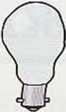


light bulb

leak  allow liquid or gas to go through a hole or crack, leak N.

cracked (see picture)
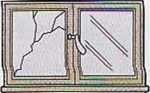
cracked window

replace sth  exchange sth for sth that is better or newer.

properly  correctly or well.

faulty  not working well; only working sometimes.

dccorate a room  put paint or paper on the walls.

wrong  causing problems or difficulties.

stick  be in one position and difficult to move.

out of order  If a machine or piece of equipment in a public place is out of order, it isn't working.

stain N, V (see picture

stain

remove sth  take sth away.


spotlight  repair, fix or mend sth

Repair sth, fix sth, and mend sth all mean ‘put sth right that is broken or damaged’.

Can you repair/fix the fridge? It took ages to repair/mend the roof.

We use mend and repair, rather than fix, to talk about repairing clothes.

I mended the hole in my pocket. I must get my shoes repaired.


4     Choose the words which are possible.

►   My shoe has a hole in it. Can you repair/mend/remove it for me?  repair, mend

1     This table’s broken. We need to decorate/fix/repair it. ________

2     Is the bedroom lamp OK? ~ No, it’s faulty/out of order/not working. ________

3     We’re going to remove/replace/decorate the fridge. ________

4     We need a new lamp/stain/light bulb. ________

5     The public phone is out of order/is wrong/isn’t working properly. ________

6     The radiator is leaking/faulty/sticking. ________


1     fix, repair

2     faulty, not working

3     remove, replace

4     lamp, light bulb

5     is out of order, isn’t working properly

6     leaking, faulty


6     Test yourself. Look at the text, and cover the meanings. Can you remember the meanings?