Word Family II

程华明

目录

  • 1 Starter 开篇
    • 1.1 A    How to use a unit
    • 1.2 B    How to learn new words
    • 1.3 C    Abbreviations and symbols
  • 2 Learning 学习
    • 2.1 1  I can talk about vocabulary learning
    • 2.2 2  I can describe my progress and aims
    • 2.3 3  I can understand a learner’s dictionary
    • 2.4 4  I can talk about English punctuation
    • 2.5 Review
  • 3 People 人
    • 3.1 5  I can talk about appearance
    • 3.2 6  I can talk about character
    • 3.3 7  I can describe my feelings
    • 3.4 8  I can talk about relationships
    • 3.5 9  I can talk about families
    • 3.6 10  I can talk about weddings and funerals
    • 3.7 Review
  • 4 The world around us 周围的世界
    • 4.1 11  I can describe the universe
    • 4.2 12  I can talk about rivers and the sea
    • 4.3 13  I can describe the climate
    • 4.4 14  I can describe natural disasters
    • 4.5 15  I can describe animals and insects
    • 4.6 Review
  • 5 Daily life 日常生活
    • 5.1 16  I can describe a range of food
    • 5.2 17  I can talk about diets and cooking
    • 5.3 18  I can talk about money
    • 5.4 19  I can talk about sleep
    • 5.5 20  I can talk about injuries
    • 5.6 21  I can talk about cars and driving
    • 5.7 22  I can describe travel problems and accidents
    • 5.8 23  I can talk about clothes and fashion
    • 5.9 Review
  • 6 Getting things done 完成每一件事
    • 6.1 24  I can describe a visit to the dentist
    • 6.2 25  I can describe hospital procedures
    • 6.3 26  I can explain household tasks
    • 6.4 27  I can describe housework
    • 6.5 28  I can talk to a hairdresser
    • 6.6 Review
  • 7 Describing things 描述事物
    • 7.1 29  I can describe urban life
    • 7.2 30  I can describe parts of a building
    • 7.3 31  I can describe objects
    • 7.4 32  I can describe the senses
    • 7.5 33  I can describe a painting
    • 7.6 34  I can describe actions
    • 7.7 Review
  • 8 Social and political  issues 社会与政治话题
    • 8.1 35  I can talk about crime
    • 8.2 36  I can describe the justice system
    • 8.3 37  I can discuss health issues
    • 8.4 38  I can talk about politics
    • 8.5 39  I can talk about war and peace
    • 8.6 40  I can talk about events in history
    • 8.7 Review
  • 9 Media and entertainment 媒体与娱乐
    • 9.1 41  I can understand newspapers
    • 9.2 42  I can talk about films
    • 9.3 43  I can talk about art and photography
    • 9.4 44  I can talk about music
    • 9.5 45  I can talk about people and places in sport
    • 9.6 46  I can describe sporting events
    • 9.7 47  I can talk about books
    • 9.8 48  I can describe festivals
    • 9.9 Review
  • 10 Work and study 工作与学习
    • 10.1 49  I can get through exams
    • 10.2 50  I can describe university life
    • 10.3 51  I can apply for a job
    • 10.4 52  I can describe jobs
    • 10.5 53  I can describe a career
    • 10.6 54  I can describe working conditions
    • 10.7 Review
  • 11 Business 商务
    • 11.1 55  I can talk about finance
    • 11.2 56  I can talk about companies
    • 11.3 57  I can describe a successful business
    • 11.4 58  I can discuss marketing
    • 11.5 Review
  • 12 Social English 社交英语
    • 12.1 59  I can express probability
    • 12.2 60  I can explain similarities and differences
    • 12.3 61  I can make arrangements to meet
    • 12.4 62  I can discuss my likes and dislikes
    • 12.5 63  I can give my opinion
    • 12.6 64  I can talk about rules
    • 12.7 65  I can discuss hopes and plans
    • 12.8 66  I can express dissatisfaction
    • 12.9 67  I can understand warnings
    • 12.10 Review
  • 13 Language 语言
    • 13.1 68  I can use link words
    • 13.2 69  I can use a range of adjectives
    • 13.3 70  I can express place and time
    • 13.4 71  I can use prepositions in phrases
    • 13.5 72  I can use prefixes
    • 13.6 73  I can use suffixes
    • 13.7 74  I can use verb patterns
    • 13.8 75  I can use phrasal verbs
    • 13.9 76  I can use a range of adverbs
    • 13.10 Review
  • 14 Styles of English 英语文体
    • 14.1 77  I can recognize informal English
    • 14.2 78  I can write a formal letter
    • 14.3 79  I can understand abbreviations and short forms
    • 14.4 80  I can understand American English
    • 14.5 Review
  • 15 Vocabulary building 构词表
  • 16 Spotlight boxes 词汇要点
  • 17 Word list 单词表
18  I can talk about money

18   I can talk about money

A    Buying things

They agree to take €20 off, so you buy it and get a receipt.

Next day, there’s a problem with it, so you take it back and ask for a refund.

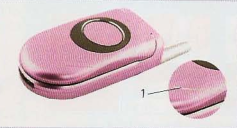
A phone costs €120. You can’t afford it, but there’s a scratch1 on it, so you ask the shop assistant for a discount.
 

They refuse, so you wait for the sales.

Then, it is reduced to €80 - a bargain.

You buy it and pay cash. You give them €100 and they give you €20 change.


Glossary

afford sth  If you can afford sth you have enough money to pay for it.

scratch  a mark on the surface of sth made by a sharp object.

discount  a cut in the usual price of something. SYN reduction.

off  If sth has €20 off, it costs €20 less than usual.

receipt  a piece of paper that shows that sth has been paid for.

refund  an amount of money paid back to you when you return sth to a shop.

the sales  a time when shops sell things at a lower price.

reduce sth  make sth less in size, quantity, or price. reduction N.

bargain  sth that is a good price or is cheaper than usual.

change  If sth costs €2 and you give the assistant €5, you get €3 change


3     ABOUT YOU Answer the questions in Exercise 2, or ask another student.

Answers from a Japanese person

1     I don’t always look for a bargain but I’m very happy when I find one.

2     I would ask the shop assistant whether they have another one in stock.

3     I check the number of notes, but I don’t check the number of coins.

4     I often wait for the sales. I usually buy my clothes then.

5     I don’t usually take things back or ask for a refund, but once the heel came off a pair of boots a few weeks after I had bought them, so I did take those back.


B    I’m not very good with money

LOTTERY WINNER LOSES EVERYTHING!

Maria Costas was an ordinary working mum without much income until she won over €3m on the lottery and became a very wealthy woman. She immediately bought a house worthlm, a car that cost a fortune, and jewellery valued at €250,000. Unfortunately, the house was a waste of money. She owned it for six months, never lived there, then had to sell it for much less than she paid for it. Maria also wasted huge amounts of money on designer clothes and foreign holidays, and within eighteen months she was completely broke. Now she owes the bank over €5,000, and has credit card debts as well.


Glossary

income  the money you earn from work, plus any other money you receive.

wealthy  rich. SYN well off.

worth   If a flat is worth €3m, you could sell it for €3m (that is the value).

cost a fortune  be very expensive.

value sth at sth  decide what sth is worth, or what you could sell it for.

waste of money  a bad use of money.

own sth  If you own sth, it is yours; it belongs to you.

huge  very large. SYN massive.

amount  a quantity of sth; a sum of money.

broke  INF having no money.

owe sb sth  have to pay money to sb for sth they have done or given.

debt  an amount of money that you owe sb.


4     Cover the text. Answer the questions.

►   How did Maria become wealthy?   She won the lottery.

1     How much was her new house worth? ________________

2     What was her jewellery valued at? ________________

3     How long did she own her new house? ________________

4     Why was the house a waste of money? ________________

5     How much does she owe the bank? ________________

6     Does she have any other debts? ________________


1     Her new house was worth €1m.; Her new house was worth €1,000,000.

2     Her jewellery was valued at €250,000.

3     She owned her new house for six months.; She owned it for six months.

4     She didn't live there, and she sold it for less money.; She never lived there, then had to sell it for much less than she paid for it.

5     She owes the bank over €5,000. 

6     Yes, she has credit card debts as well.; Yes, she has credit card debts.


5     Rewrite the sentences using the words in capitals.

►   My boss has a lot of money. WEALTHY  My boss is very wealthy.

1     It’s a very large house. HUGE ________________

2     The house is worth £2,000,000. VALUE ________________

3     Rani hasn’t got any money. BROKE ________________

4     The flat doesn’t belong to me. OWN ________________

5     Her shoes were very expensive. FORTUNE ________________

6     Gisela has debts of €5,000. OWE ________________


1     It’s a huge house. 

2     The house is valued at £2,000,000.; The value of the house is £2,000,000. 

3     Rani is broke. 

4     I don’t own the flat. 

5     Her shoes cost a fortune. 

6     Gisela owes €5,000.


7     Test yourself. Look at the glossary words and cover the meanings. What are the meanings?