Word Family II

程华明

目录

  • 1 Starter 开篇
    • 1.1 A    How to use a unit
    • 1.2 B    How to learn new words
    • 1.3 C    Abbreviations and symbols
  • 2 Learning 学习
    • 2.1 1  I can talk about vocabulary learning
    • 2.2 2  I can describe my progress and aims
    • 2.3 3  I can understand a learner’s dictionary
    • 2.4 4  I can talk about English punctuation
    • 2.5 Review
  • 3 People 人
    • 3.1 5  I can talk about appearance
    • 3.2 6  I can talk about character
    • 3.3 7  I can describe my feelings
    • 3.4 8  I can talk about relationships
    • 3.5 9  I can talk about families
    • 3.6 10  I can talk about weddings and funerals
    • 3.7 Review
  • 4 The world around us 周围的世界
    • 4.1 11  I can describe the universe
    • 4.2 12  I can talk about rivers and the sea
    • 4.3 13  I can describe the climate
    • 4.4 14  I can describe natural disasters
    • 4.5 15  I can describe animals and insects
    • 4.6 Review
  • 5 Daily life 日常生活
    • 5.1 16  I can describe a range of food
    • 5.2 17  I can talk about diets and cooking
    • 5.3 18  I can talk about money
    • 5.4 19  I can talk about sleep
    • 5.5 20  I can talk about injuries
    • 5.6 21  I can talk about cars and driving
    • 5.7 22  I can describe travel problems and accidents
    • 5.8 23  I can talk about clothes and fashion
    • 5.9 Review
  • 6 Getting things done 完成每一件事
    • 6.1 24  I can describe a visit to the dentist
    • 6.2 25  I can describe hospital procedures
    • 6.3 26  I can explain household tasks
    • 6.4 27  I can describe housework
    • 6.5 28  I can talk to a hairdresser
    • 6.6 Review
  • 7 Describing things 描述事物
    • 7.1 29  I can describe urban life
    • 7.2 30  I can describe parts of a building
    • 7.3 31  I can describe objects
    • 7.4 32  I can describe the senses
    • 7.5 33  I can describe a painting
    • 7.6 34  I can describe actions
    • 7.7 Review
  • 8 Social and political  issues 社会与政治话题
    • 8.1 35  I can talk about crime
    • 8.2 36  I can describe the justice system
    • 8.3 37  I can discuss health issues
    • 8.4 38  I can talk about politics
    • 8.5 39  I can talk about war and peace
    • 8.6 40  I can talk about events in history
    • 8.7 Review
  • 9 Media and entertainment 媒体与娱乐
    • 9.1 41  I can understand newspapers
    • 9.2 42  I can talk about films
    • 9.3 43  I can talk about art and photography
    • 9.4 44  I can talk about music
    • 9.5 45  I can talk about people and places in sport
    • 9.6 46  I can describe sporting events
    • 9.7 47  I can talk about books
    • 9.8 48  I can describe festivals
    • 9.9 Review
  • 10 Work and study 工作与学习
    • 10.1 49  I can get through exams
    • 10.2 50  I can describe university life
    • 10.3 51  I can apply for a job
    • 10.4 52  I can describe jobs
    • 10.5 53  I can describe a career
    • 10.6 54  I can describe working conditions
    • 10.7 Review
  • 11 Business 商务
    • 11.1 55  I can talk about finance
    • 11.2 56  I can talk about companies
    • 11.3 57  I can describe a successful business
    • 11.4 58  I can discuss marketing
    • 11.5 Review
  • 12 Social English 社交英语
    • 12.1 59  I can express probability
    • 12.2 60  I can explain similarities and differences
    • 12.3 61  I can make arrangements to meet
    • 12.4 62  I can discuss my likes and dislikes
    • 12.5 63  I can give my opinion
    • 12.6 64  I can talk about rules
    • 12.7 65  I can discuss hopes and plans
    • 12.8 66  I can express dissatisfaction
    • 12.9 67  I can understand warnings
    • 12.10 Review
  • 13 Language 语言
    • 13.1 68  I can use link words
    • 13.2 69  I can use a range of adjectives
    • 13.3 70  I can express place and time
    • 13.4 71  I can use prepositions in phrases
    • 13.5 72  I can use prefixes
    • 13.6 73  I can use suffixes
    • 13.7 74  I can use verb patterns
    • 13.8 75  I can use phrasal verbs
    • 13.9 76  I can use a range of adverbs
    • 13.10 Review
  • 14 Styles of English 英语文体
    • 14.1 77  I can recognize informal English
    • 14.2 78  I can write a formal letter
    • 14.3 79  I can understand abbreviations and short forms
    • 14.4 80  I can understand American English
    • 14.5 Review
  • 15 Vocabulary building 构词表
  • 16 Spotlight boxes 词汇要点
  • 17 Word list 单词表
14  I can describe natural disasters

14   I can describe natural disasters

A    Types of disaster
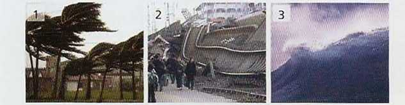


Hurricane1: this word is used especially of storms in the western Atlantic. It is a violent storm with very strong winds. In other parts of the world, especially Asia, it is called a typhoon.

Earthquake2: a sudden violent movement of the ground causing damage.

Tidal wave3: a very large ocean wave that is caused by a storm or earthquake, and which destroys things when it reaches land.

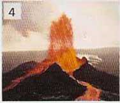
Volcanic eruption4: a volcano is a mountain with a hole in the top, and when it erupts, hot gases and lava are forced out into the air and onto the surrounding land.

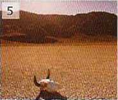
Drought5: a long period with no rain. Crops die, and people may starve to death.


Glossary

disaster  a very bad event, causing harm or death.

violent  very strong and usually causing damage. violence N.

sudden  happening very quickly. suddenly ADV.

ground  the top part of the earth’s surface that people walk on.

damage  harm or injury caused when sth is broken. damage V.  

destroy sth  break sth completely so it can’t be used again. destruction N.

erupt  explode and throw out fire, burning rocks, etc.

lava  hot liquid rock (see picture).

surrounding  that is near or around sth. surroundings N.

crops  plants that are grown for food. e.g. rice and potatoes.

starve (to death)  suffer (or die) because you don’t have enough food. 


1     Combine five more pairs of words below to form compound words or phrases.

earth✓ volcanic  tidal  surrounding  starve  land  

eruption  violent  wave  quake✓ to death  storm

►   earthquake ____ ____ ____ ____ ____


volcanic eruption

tidal wave

surrounding land

starve to death

violent storm


4     Test yourself. Cover the texts and look at the pictures. Can you name each disaster and what happens?  


B    Effects

EARTHQUAKE HITS KASHMIR

Late last night a sudden earthquake struck the region of Kashmir on the borders of India and Pakistan, and hundreds of people are thought to have lost their lives as buildings collapsed while they slept.

Thousands have now been evacuated, but there are fears that many are still trapped inside their homes, so the death toll could rise. The damage has already been considerable and the next 48 hours will be crucial, not only to rescue more people but also to try to maintain supplies of water and electricity.


Glossary

hit sth/sb  make sudden violent contact with sth/sb. SYN strike sth/sb.

collapse  If a building collapses, it falls to the ground. collapse N.

evacuate sb  move sb away from a dangerous place. evacuation N.

fear  a feeling that sth bad might happen. fear V.

trap sb  If sb is trapped, they arc inside sth and cannot get out.

death toll  the number of people killed in a disaster, accident, etc.

considerable  very large in size or amount.

crucial  very important.

rescue sb  take sb from a dangerous place to safety. SYN save sb.

maintain sth  make sth continue at a certain level.

supply (PL supplies) an amount of sth that you need.


7     Test yourself. Look at the glossary words and cover the meanings. Can you remember the meanings?