
Word Family II

程华明

目录

  • 1 Starter 开篇
    • 1.1 A    How to use a unit
    • 1.2 B    How to learn new words
    • 1.3 C    Abbreviations and symbols
  • 2 Learning 学习
    • 2.1 1  I can talk about vocabulary learning
    • 2.2 2  I can describe my progress and aims
    • 2.3 3  I can understand a learner’s dictionary
    • 2.4 4  I can talk about English punctuation
    • 2.5 Review
  • 3 People 人
    • 3.1 5  I can talk about appearance
    • 3.2 6  I can talk about character
    • 3.3 7  I can describe my feelings
    • 3.4 8  I can talk about relationships
    • 3.5 9  I can talk about families
    • 3.6 10  I can talk about weddings and funerals
    • 3.7 Review
  • 4 The world around us 周围的世界
    • 4.1 11  I can describe the universe
    • 4.2 12  I can talk about rivers and the sea
    • 4.3 13  I can describe the climate
    • 4.4 14  I can describe natural disasters
    • 4.5 15  I can describe animals and insects
    • 4.6 Review
  • 5 Daily life 日常生活
    • 5.1 16  I can describe a range of food
    • 5.2 17  I can talk about diets and cooking
    • 5.3 18  I can talk about money
    • 5.4 19  I can talk about sleep
    • 5.5 20  I can talk about injuries
    • 5.6 21  I can talk about cars and driving
    • 5.7 22  I can describe travel problems and accidents
    • 5.8 23  I can talk about clothes and fashion
    • 5.9 Review
  • 6 Getting things done 完成每一件事
    • 6.1 24  I can describe a visit to the dentist
    • 6.2 25  I can describe hospital procedures
    • 6.3 26  I can explain household tasks
    • 6.4 27  I can describe housework
    • 6.5 28  I can talk to a hairdresser
    • 6.6 Review
  • 7 Describing things 描述事物
    • 7.1 29  I can describe urban life
    • 7.2 30  I can describe parts of a building
    • 7.3 31  I can describe objects
    • 7.4 32  I can describe the senses
    • 7.5 33  I can describe a painting
    • 7.6 34  I can describe actions
    • 7.7 Review
  • 8 Social and political  issues 社会与政治话题
    • 8.1 35  I can talk about crime
    • 8.2 36  I can describe the justice system
    • 8.3 37  I can discuss health issues
    • 8.4 38  I can talk about politics
    • 8.5 39  I can talk about war and peace
    • 8.6 40  I can talk about events in history
    • 8.7 Review
  • 9 Media and entertainment 媒体与娱乐
    • 9.1 41  I can understand newspapers
    • 9.2 42  I can talk about films
    • 9.3 43  I can talk about art and photography
    • 9.4 44  I can talk about music
    • 9.5 45  I can talk about people and places in sport
    • 9.6 46  I can describe sporting events
    • 9.7 47  I can talk about books
    • 9.8 48  I can describe festivals
    • 9.9 Review
  • 10 Work and study 工作与学习
    • 10.1 49  I can get through exams
    • 10.2 50  I can describe university life
    • 10.3 51  I can apply for a job
    • 10.4 52  I can describe jobs
    • 10.5 53  I can describe a career
    • 10.6 54  I can describe working conditions
    • 10.7 Review
  • 11 Business 商务
    • 11.1 55  I can talk about finance
    • 11.2 56  I can talk about companies
    • 11.3 57  I can describe a successful business
    • 11.4 58  I can discuss marketing
    • 11.5 Review
  • 12 Social English 社交英语
    • 12.1 59  I can express probability
    • 12.2 60  I can explain similarities and differences
    • 12.3 61  I can make arrangements to meet
    • 12.4 62  I can discuss my likes and dislikes
    • 12.5 63  I can give my opinion
    • 12.6 64  I can talk about rules
    • 12.7 65  I can discuss hopes and plans
    • 12.8 66  I can express dissatisfaction
    • 12.9 67  I can understand warnings
    • 12.10 Review
  • 13 Language 语言
    • 13.1 68  I can use link words
    • 13.2 69  I can use a range of adjectives
    • 13.3 70  I can express place and time
    • 13.4 71  I can use prepositions in phrases
    • 13.5 72  I can use prefixes
    • 13.6 73  I can use suffixes
    • 13.7 74  I can use verb patterns
    • 13.8 75  I can use phrasal verbs
    • 13.9 76  I can use a range of adverbs
    • 13.10 Review
  • 14 Styles of English 英语文体
    • 14.1 77  I can recognize informal English
    • 14.2 78  I can write a formal letter
    • 14.3 79  I can understand abbreviations and short forms
    • 14.4 80  I can understand American English
    • 14.5 Review
  • 15 Vocabulary building 构词表
  • 16 Spotlight boxes 词汇要点
  • 17 Word list 单词表
13  I can describe the climate

13   I can describe the climate

A    The weather


Word/Phrase      Example      Meaning

pour (with rain)  It’s pouring outside!  rain heavily.

soaking wet  SYN soaked  It was pouring with rain and I got soaking wet.  extremely wet.

drizzle V, N  It was drizzling when I left the office.  rain lightly, with very small drops.

rainbow  Did you see the rainbow?  

bitterly cold  It’s bitterly cold today.  extremely cold.

chilly  It gets chilly in the evening.  a little too cold to be comfortable.

mild  It’s been a very mild winter.  warmer than usual for the time of year.

heatwave  I hate this heatwave!  a period of unusually hot weather.

muggy  SYN humid  It’s really muggy today.  warm and damp in an unpleasant way.

mist N  misty ADI   You get a lot of mist in the mornings in autumn.  thin cloud near the ground which is difficult to see through (not as thick as fog).

frost N  frostyADJ  There was a frost last night: there’s ice on the car.   the weather condition when the temperature is below 0°C and ice forms on windows, the ground, etc.

breeze N breezy ADI   It’s hot today, but there’s a lovely breeze.   a light wind.

gale   There were gales last night.  a strong wind.


3     Test yourself. Cover the words/phrases and examples in the table and look at the meanings. What are the words?


B    Climate change

OUR ENVIRONMENT

Global warming is the gradual increase in the average temperature of the earth’satmosphere, and is caused by harmful gases. Many environmentalists believe that most of this pollution is the result of human activities. Here are some of the effects:

As the ice at the poles2 melts, sea levels could rise by almost a metre in the next century.

There will be more extreme and unpredictable weather, e.g. heatwaves or floods.

The earth will become even warmer because the rainforestsare disappearing.

Famine and disease will spread, and this will especially affect people in poor countries.
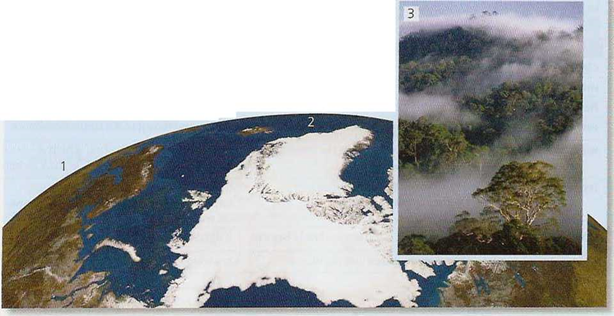


Glossary 

climate  the normal weather conditions of a particular region.

(the) environment  the natural world; the air. land, and water in which people, plants, and animals live (an environmentalist is sb who studies the environment).

gradual  happening slowly over a long period of time. gradually ADV.

the atmosphere  the gases around the earth. planets, etc.

harmful  causing damage, injury, or illness. harm sth/sb V.

gas  a substance like air, e.g. oxygen and hydrogen.

pollution  dirty and dangerous gases, chemicals, etc. that harm the environment. pollute V.

human   connected with people.

melt  If you heat ice, it melts: it changes from a solid to a liquid.

rise  increase; go higher. rise N. OPP fall V, N.

extreme  much hotter, colder, or more violent than usual.

unpredictable  If sth is unpredictable, you can’t say how it will change in the future, OPP predictable, predict V.

disappear   stop existing. SYN vanish.

famine  A famine is when there is not enough food in a country.

disease   illness in people, animals, or plants.

spread   affect more and more people or things.


spotlight  effect N, affect V

An effect is a change which is caused by something.

What are the effects of global warming?

To affect something means to make it change in a particular way.

Climate change will affect all our lives (= will make our lives change). 


8     ABOUT YOU AND YOUR COUNTRY Write your answers, or ask another student.

1     How worried are you about global warming?

________________

2     Do you have rainforests in your country? If so, what is happening to them?

________________

3     Has the climate changed in recent years in your country? If so, how?

________________

4     Which human activities do you think are harming the environment most?

________________

5     What kind of pollution is common in your country?

________________


Answers from a Polish person

1     I’m quite worried about global warming, but what worries me most is the fact that scientists and politicians talk about this problem a lot, but nothing is being done about it.

2     We don’t have rainforests in Poland.

3     Summers have become warmer and winters are milder now. Also, summer starts earlier, almost right after winter, so sometimes it seems as if we haven’t had spring.

4     The changing of natural habitats, the construction of roads and buildings, and the growth of industry are all harming the environment.

5     1 think industrial pollution is probably most common in Poland. 


9     Test yourself. Cover the glossary meanings and look at the words. What are the meanings?