
Unit 10 Pompeii
For this text, the background knowledge is very important in the understanding of this whole story. Therefore some knowledge of the city and that volcano will help us have a better understanding of the whole text.
I. Background
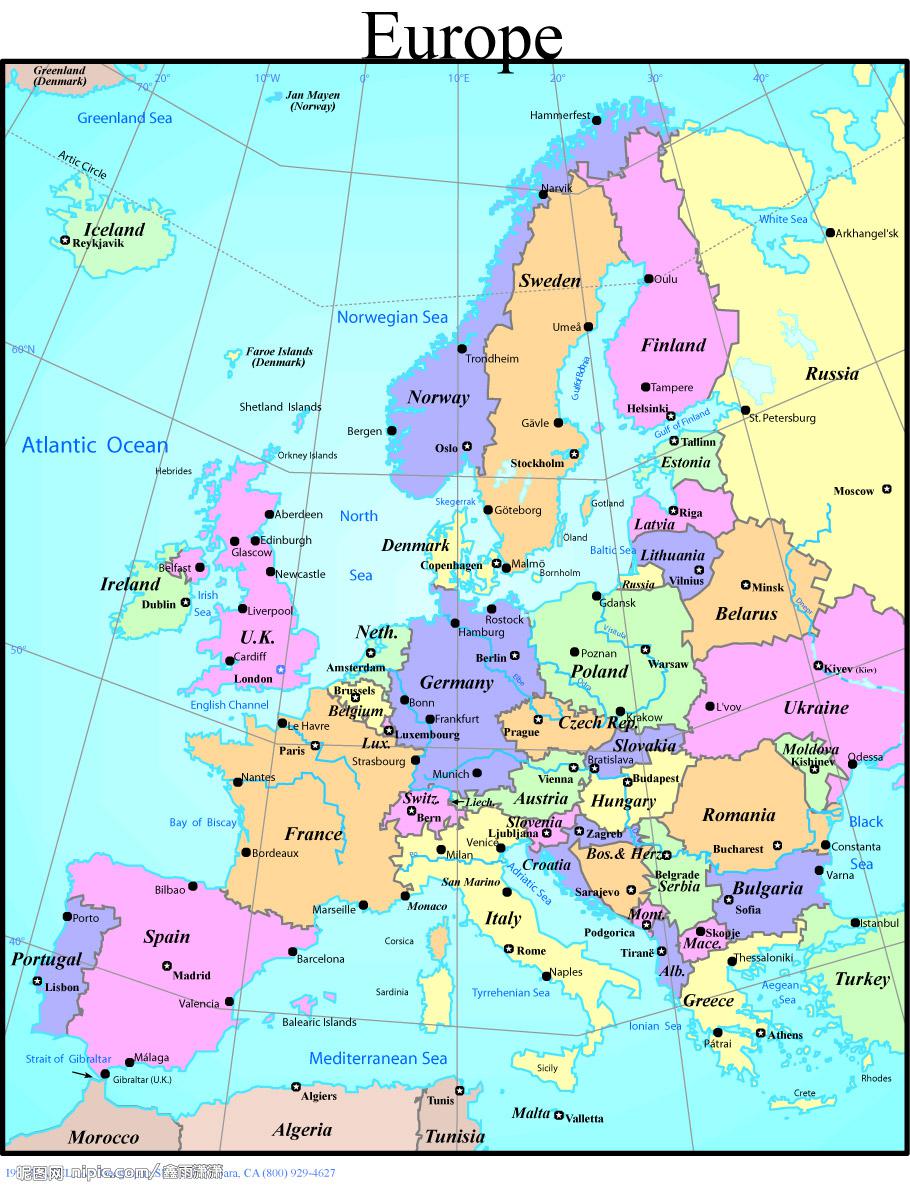
1. Some knowledge of Europe
2. Pompeii
History of Pompeii
1. About BC. 600
2. BC. 5th century
3. BC. 89
4. BC. 80
5. AD. 63
6. AD. 79
Excavation of Pompeii
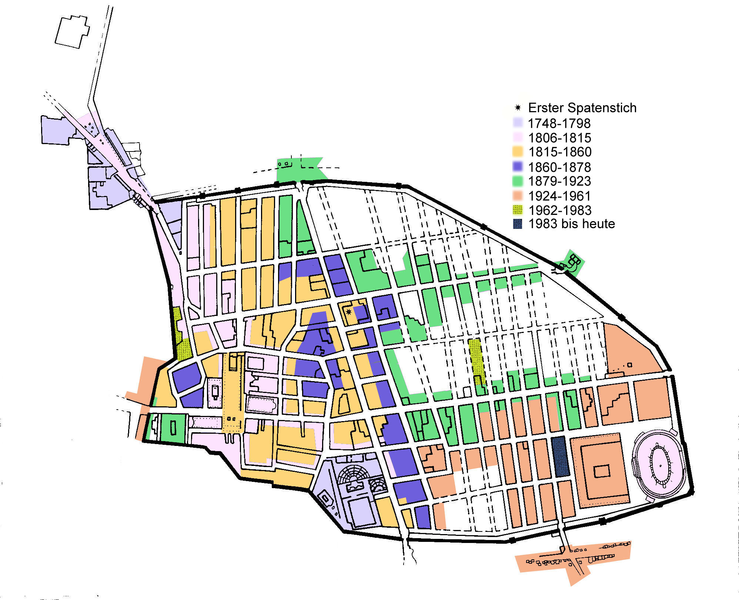
Pompeii was rediscovered in 1748 but systematic excavation did not begin until 1860. About 2,000 skeletons were found in hollows left in the ash by the bodies of the victims. The archeologists poured plaster of Paris into these hollows and so made plaster casts of men, women, children and domestic animals, looking exactly as they had been at the moment of death. Many of them had their hands or clothes in their mouths, indicating that they were trying to protect themselves from the poisonous gas. Several were found clutching bags of coins’ and other valuables.
We know that natural disasters have often been reduced to mere statistics. But over the years people have also shown intense interest in them. For one thing, natural disasters cause a lot of human tragedy, and human tragedy has always been a deep concern of human beings. Second, during a natural disaster, human beings usually reveal their true colors. We see ourselves at our best as well as at our worst: Third, the careful study of natural disasters may reveal scientific laws which may eventually help man discover ways to deal with natural disasters better. Fourth, natural disasters are often linked with human errors, and therefore can lead to our better understanding of our mistakes and shortcomings. Fifth, the memory of natural disasters can always remind us that natural power is still much greater than human power, and it is stupid arrogance on our part to think that we can conquer nature. Man should forever be humble and learn to respect nature’s ways, and learn whatever other useful lessons from them.
What is unique about this particular natural disaster is the fact that the eruption destroyed a Roman city more than 2,000 years ago, but now the buried city is returned to us almost intact. From the ash and rabble of the city we now see what this Roman city was like with every detail. Among the 2,000 dead bodies we see men and women; old and young; rich and poor. We see gladiators, tourists, merchants, bakers. We see all kinds of buildings, including a brothel, and a bakery where there were still 81 loaves of bread left at the time of eruption. And in the buildings, we see furniture used at the time, domestic animals, and frescoes. No wonder Pompeii has become one of the most popular historical museums in the world. The present text is condensed from a much longer article that appeared in National Geographic many years ago. But even this much shortened version serves as a vivid introduction to this great archeological discovery.
3. Vesuvius
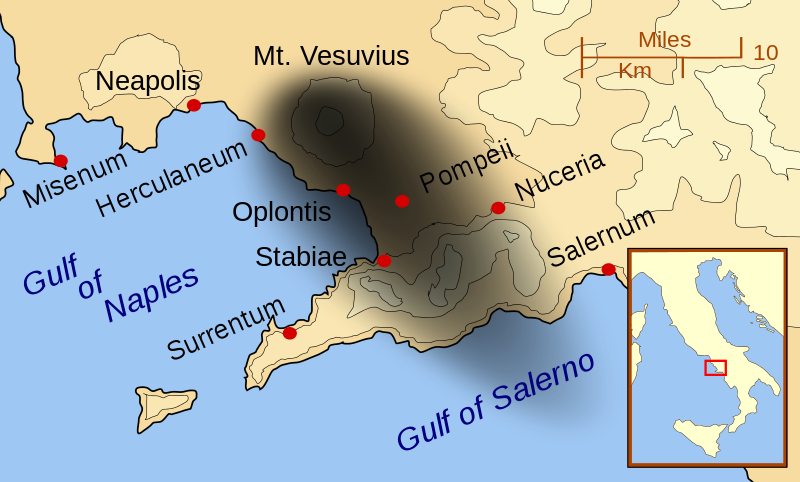
Vesuvius is probably the most famous volcano in the world and the most observed by scientists. A bibliography compiled in 1918 listed more than 2,000 books and articles on Vesuvius, and many more have been written since then. Geological evidence indicates that the volcano has been active for ten thousand years. Before its eruption in AD 79, however, it had been dormant for several centuries, and the early Greeks and Romans did not think of it as a dangerous volcano. In Roman times the area was a popular seaside resort where many people had summer homes. In the 1st century BC, the geographer Strable reported terrace farming on the slopes of the mountain but described the summit as barren with ash. Spartacus, the leader of a slave revolt during the same period, took refuge in the crater of Vesuvius when he and his followers were being pursued by the Romans.
II. General analysis
1. Structure
The selection can be divided into two parts. The first 7 paragraphs provide a brief account of Pompeii before and after the eruption of AD 79. The rest (paras. 8-20) recounts what happened on the day of the eruption.
I. A brief account of Pompeii before and after August 24, AD 79 (paras. 1-7)
A. Pompeii is a dead city, (paras. 1-2)
B. It used to be a prosperous city until a volcanic eruption buried it deep in AD 79. (paras. 3-4)
C. It was discovered again 1700 years later and has now been restored to what it was like the day of the eruption, (paras. 5-7)
II. A detailed description of what happened on the day of the eruption (paras. 8-20)
A. In the morning, disaster was on its way. (paras. 8-9)
B. The eruption began at one o’clock with a loud explosion, (paras. 10-13)
C. In the afternoon, buildings began to collapse and houses caught fire, (paras. 14-15)
D. In the evening an earthquake struck, killing hundreds of people, (para. 16)
E. Poisonous gas killed more people, (paras. 17-18)
F. By midday on August 25, Pompeii became a city of the dead and was buried deep. (paras. 19-20)
III. Detailed Analysis
1. AD 79 (para. 2)
in full: Anno Domini, Latin for “in the year of our Lord”.
The Christian myth has it that AD 1 was the year Jesus Christ was born (lie was probably born years earlier). Time before AD is called BC, i.e., Before Christ.
2. ... Pompeii was a prosperous city of 25,000 people, (para. 3)
a city of 25,000 people: 一座人口为两千万的城市
cf. a city with a population of 23,000
Do not mix up the two. It is redundant to say “a city with a population of 23,000 people”, for
the word “population” means “the number of people living in a particular area, country, etc.”
3. Nearby was the Bay of Naples, an arm of the blue Mediterranean, (para. 3)
This is an inverted sentence. The subject is “the Bay of Naples”. Inversion occurs because the subject with an appositive “an arm of the blue Mediterranean” makes it too long. It is moved to the end of the sentence to avoid top heaviness (the situation in which the subject of a sentence is too long while the predicate too short).
an arm of sth: along and narrow area of land or water that is joined to a broader area
4. Rich men came down from wealthy Rome to build seaside villas, (para. 3)
down: Here it means moving from/to a big city. It can also mean “in or toward south”, e.g.
They drove all the way down from Wuhan to Guangzhou.
5. Rising behind the city was the 4,000-foot Mount Vesuvius, a grass-covered slope where the shepherds of Pompeii took their goats to graze, (para. 3)
This is also an inverted sentence. The subject is “the 4,000-foot Mount Vesuvius”. It is placed after the predicate because it has a long attributive qualifier “a grass-covered slope.
A/bte: 4,000-foot Vesuvius (not 4,000-feet)
Similar phrases: five-year plan; three-head monsters; a 6-month contract
6. ...a terrible rain of fire and ash. (para. 4)
... the fire and ash fell like rain.
a rain of sth: a large number of things that fall from the sky at the same time, e.g. a rain of bullets; a rain of soot; a rain of petals; a rain of arrows
Similarly:
a shower of: a lot of small light things falling or moving through the air together,
e.g. a shower of leaves; a shower of sparks; a shower of meteorites; a shower of stones; a shower of blows; a shower of insults; a shower of phrases
a storm of: a sudden loud amount of noise made by a group of people in reaction to sth,
e.g. a storm of abuse/criticism/protest; a storm of applause/cheers
7. The tragedy struck... (para. 4)
“Strike” is a verb often used with disasters, e.g. A typhoon/plague strikes.
Some other uses of “strike “:
He struck his head against the roof. (=hit)
He struck his brother on the head. (=hit with hand/weapon)
The clock struck four. (=make a sound four times)
She struck up an acquaintance with a musician on the trip. (=start talking)
How did the film strike you? (=What do you think of the film?)
The lightning struck terror into their hearts. (=make people very frightened)
8. Mount Vesuvius, which had slept quietly for centuries, erupted with savage violence, (para. 4)
had slept quietly: had been inactive/dormant
is an informal way of describing an inactive (though not dead) volcano. As the book Lost Cities and Civilizations, from which the text is taken, is intended for a general audience, the writer doesn’t use many technical terms. The technical term for an inactive volcano is “dormant”, which means “not active or growing but having the ability to be active at a later
time”.
savage violence: Both of these words are very strong and normally they would not be used together. We must be careful when we qualify a very strong word in translation from Chinese as often the adjective or adverb actually weakens the English, e.g. in general, no adverb should be used with “ruin”, “condemn”, “denounce”, etc.
9. For three days the sun did not break through the clouds of volcanic ash that filled the sky. (para. 4)
the clouds of volcanic ash: the large amount of volcanic ash that was floating in the air and looked like cloud
Similarly:
cloud of dust; cloud of smoke; cloud of steam (large amount/number of sth) fill a place: if a thing or group fills sth, there is no space left, e.g.
Crowds of his fans filled the streets.
Baby clothes, milk and diapers filled the suitcase. Figuratively:
The smell of freshly roasted duck filled the kitchen.
At weekends, happy sounds filled the house. It was midnight, and moonlight filled the room.
10. Beneath the protecting shroud of ash, the city lay intact.(para. 5)
The city remained as it had been before the eruption. It had been protected by the thick layer of ash that buried the city deep. (This paragraph describes what Pompeii was like when it was rediscovered. Therefore the past tense is used.)
shroud of ash: a metaphor in which the ash is compared to a shroud (=a cloth that is used to
wrap a dead body)
intact: complete and not damaged or changed, e.g.
The Johnsons suffered a good deal of misfortune in the past year. Yet, the family remained intact.
11. In the wine shops, the wine jars were in place, and on one counter could be seen a stain where a customer had thrown down his wine glass and fled. (para. 5)
In the wine shops, the wine containers were in their right place, and people could see a (wine) stain a customer had left on one counter when he hastily put his glass down and fled.
in place: in its usual or correctjposition, e.g.
The books were all in place on the shelves.
Let’s put the chairs in place before we go. Opposite: out of place
Note: In the second coordinate clause the subject-verb order is inverted. The subject “a stain” is qualified by a relative clause introduced by the relative adverb. As it is too long, it is placed after the predicate “could be seen”.
12. To go to Pompeii today is to take a trip backward in time. (para. 6)
When you go to Pompeii today it is like going back 1,700 years in history because you would find the city as it actually was the day of the eruption.
13. The old city comes to life all around you. (para. 6)
The city is no longer a dead city. You can imagine what was going on around you. (The next
sentence describes the sounds of the city.)
come to life: (of a place) to become filled with the energy and excitement of active people, e.g.
The house comes to life whenever their grandchildren come to visit it.
The park comes to life when its cheery blossoms bring thousands of tourists.
14. Ships from every nation are in port... (para. 6)
be in port: to have stopped at sea ports to load and unload cargo Related expressions: to come into port; to enter port; to leave port
15. Such was Pompeii on its last day. (para. 7)
That was what Pompeii was like the day it was destroyed in the volcanic eruption. This is an inverted sentence, in which the subject “Pompeii” is placed after the verb “was”. The predicative “such” is put at the beginning of the sentence because the word (pronoun) refers to what is said in the previous sentence.
Here inversion is used as transitional device. The sentence summarizes what has been said and naturally leads to the next paragraph.
16. A good imagination is all you need to restore it to activity, (para. 7)
If you have a good imagination you will be able to imagine what was going on—the sights,
sounds, smells and activities of a busy, prosperous Roman town.
restore sth to sth: to make sth return to its previous state or condition, e.g.
A week at the beach will restore you to health.
The government is trying hard to restore the country’s economy to full strength.
17. ... Pompeii’s 25,000 people awakened to another hot day in that hot summer, (para. 8)
... Pompeii’s 25,000 people woke up to find that they were going to have another hot day... The preposition “to” here indicates a particular result.
awaken: It is generally used in the passive voice and is used figuratively. Here “awoke” or “woke up” would do just as well.
18. In the forum the town’s important men had gathered after breakfast to read the political signs that had been posted during the night, (para. 8)
forum: the marketplace or public place of an ancient Roman city forming the center of
judicial and public business
Cultural note: The forum was the centre of the city’s religious, economic, and municipal life;
it was a large area with a two-story entrance, around which were temples of ancient Greek gods, a large food market, the imposing headquarters of the woolen industry, the meeting place of the city council and the offices of the officials of the city.
In modern English a forum is a public meeting or lecture involving audience discussion.
sign: a posted command, warning, or direction
19. The mountain blew up, raining death on thousands, (para. 9)
To “blow up” and to “explode” are often confused, even by native speakers.
blow up: to destroy by explosion, e.g. to blow up a bridge/a building/a ship
explode: vi. to break into pieces violently, e.g. A mine/bomb exploded.
explode: vt. to make sth break into pieces, e.g. The country claimed to have exploded a nuclear device.
raining death: bringing/causing death. “rain” is a transitive verb used figuratively here. Similarly: rain blows/honors/gifts/scorn/curses, etc. on sb
20. Like the trunk of a tree, it rose in the air, branching out as it climbed, (para. 12)
Like a tree trunk dividing into many branches while the tree is growing, the black cloud of volcanic ash from the crater expanded in different direction as it rose.
21. The sound of the explosion died away, but it still reverberated in everyone’s ears. (para. 13)
Even when the loud sound stopped, people did not recover from the shock.
die away: (of sound/wind/light) to become weaker gradually until you cannot hear, or feel, or
see it, e.g.
They didn’t go back to bed until the footsteps died away.
The firing finally began to die away in the late afternoon.
22. ... the Temple of Jupiter, the Temple of Apollo, the Temple of Isis. (para. 14)
Jupiter: the chief ancient Roman and Italian god, the equivalent of the ancient Greek god
Zeus宙斯)
Apollo: the Greek god of light, youth, beauty, and prophecy. He was later worshipped by the Romans.
Isis: one of the most important goddesses of ancient Egypt whose worship spread to Greece and Rome
23. An hour went by and darkness still shrouded everything, (para. 14)
An hour passed, things did not improve and darkness covered everything.
shroud: to cover or hide sth
24. All was confusion, (para. 14)
There was total chaos everywhere. / The whole city had been thrown into chaos.
confusion: a state or situation, often with a lot of activity and noise, in which many things are happening in a way that is not controlled or orderly, e.g.
In the confusion after a power cut, three children were injured.
25. The people of Pompeii now knew that doom was at hand. (para. 14.)
The people of Pompeii now knew that they would not survive the eruption.
doom was at hand: death was near
26. ... only the quick-witted managed to escape, (para. 15)
the quick-witted: those who think fast and intelligently Oppose: slow-witted, dull-witted
27. ... he led his little band out into the nightmare of the streets, (para. 15)
... he led his family out into the streets, which were extremely chaotic.
nightmare: a very difficult, unpleasant or frightening situation, e.g. Our trip abroad was a nightmare.
28. And a new trouble was in store for Pompeii, (para. 16)
in store: in a state of being ready or prepared to happen More examples:
The immigrants did not know what was in store for them in the New World.
A great future is in store for our people.
29. Roofs went crashing in ruin... (para. 16) Synonyms fox fall in the text: crash, topple, collapse 30. Poisonous gas came drifting from the crater... (para. 17)
poisonous gas: “Poisonous” is the correct adjective for this gas that came from the volcano. “Poison gas” is the name given to poisonous gas which is specially manufactured to kill one’s enemies.
31. Rushing throngs, blinded by the darkness and the smoke, rushed up one street and down the next, trampling the fallen in a crazy fruitless dash toward safety, (para. 17)
People panicked. They rushed into the streets to escape the falling buildings. It was dark and the air was full of smoke so they could not see where they were going. They rushed up one street and down the next in a hopeless attempt to reach safety. In their blind rush, they ran over the bodies of people who had fallen down.
32. ... and Pompeiians died by the hundreds, (para. 18)
by: often indicating a unit of time or other measurement, e.g. to rent a house by the year to hire a boat by the hour to sell eggs by the dozen to sell cloth by the meter to be paid by the hour to be sold by the ounce to go in by twos and threes
33. All over Pompeii, people lay down on beds of pumice stones, overwhelmed the gas... (para. 18)
Everywhere people lay on flat piles of pumice stones which covered the ground.
a bed of sth: a flat pile or layer of sth, e.g.
He stretched out on a bed of flowers on the hillside.
Mother and child lay down to sleep on a bed of new hay.
34. Not once had Vesuvius stopped hurling... (para. 19)
Inverted order for emphasis and dramatic effect
35. ... Pompeii was a city of the dead. (para. 20)
... all the people who stayed on in Pompeii had died. /... no one was still alive in Pomoeii
IV. Language Focus
1. Word formation
a) -ry
b) -fs; -ves
c) mono-
d) 4,000-foot mountain
2. Idioms and expressions
a loaf of bread
a rain of stones
as though
at midday
at the inn
be at hand
be exact
be in place
be in port (ships)
be in store for sb
black as night
blow up
branch out
break loose
break through the clouds
call for breakfast
call people together
clear away
come down (south)
come to life
cram sth into a sack
crash in ruin
crouch/cluster in the temples
dash toward safety
descend on Pompeii
die away
die by the hundreds
far from
float in the air
getaway
goby
go over
head toward school
hide it from sight
hurl into the air
in the forum
in the grip of a giant fist
lead sb out
make their way to
nothing except
on its way
plunge into dead-end streets
pour down
prevent sb/sth from
protect sb from
restore it to activity
rise in the air
rush to
shimmer on the waters
tons of
3. Verb + noun collocations
absorb oxygen
board boats
calm the citizens
catch fire
cover the ground
expect the end
fill the air
light a torch
post the signs
rain death
reach the critical point
redouble one’s fears/efforts
regain consciousness
shatter one’s dreams
shroud everything
survive the eruption
take a trip
talk business
tell the tale
4. Sentence patterns
1) And when the eruption ended, Pompeii was buried deep.
2) Everything was as it had been the day Vesuvius erupted.
3) To go to Pompeii today is to take a trip backward in time.
4) Roofs went crashing in ruin, burying hundreds who had hoped to survive the eruption.
5) Rushing throngs, blinded by the darkness and the smoke, rushed up one street and down the next, trampling the fallen in a crazy fruitless dash toward safety.
6) Victims of carbon monoxide poisoning get sleepier and sleepier until they lose consciousness, never to regain it.
5. Grammar
1) Past participle as adverbial modifier
2) Past participle as object complement
V. Assignments
1. List useful phrases, idioms and expression.
2. Write an essay of about 250-300 words on the following topic.
How do you understand the 16th-century English poet Sir William D’avenant’s remark: “Calamity (disaster) is the perfect glass wherein we truly see and know ourselves.”

