Java语言

王晓蒙

目录

  • 1 Introduction to Java
    • 1.1 Programming Languages
    • 1.2 Java Introduction
    • 1.3 JDK Installation
    • 1.4 A Simple Program
    • 1.5 Programming Style and Documentation
    • 1.6 Programming Error
    • 1.7 Programming Using Eclipse
    • 1.8 Review Questions
  • 2 Elementary Programming
    • 2.1 Identifiers, Variables and Constants
    • 2.2 Input By Console
    • 2.3 Numeric Data Type and Literals
    • 2.4 Augmented Numeric Operators
    • 2.5 Numeric Type Conversions
    • 2.6 Mathematical Methods
    • 2.7 Character Data Type
    • 2.8 Using String Type
    • 2.9 Console Formatting Output
  • 3 Selections
    • 3.1 Boolean and Relational Operators
    • 3.2 if-else
    • 3.3 Logical Operators
    • 3.4 switch
  • 4 Loops
    • 4.1 while
    • 4.2 Case: Guessing Numbers
    • 4.3 do-while
    • 4.4 for
    • 4.5 Nested Loops
    • 4.6 break and continue
    • 4.7 Case: Checking Palindromes
  • 5 Methods
    • 5.1 Defining and Calling a Method
    • 5.2 Passing Arguments By Values
    • 5.3 Modularizing Code
    • 5.4 Overloading Methods
    • 5.5 Variables Scope
  • 6 Arrays
    • 6.1 Array Basics
    • 6.2 Case: Analyzing Numbers
    • 6.3 Copying Arrays
    • 6.4 Passing Arrays to Methods
    • 6.5 Variable-Length Arguments List
    • 6.6 The Arrays Class
    • 6.7 Two-Dimensional Arrays Basics
    • 6.8 Two-Dimensional Arrays Processing
    • 6.9 Multidimensional Arrays
  • 7 Objects and Classes
    • 7.1 Introduction to OOP
    • 7.2 Defining Classes and Creating Objects
    • 7.3 Constructors
    • 7.4 Reference Variables and Reference Types
    • 7.5 Using Java Library
    • 7.6 Static Members
    • 7.7 Visibility Modifers
    • 7.8 Passing Objects to Methods
    • 7.9 This Keyword
    • 7.10 Wrapper Class
    • 7.11 Immutable and Interned Strings
  • 8 Inheritance and Polymorphism
    • 8.1 Super-classes and Sub-classes
    • 8.2 super Keyword and Constructor Chaining
    • 8.3 Overriding
    • 8.4 Polymorphism
    • 8.5 Objects Casting
    • 8.6 The method equals
    • 8.7 The protected Members
  • 9 Abstract Classes and Interfaces
    • 9.1 Abstract Classes
    • 9.2 Interfaces
    • 9.3 Comparable Interface
  • 10 Exception Handling
    • 10.1 Introduction
    • 10.2 Exception Declaring and Throwing
    • 10.3 Exception Catching and Handling
    • 10.4 finally
  • 11 I/O Operation
    • 11.1 I/O Introduction
    • 11.2 Binary Input
    • 11.3 Binary Output
    • 11.4 Text Input
    • 11.5 Text Output
  • 12 JavaFX Basics
    • 12.1 A Basic JavaFX Program
    • 12.2 Node Types
    • 12.3 Property Binding
    • 12.4 Node Style
    • 12.5 Layout
    • 12.6 JavaFX and Eclipse
  • 13 Event-Driven Programming
    • 13.1 Event-Source, Event and Event-Handler
    • 13.2 Defining Event-Handler Using Inner-Class
    • 13.3 Event Handling Using Lambda Expression
  • 14 Others
Exception Catching and Handling


Exception Handling

When an exception is thrown, it can be caught and handled in a try-catch block, as follows:
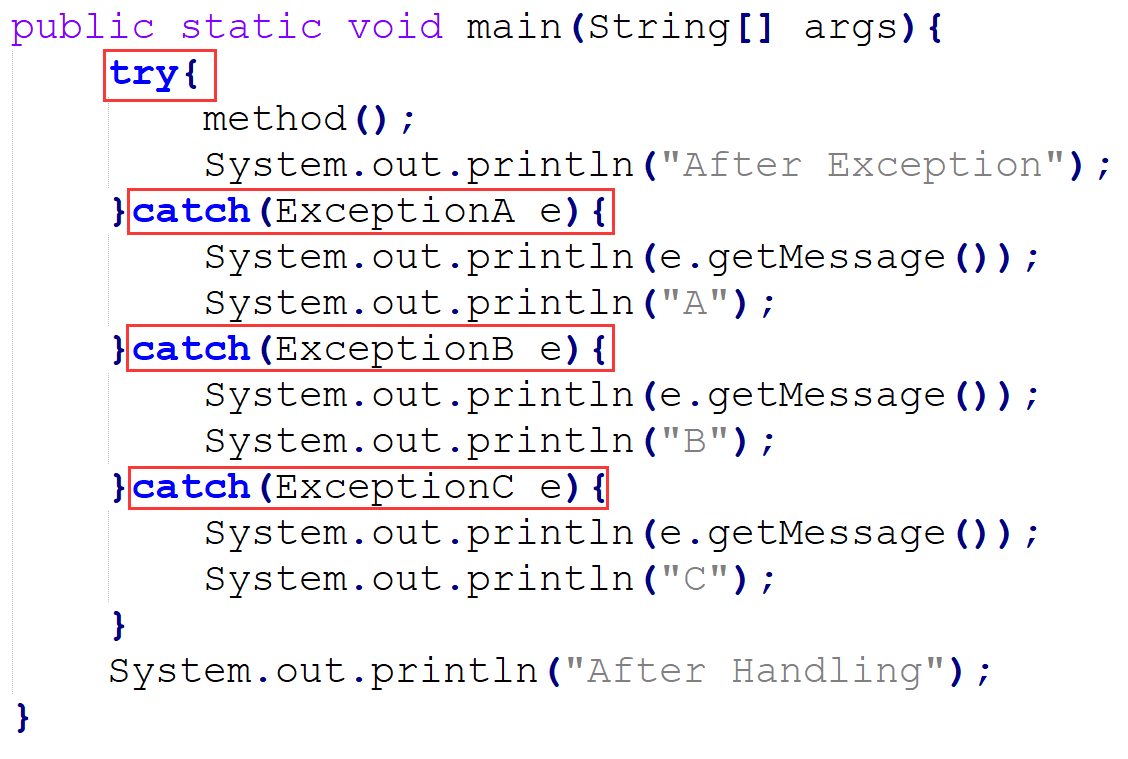
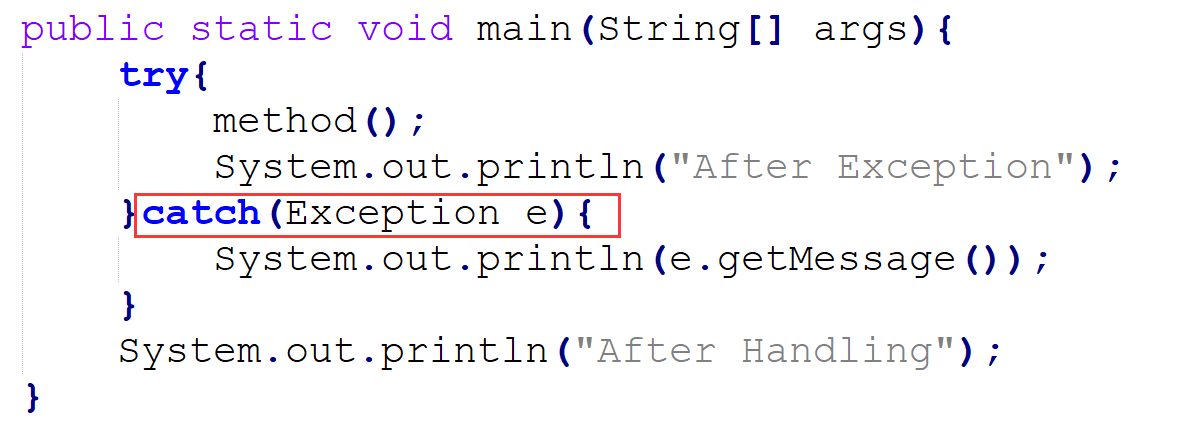
try语句表示尝试捕获语句块中代码抛出的异常,catch语句表示对捕获到的对应类型的异常进行处理。当异常发生后会对异常类型进行匹配,找到合适的catch语句块处理异常。父异常类可以匹配所有子类异常,例如ExceptionA、ExceptionB、ExceptionC都是Exception的子类,因此可以统一捕获Exception异常:
多catch语句场景下,若父异常类和子异常类同时存在,则设计时先尝试捕获子异常类,再捕获父异常类:
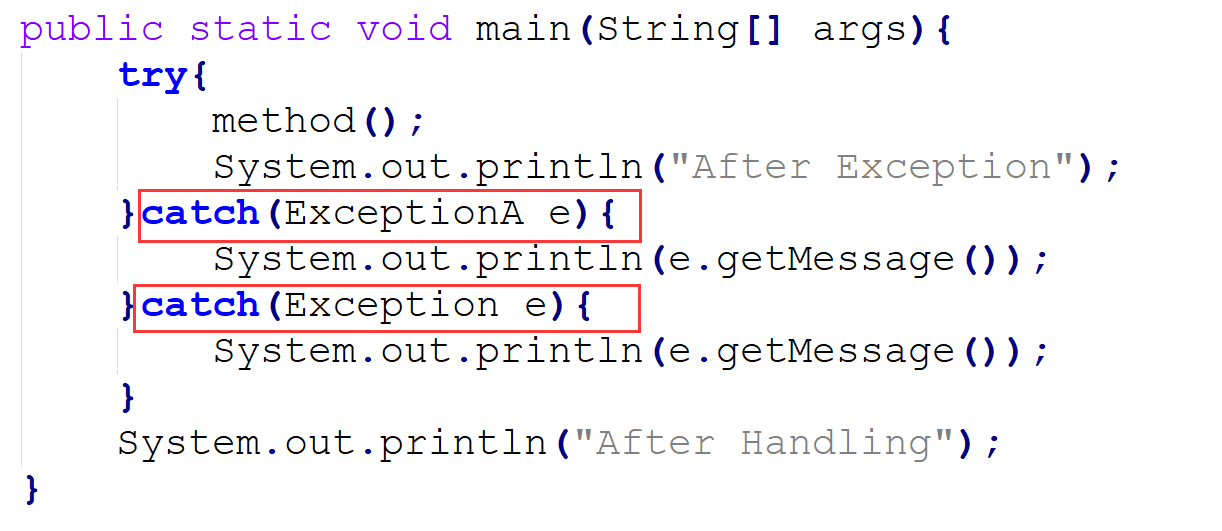
反过来先捕获父异常类则会出现编译错误。


When Exception happen

try语句中的异常发生后,其剩余的语句不会执行,此时直接跳转到匹配上的catch语句中对异常进行处理:


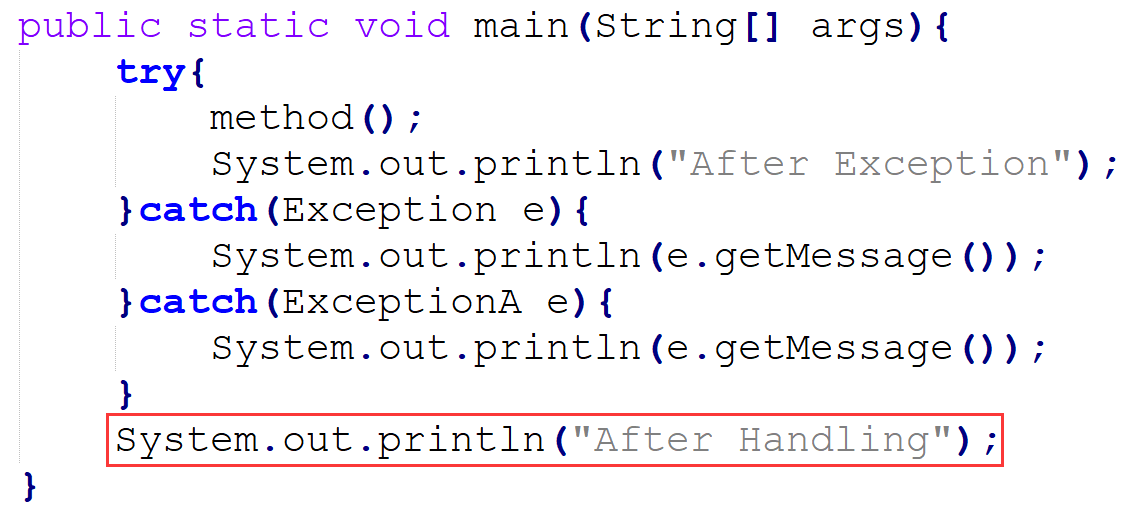
After Exception Handling

当异常捕获并处理完成之后,继续执行try-catch语句块后面的代码:
Without Catching

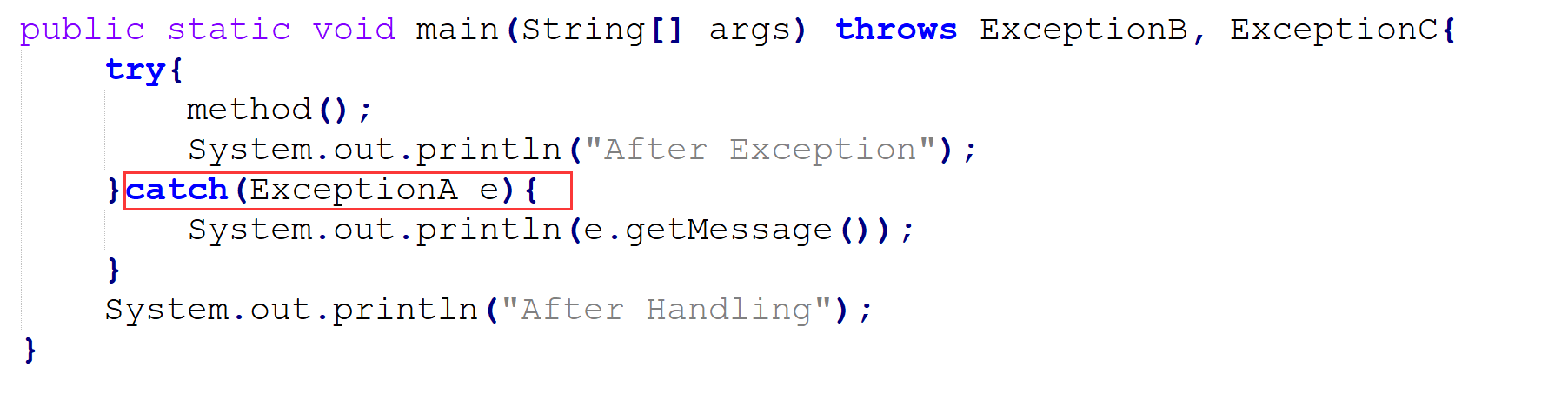
当异常发生但是没捕获到,则程序执行权交给上一层调用者,在如下所示代码中,假设method()抛出ExceptionB,但main函数只处理了ExceptionA异常,这个时候程序控制权返回给调用main函数的上一层代码,因此,这时main函数剩余的代码不会执行。