
目录

  • 1 Lecture 1 Plato Ion
    • 1.1 Introduction
    • 1.2 Presentation
    • 1.3 Discussion
    • 1.4 Comment
    • 1.5 Quiz
  • 2 Lecture 2 Aristotle Poetics
    • 2.1 Introduction
    • 2.2 Presentation
    • 2.3 Discussion
    • 2.4 Comment
    • 2.5 Quiz
  • 3 Lecture 3 Samuel Johnson Preface to the Plays of Shakespeare
    • 3.1 Introduction
    • 3.2 Presentation
    • 3.3 Discussion
    • 3.4 Comment
    • 3.5 Quiz
  • 4 Lecture 4 Wordsworth Preface to Lyrical Ballads (2nd Edition)
    • 4.1 Introduction
    • 4.2 Presentation
    • 4.3 Discussion
    • 4.4 Comment
    • 4.5 Quiz
  • 5 Lecture 5 Taine Preface to History of English Literature
    • 5.1 Introduction
    • 5.2 Presentation
    • 5.3 Discussion
    • 5.4 Comment
    • 5.5 Quiz
  • 6 Lecture 6 Oscar Wilde Preface to The Picture of Dorian Gray
    • 6.1 Introduction
    • 6.2 Presentation
    • 6.3 Discussion
    • 6.4 Comment
    • 6.5 Quiz
  • 7 Lecture 7 Freud Development of the Libido and Sexual Organization
    • 7.1 Introduction
    • 7.2 Presentation
    • 7.3 Discussion
    • 7.4 Comment
    • 7.5 Quiz
  • 8 Lecture 8 Eliot Tradition and the Individual Talent
    • 8.1 Introduction
    • 8.2 Presentation
    • 8.3 Discussion
    • 8.4 Comment
    • 8.5 Quiz
  • 9 Lecture 9 Empson Seven Types Of Ambiguity
    • 9.1 Introduction
    • 9.2 Presentation
    • 9.3 Discussion
    • 9.4 Comment
    • 9.5 Quiz
  • 10 Lecture 10 Bakhtin Epic and Novel
    • 10.1 Introduction
    • 10.2 Presentation
    • 10.3 Discussion
    • 10.4 Comment
    • 10.5 Quiz
  • 11 Lecture 11 M. H. Abrams The Mirror and the Lamp
    • 11.1 Introduction
    • 11.2 Presentation
    • 11.3 Discussion
    • 11.4 Comment
    • 11.5 Quiz
  • 12 Lecture 12 Sontag Against Interpretation
    • 12.1 Introduction
    • 12.2 Presentation
    • 12.3 Discussion
    • 12.4 Comment
    • 12.5 Quiz
  • 13 Lecture 13 H. Jauss Literary History as a Challenge to Literary Theory
    • 13.1 Introduction
    • 13.2 Presentation
    • 13.3 Discussion
    • 13.4 Comment
    • 13.5 Quiz
  • 14 Lecture 14 Edward Said Orientalism
    • 14.1 Introduction
    • 14.2 Discussion
    • 14.3 Comment
    • 14.4 Quiz
Discussion

·life

Edward Wadie Said was a Palestinian American literary theorist and publicintellectual who helped found the critical-theory field of post colonialism.Born in Jerusalem in Mandatory Palestine to Palestinian parents’ resident inEgypt, he was an American citizen through his father. Said spent his childhoodin Jerusalem and Cairo, where he attended elite British and American schools.Subsequently he left for the United States, where he obtained a bachelor's degreefrom Princeton and a doctorate in English literature from Harvard. Said thenjoined the faculty of Columbia University in 1963, where he became professor ofEnglish and comparative literature in 1991.
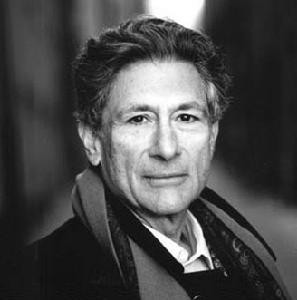

As a cultural critic, Said is best known for the 1978 book Orientalism. Init, he analyses the cultural representations that are the basis of Orientalism,a term he redefined to refer to the West's patronizing perceptions anddepictions of Middle Eastern, Asian and North African societies—"the East".As a public intellectual, Said discussed culture, literature, music andcontemporary politics. Drawing from his family experiences as PalestinianChristians in the Middle East around the time Israel was established in 1948,Said argued for the establishment of a Palestinian state.