
目录

  • 1 Lecture 1 Plato Ion
    • 1.1 Introduction
    • 1.2 Presentation
    • 1.3 Discussion
    • 1.4 Comment
    • 1.5 Quiz
  • 2 Lecture 2 Aristotle Poetics
    • 2.1 Introduction
    • 2.2 Presentation
    • 2.3 Discussion
    • 2.4 Comment
    • 2.5 Quiz
  • 3 Lecture 3 Samuel Johnson Preface to the Plays of Shakespeare
    • 3.1 Introduction
    • 3.2 Presentation
    • 3.3 Discussion
    • 3.4 Comment
    • 3.5 Quiz
  • 4 Lecture 4 Wordsworth Preface to Lyrical Ballads (2nd Edition)
    • 4.1 Introduction
    • 4.2 Presentation
    • 4.3 Discussion
    • 4.4 Comment
    • 4.5 Quiz
  • 5 Lecture 5 Taine Preface to History of English Literature
    • 5.1 Introduction
    • 5.2 Presentation
    • 5.3 Discussion
    • 5.4 Comment
    • 5.5 Quiz
  • 6 Lecture 6 Oscar Wilde Preface to The Picture of Dorian Gray
    • 6.1 Introduction
    • 6.2 Presentation
    • 6.3 Discussion
    • 6.4 Comment
    • 6.5 Quiz
  • 7 Lecture 7 Freud Development of the Libido and Sexual Organization
    • 7.1 Introduction
    • 7.2 Presentation
    • 7.3 Discussion
    • 7.4 Comment
    • 7.5 Quiz
  • 8 Lecture 8 Eliot Tradition and the Individual Talent
    • 8.1 Introduction
    • 8.2 Presentation
    • 8.3 Discussion
    • 8.4 Comment
    • 8.5 Quiz
  • 9 Lecture 9 Empson Seven Types Of Ambiguity
    • 9.1 Introduction
    • 9.2 Presentation
    • 9.3 Discussion
    • 9.4 Comment
    • 9.5 Quiz
  • 10 Lecture 10 Bakhtin Epic and Novel
    • 10.1 Introduction
    • 10.2 Presentation
    • 10.3 Discussion
    • 10.4 Comment
    • 10.5 Quiz
  • 11 Lecture 11 M. H. Abrams The Mirror and the Lamp
    • 11.1 Introduction
    • 11.2 Presentation
    • 11.3 Discussion
    • 11.4 Comment
    • 11.5 Quiz
  • 12 Lecture 12 Sontag Against Interpretation
    • 12.1 Introduction
    • 12.2 Presentation
    • 12.3 Discussion
    • 12.4 Comment
    • 12.5 Quiz
  • 13 Lecture 13 H. Jauss Literary History as a Challenge to Literary Theory
    • 13.1 Introduction
    • 13.2 Presentation
    • 13.3 Discussion
    • 13.4 Comment
    • 13.5 Quiz
  • 14 Lecture 14 Edward Said Orientalism
    • 14.1 Introduction
    • 14.2 Discussion
    • 14.3 Comment
    • 14.4 Quiz
Presentation

·life

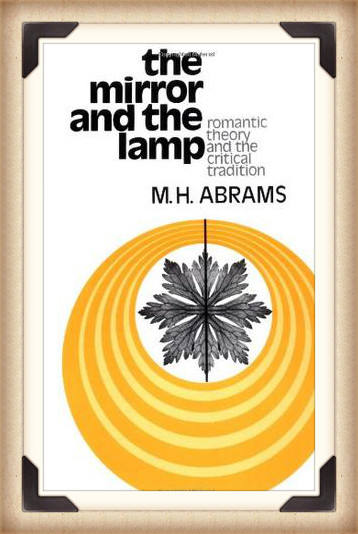
Meyer Howard "Mike" Abrams, usually cited as M. H. Abrams, was an American literary critic, known for works on romanticism, in particular his book The Mirror and the Lamp. Under Abrams' editorship, the Norton Anthology of English Literature became the standard text for undergraduate survey courses across the U.S. and a major trendsetter in literary canon formation.

During World War II, he served at the Psycho-Acoustics Laboratory at Harvard. He describes his work as solving the problem of voice communications in a noisy military environment by establishing military codes that are highly audible and inventing selection tests for personnel who had a superior ability to recognize sound in a noisy background.

In 1945 Abrams became a professor at Cornell University. The literary critics Harold Bloom, GayatriSpivak and E. D. Hirsch, and the novelist Thomas Pynchon were among his students. He was elected a Fellow of the American Academy of Arts and Sciences in 1963. As of March 4, 2008, he was Class of 1916 Professor of English Emeritus there.