
·ideas
Poetry
 Typically, Eliot first published his poems individually in periodicals orin small books or pamphlets, and then collected them in books. His firstcollection was Prufrock and Other Observations (1917). In 1920, he publishedmore poems in Ara Vos Prec (London) and Poems: 1920 (New York). These had thesame poems (in a different order) except that "Ode" in the Britishedition was replaced with "Hysteria" in the American edition. In1925, he collected The Waste Land and the poems in Prufrock and Poems into onevolume and added The Hollow Men to form Poems: 1909–1925. From then on, heupdated this work as Collected Poems. Exceptions are Old Possum's Book ofPractical Cats (1939), a collection of light verse; Poems Written in EarlyYouth, posthumously published in 1967 and consisting mainly of poems publishedbetween 1907 and 1910 in The Harvard Advocate, and Inventions of the MarchHare: Poems 1909–1917, material Eliot never intended to have published, whichappeared posthumously in 1997.
The Love Songof J. Alfred Prufrock
In 1915, Ezra Pound,overseas editor of Poetry magazine, recommended to Harriet Monroe, themagazine's founder, that she publishes "The Love Song of J. AlfredPrufrock". Although the character Prufrock seems to be middle-aged, Eliotwrote most of the poem when he was only twenty-two. Its now-famous openinglines, comparing the evening sky to "a patient etherized upon atable", were considered shocking and offensive, especially at a time whenGeorgian Poetry was hailed for its derivations of the nineteenth centuryRomantic Poets.
The poem follows theconscious experience of a man, Prufrock (relayed in the "stream ofconsciousness" form characteristic of the Modernists), lamenting hisphysical and intellectual inertia with the recurrent theme of carnal loveunattained. Critical opinion is divided as to whether the narrator leaves hisresidence during the course of the narration. The locations described can beinterpreted either as actual physical experiences, mental recollections, or assymbolic images from the unconscious mind, as, for example, in the refrain"In the room the women come and go".
The poem's structure washeavily influenced by Eliot's extensive reading of Dante and refers to a numberof literary works, including Hamlet and those of the French Symbolists. Itsreception in London can be gauged from an unsigned review in The Times LiterarySupplement on 21 June 1917. "The fact that these things occurred to themind of Mr. Eliot is surely of the very smallest importance to anyone, even tohimself. They certainly have no relation to poetry."
The Waste Land
In October 1922, Eliotpublished The Waste Land in The Criterion. Eliot's dedication to il migliorfabbro ("the better craftsman") refers to Ezra Pound's significanthand in editing and reshaping the poem from a longer Eliot manuscript to theshortened version that appears in publication.
It was composed during aperiod of personal difficulty for Eliot—his marriage was failing, and both heand Vivienne were suffering from nervous disorders. The poem is often read as arepresentation of the disillusionment of the post-war generation. Before thepoem's publication as a book in December 1922, Eliot distanced himself from itsvision of despair. On 15 November 1922, he wrote to Richard Aldington, saying,"As for The Waste Land, that is a thing of the past so far as I amconcerned and I am now feeling toward a new form and style."
The poem is known for itsobscure nature—its slippage between satire and prophecy; its abrupt changes ofspeaker, location, and time. This structural complexity is one of the reasonsthat the poem has become a touchstone of modern literature, a poeticcounterpart to a novel published in the same year, James Joyce's Ulysses.
Among itsbest-known phrases are "April is the cruellest month", "I willshow you fear in a handful of dust" and "Shantih shantihshantih". The Sanskrit mantra ends the poem.
The initial criticalresponse to Eliot's "The Waste Land" was mixed. Ronald Bush notesthat "'The Waste Land' was at first correctly perceived as a work ofjazz-like syncopation—and, like 1920s jazz, essentially iconoclastic."Some critics, like Edmund Wilson, Conrad Aiken, and Gilbert Seldes thought itwas the best poetry being written in the English language while others thoughtit was esoteric and wilfully difficult. Edmund Wilson, being one of the criticswho praised Eliot, called him "one of our only authentic poets".Wilson also pointed out some of Eliot's weaknesses as a poet. In regard to"The Waste Land", Wilson admits its flaws ("its lack ofstructural unity"), but concluded, "I doubt whether there is a singleother poem of equal length by a contemporary American which displays so highand so varied a mastery of English verse."
Four Quartets
Eliot regarded Four Quartetsas his masterpiece, and it is the work that led to his being awarded the NobelPrize in Literature. It consists of four long poems, each first publishedseparately: Burnt Norton (1936), East Coker (1940), The Dry Salvages (1941) andLittle Gidding (1942). Each has five sections. Although they resist easy characterization,each poem includes meditations on the nature of time in some importantrespect—theological, historical, physical—and its relation to the humancondition. Each poem is associated with one of the four classical elements:air, earth, water, and fire.
Burnt Norton is a meditativepoem that begins with the narrator trying to focus on the present moment whilewalking through a garden, focusing on images and sounds like the bird, theroses, clouds, and an empty pool. The narrator's meditation leads him/her toreach "the still point" in which he doesn't try to get anywhere or toexperience place and/or time, instead experiencing "a grace ofsense". In the final section, the narrator contemplates the arts("Words" and "music") as they relate to time. The narratorfocuses particularly on the poet's art of manipulating "Words [which]strain, / Crack and sometimes break, under the burden [of time], under thetension, slip, slide, perish, decay with imprecision, [and] will not stay inplace, / Will not stay still." By comparison, the narrator concludes that"Love is itself unmoving, / Only the cause and end of movement, /Timeless, and undesiring."
East Coker continues theexamination of time and meaning, focusing in a famous passage on the nature oflanguage and poetry. Out of darkness, Eliot offers a solution: "I said tomy soul, be still, and wait without hope."
The Dry Salvages treats theelement of water, via images of river and sea. It strives to contain opposites:"The past and future / Are conquered, and reconciled."
Little Gidding (the elementof fire) is the most anthologized of the Quartets. Eliot's experiences as anair raid warden in The Blitz power the poem, and he imagines meeting Dante duringthe German bombing. The beginning of the Quartets ("Houses / Are removed,destroyed") had become a violent everyday experience; this creates ananimation, where for the first time he talks of Love as the driving forcebehind all experience. From this background, the Quartets end with anaffirmation of Julian of Norwich: "All shall be well and / All manner ofthing shall be well."
The Four Quartets cannot beunderstood without reference to Christian thought, traditions, and history.Eliot draws upon the theology, art, symbolism and language of such figures asDante, and mystics St. John of the Cross and Julian of Norwich. The"deeper communion" sought in East Coker, the "hints and whispersof children, the sickness that must grow worse in order to find healing",and the exploration which inevitably leads us home all point to the pilgrim'spath along the road of sanctification.
Plays
With the important exceptionof Four Quartets, Eliot directed much of his creative energies after AshWednesday to writing plays in verse, mostly comedies or plays with redemptiveendings. He was long a critic and admirer of Elizabethan and Jacobean versedrama; witness his allusions to Webster, Thomas Middleton, William Shakespeareand Thomas Kyd in The Waste Land. In a 1933 lecture he said "Every poetwould like, I fancy, to be able to think that he had some direct social utility. . . . He would like to be something of a popular entertainer, and be able tothink his own thoughts behind a tragic or a comic mask. He would like to conveythe pleasures of poetry, not only to a larger audience, but to larger groups ofpeople collectively; and the theatre is the best place in which to do it."
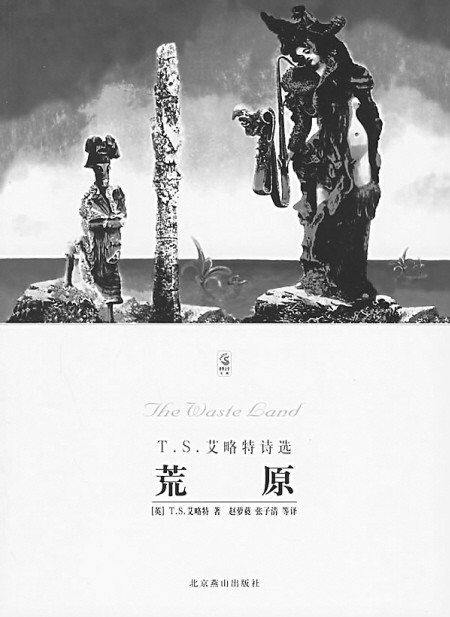
After The Waste Land (1922),he wrote that he was "now feeling toward a new form and style". Oneproject he had in mind was writing a play in verse, using some of the rhythmsof early jazz. The play featured "Sweeney", a character who hadappeared in a number of his poems. Although Eliot did not finish the play, hedid publish two scenes from the piece. These scenes, titled Fragment of aPrologue (1926) and Fragment of an Agon (1927), were published together in 1932as Sweeney Agonistes. Although Eliot noted that this was not intended to be aone-act play, it is sometimes performed as one.
A pageant play by Eliotcalled The Rock was performed in 1934 for the benefit of churches in theDiocese of London. Much of it was a collaborative effort; Eliot accepted creditonly for the authorship of one scene and the choruses. George Bell, the Bishopof Chichester, had been instrumental in connecting Eliot with producer E.Martin Browne for the production of The Rock, and later commissioned Eliot towrite another play for the Canterbury Festival in 1935. This one, Murder in theCathedral, concerning the death of the martyr, Thomas Becket, was more underEliot's control. Eliot biographer Peter Ackroyd comments that "for[Eliot], Murder in the Cathedral and succeeding verse plays offered a doubleadvantage; it allowed him to practice poetry but it also offered a convenienthome for his religious sensibility."[32] After this, he worked on more"commercial" plays for more general audiences: The Family Reunion(1939), The Cocktail Party (1949), The Confidential Clerk, (1953) and The ElderStatesman (1958) (the latter three were produced by Henry Sherek and directedby E. Martin Browne). The Broadway production in New York of The Cocktail Partyreceived the 1950 Tony Award for Best Play.
Regarding hismethod of playwriting, Eliot explained, "If I set out to write a play, Istart by an act of choice. I settle upon a particular emotional situation, outof which characters and a plot will emerge. And then lines of poetry may comeinto being: not from the original impulse but from a secondary stimulation ofthe unconscious mind."
Literary criticism
Eliot also made significantcontributions to the field of literary criticism, strongly influencing theschool of New Criticism. While somewhat self-deprecating and minimising of hiswork—he once said his criticism was merely a "by-product" of his"private poetry-workshop"—Eliot is considered by some to be one ofthe greatest literary critics of the twentieth century.[63] The critic WilliamEmpson once said, "I do not know for certain how much of my own mind [Eliot]invented, let alone how much of it is a reaction against him or indeed aconsequence of misreading him. He is a very penetrating influence, perhaps notunlike the east wind."
 In his critical essay"Tradition and the Individual Talent", Eliot argues that art must beunderstood not in a vacuum, but in the context of previous pieces of art."In a peculiar sense [an artist or poet] ... must inevitably be judged bythe standards of the past." This essay was an important influence over theNew Criticism by introducing the idea that the value of a work of art must beviewed in the context of the artist's previous works, a "simultaneousorder" of works (i.e., "tradition"). Eliot himself employed thisconcept on many of his works, especially on his long-poem The Waste Land.
Also important to NewCriticism was the idea—as articulated in Eliot's essay "Hamlet and HisProblems"—of an "objective correlative", which posits aconnection among the words of the text and events, states of mind, andexperiences.[66] This notion concedes that a poem means what it says, butsuggests that there can be a non-subjective judgment based on differentreaders' different—but perhaps corollary—interpretations of a work.
More generally, New Criticstook a cue from Eliot in regard to his "'classical' ideals and hisreligious thought; his attention to the poetry and drama of the earlyseventeenth century; his deprecation of the Romantics, especially Shelley; hisproposition that good poems constitute 'not a turning loose of emotion but anescape from emotion'; and his insistence that 'poets... at present must bedifficult'."
Eliot's essays were a majorfactor in the revival of interest in the metaphysical poets. Eliot particularlypraised the metaphysical poets' ability to show experience as both psychologicaland sensual, while at the same time infusing this portrayal with—in Eliot'sview—wit and uniqueness. Eliot's essay "The Metaphysical Poets",along with giving new significance and attention to metaphysical poetry,introduced his now well-known definition of "unified sensibility",which is considered by some to mean the same thing as the term"metaphysical".
His 1922 poem The Waste Landalso can be better understood in light of his work as a critic. He had arguedthat a poet must write "programmatic criticism", that is, a poetshould write to advance his own interests rather than to advance"historical scholarship". Viewed from Eliot's critical lens, TheWaste Land likely shows his personal despair about World War I rather than anobjective historical understanding of it.
Late in his career,Eliot focused much of his creative energy on writing for the theatre, and someof his critical writing, in essays like "Poetry and Drama,""Hamlet and his Problems," and "The Possibility of a PoeticDrama," focused on the aesthetics of writing drama in verse.

