
目录

  • 1 Lecture 1 Plato Ion
    • 1.1 Introduction
    • 1.2 Presentation
    • 1.3 Discussion
    • 1.4 Comment
    • 1.5 Quiz
  • 2 Lecture 2 Aristotle Poetics
    • 2.1 Introduction
    • 2.2 Presentation
    • 2.3 Discussion
    • 2.4 Comment
    • 2.5 Quiz
  • 3 Lecture 3 Samuel Johnson Preface to the Plays of Shakespeare
    • 3.1 Introduction
    • 3.2 Presentation
    • 3.3 Discussion
    • 3.4 Comment
    • 3.5 Quiz
  • 4 Lecture 4 Wordsworth Preface to Lyrical Ballads (2nd Edition)
    • 4.1 Introduction
    • 4.2 Presentation
    • 4.3 Discussion
    • 4.4 Comment
    • 4.5 Quiz
  • 5 Lecture 5 Taine Preface to History of English Literature
    • 5.1 Introduction
    • 5.2 Presentation
    • 5.3 Discussion
    • 5.4 Comment
    • 5.5 Quiz
  • 6 Lecture 6 Oscar Wilde Preface to The Picture of Dorian Gray
    • 6.1 Introduction
    • 6.2 Presentation
    • 6.3 Discussion
    • 6.4 Comment
    • 6.5 Quiz
  • 7 Lecture 7 Freud Development of the Libido and Sexual Organization
    • 7.1 Introduction
    • 7.2 Presentation
    • 7.3 Discussion
    • 7.4 Comment
    • 7.5 Quiz
  • 8 Lecture 8 Eliot Tradition and the Individual Talent
    • 8.1 Introduction
    • 8.2 Presentation
    • 8.3 Discussion
    • 8.4 Comment
    • 8.5 Quiz
  • 9 Lecture 9 Empson Seven Types Of Ambiguity
    • 9.1 Introduction
    • 9.2 Presentation
    • 9.3 Discussion
    • 9.4 Comment
    • 9.5 Quiz
  • 10 Lecture 10 Bakhtin Epic and Novel
    • 10.1 Introduction
    • 10.2 Presentation
    • 10.3 Discussion
    • 10.4 Comment
    • 10.5 Quiz
  • 11 Lecture 11 M. H. Abrams The Mirror and the Lamp
    • 11.1 Introduction
    • 11.2 Presentation
    • 11.3 Discussion
    • 11.4 Comment
    • 11.5 Quiz
  • 12 Lecture 12 Sontag Against Interpretation
    • 12.1 Introduction
    • 12.2 Presentation
    • 12.3 Discussion
    • 12.4 Comment
    • 12.5 Quiz
  • 13 Lecture 13 H. Jauss Literary History as a Challenge to Literary Theory
    • 13.1 Introduction
    • 13.2 Presentation
    • 13.3 Discussion
    • 13.4 Comment
    • 13.5 Quiz
  • 14 Lecture 14 Edward Said Orientalism
    • 14.1 Introduction
    • 14.2 Discussion
    • 14.3 Comment
    • 14.4 Quiz
Presentation

·life

Thomas Stearns Eliot OM usuallyknown as T. S. Eliot, was an essayist, publisher, playwright, literary andsocial critic, and "one of the twentieth century's major poets". Hewas born in St. Louis, Missouri, to the old Yankee Eliot family descended fromAndrew Eliot, who migrated to Boston, Massachusetts from East Coker, England inthe 1660s. He emigrated to England in 1914 (at age 25), settling, working andmarrying there. He was eventually naturalised as a British subject in 1927 atage 39, renouncing his American citizenship.
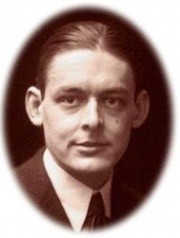
Eliot attractedwidespread attention for his poem The Love Song of J. Alfred Prufrock (1915),which is seen as a masterpiece of the Modernist movement. It was followed bysome of the best-known poems in the English language, including The Waste Land(1922), The Hollow Men (1925), Ash Wednesday (1930), and Four Quartets (1945).He is also known for his seven plays, particularly Murder in the Cathedral(1935). He was awarded the Nobel Prize in Literature in 1948, "for hisoutstanding, pioneer contribution to present-day poetry."