
·ideas
Seduction theory
In the early 1890s, Freud used a form of treatment based on the one thatBreuer had described to him, modified by what he called his "pressuretechnique" and his newly developed analytic technique of interpretationand reconstruction. According to Freud's later accounts of this period, as aresult of his use of this procedure most of his patients in the mid-1890sreported early childhood sexual abuse. He believed these stories, which he usedas the basis for his seduction theory, but then he came to believe that theywere fantasies. He explained these at first as having the function of"fending off" memories of infantile masturbation, but in later yearshe wrote that they represented Oedipal fantasies, stemming from innate drivesthat are sexual and destructive in nature.
Cocaine
As a medical researcher, Freud was an early user and proponent of cocaineas a stimulant as well as analgesic. He believed that cocaine was a cure formany mental and physical problems, and in his 1884 paper "On Coca" heextolled its virtues.
The Unconscious
The concept of the unconscious was central to Freud's account of the mind.Freud believed that while poets and thinkers had long known of the existence ofthe unconscious, he had ensured that it received scientific recognition in thefield of psychology. The concept made an informal appearance in Freud'swritings.
The unconscious was first introduced in connection with the phenomenon  ofrepression, to explain what happens to ideas that are repressed. Freud statedexplicitly that the concept of the unconscious was based on the theory ofrepression. He postulated a cycle in which ideas are repressed, but remain inthe mind, removed from consciousness yet operative, then reappear inconsciousness under certain circumstances. The postulate was based upon theinvestigation of cases of traumatic hysteria, which revealed cases where thebehavior of patients could not be explained without reference to ideas orthoughts of which they had no awareness. This fact, combined with theobservation that such behavior could be artificially induced by hypnosis, inwhich ideas were inserted into people's minds, suggested that ideas wereoperative in the original cases, even though their subjects knew nothing ofthem.
Dreams
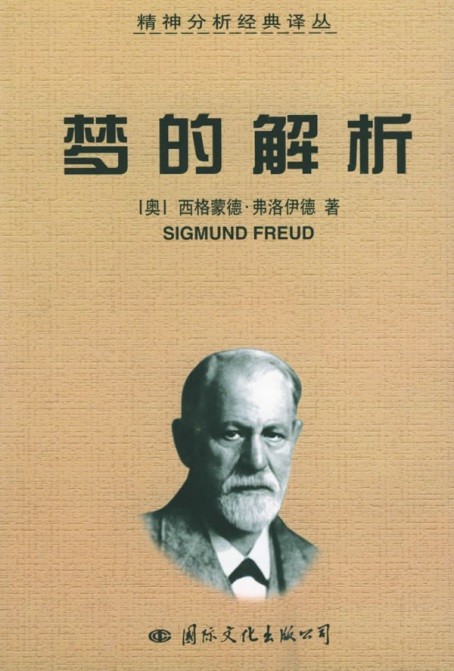
Freud believed that the function of dreams is to preserve sleep byrepresenting as fulfilled wishes that would otherwise awaken the dreamer.
In Freud's theory dreams are instigated by the daily occurrences andthoughts of everyday life. His claim that they function as wish fulfillments isbased on an account of the “dream work" in terms of a transformation of"secondary process" thought, governed by the rules of language andthe reality principle, into the "primary process" of unconsciousthought governed by the pleasure principle, wish gratification and therepressed sexual scenarios of childhood.
Psychosexual development
Freud’s theory of psychosexual development proposes that, following on fromthe initial polymorphous perversity of infantile sexuality, the sexual“drives" pass through the distinct developmental phases of the oral, theanal and the phallic. Though these phases then give way to a latency stage ofreduced sexual interest and activity (from around the age of approximately fiveup until puberty), they leave, to a greater or lesser extent, a “perverse"and bisexual residue which persists during the formation of adult genitalsexuality. Freud argued that neurosis or perversion could be explained in termsof fixation or regression to these phases whereas adult character and culturalcreativity could achieve a sublimation of their perverse residue.
Id, ego and super-ego
Freud proposed that the human psyche could be divided into three parts: Id,ego and super-ego. Freud discussed this model in the 1920 essay Beyond thePleasure Principle, and fully elaborated upon it in The Ego and the Id (1923),in which he developed it as an alternative to his previous topographic schema(i.e., conscious, unconscious and preconscious). The id is the completelyunconscious, impulsive, childlike portion of the psyche that operates on the"pleasure principle" and is the source of basic impulses and drives;it seeks immediate pleasure and gratification.

Freud acknowledged that his use of the term Id (das Es, "the It")derives from the writings of Georg Groddeck. The super-ego is the moralcomponent of the psyche, which takes into account no special circumstances inwhich the morally right thing may not be right for a given situation. Therational ego attempts to exact a balance between the impractical hedonism ofthe id and the equally impractical moralism of the super-ego; it is the part ofthe psyche that is usually reflected most directly in a person's actions. Whenoverburdened or threatened by its tasks, it may employ defence mechanismsincluding denial, repression, undoing, rationalization, and displacement. Thisconcept is usually represented by the "Iceberg Model".[132] Thismodel represents the roles the Id, Ego, and Super Ego play in relation toconscious and unconscious thought.
Life and death drives
Freud believed that people are driven by two conflicting central desires:the life drive (libido or Eros) (survival, propagation, hunger, thirst, andsex) and the death drive. The death drive was also termed "Thanatos",although Freud did not use that term; "Thanatos" was introduced inthis context by Paul Federn. Freud hypothesized that libido is a form of mentalenergy with which processes, structures and object-representations areinvested. Prior to the war, Freud believes, fiction had constituted a differentmode of relation to death, a place of compensation in which "the conditionfor reconciling ourselves to death is fulfilled, namely, if beneath all vicissitudesof life a permanent life still remains to us".
Femininity and female sexuality
According to Freud, "Elimination of clitoral sexuality is a necessaryprecondition for the development of femininity, since it is immature andmasculine in its nature." Freud postulated the concept of "vaginalorgasm" as separate from clitoral orgasm, achieved by external stimulationof the clitoris. In 1905, he stated that clitoral orgasms are purely anadolescent phenomenon and that, upon reaching puberty, the proper response ofmature women is a change-over to vaginal orgasms, meaning orgasms without anyclitoral stimulation. This theory has been criticized on the grounds that Freudprovided no evidence for this basic assumption, and because it made many womenfeel inadequate when they could not achieve orgasm via vaginal intercoursealone.
Religion
Freud regarded the monotheistic God as an illusion based upon the infantileemotional need for a powerful, supernatural pater familias. He maintained thatreligion – once necessary to restrain man's violent nature in the early stagesof civilization – in modern times, can be set aside in favor of reason andscience.

