
·ideas
Autobiographical work and Poems in Two Volumes
Wordsworth had for yearsbeen making plans to write a long philosophical poem in three parts, which heintended to call The Recluse. In 1798–99 he started an autobiographical poem,which he referred to as the "poem to Coleridge" and which he plannedwould serve as an appendix to a larger work called The Recluse. In 1804 hebegan expanding this autobiographical work, having decided to make it a prologuerather than an appendix. He completed this work, now generally referred to asthe first version of The Prelude, in 1805, but refused to publish such apersonal work until he had completed the whole of The Recluse. The death of hisbrother John, also in 1805, affected him strongly and may have influenced hisdecisions about these works.
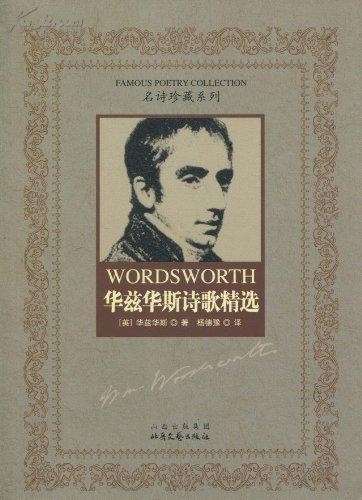
Wordsworth's philosophicalallegiances as articulated in The Prelude and in such shorter works as"Lines written a few miles above Tintern Abbey" have been a source ofcritical debate. It was long supposed that Wordsworth relied chiefly onColeridge for philosophical guidance, but more recently scholars have suggestedthat Wordsworth's ideas may have been formed years before he and Coleridgebecame friends in the mid-1790s. In particular, while he was in revolutionaryParis in 1792 the 22-year-old Wordsworth made the acquaintance of themysterious traveler John "Walking" Stewart (1747–1822), who wasnearing the end of his thirty years of wandering, on foot, from Madras, India,through Persia and Arabia, across Africa and Europe, and up through thefledgling United States. By the time of their association Stewart had publishedan ambitious work of original materialist philosophy entitled The Apocalypse ofNature (London, 1791), to which many of Wordsworth's philosophical sentimentsmay well be indebted.
In 1807 Wordsworth publishedPoems in Two Volumes, including "Ode: Intimations of Immortality fromRecollections of Early Childhood". Up to this point Wordsworth was known onlyfor Lyrical Ballads, and he hoped that this new collection would cement hisreputation. Its reception was lukewarm, however.
The Prospectus
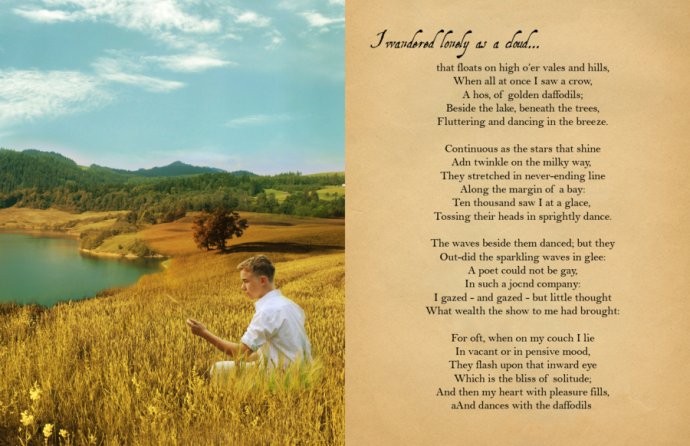
In 1814 Wordsworth publishedThe Excursion as the second part of the three-part work The Recluse, eventhough he had not completed the first part or the third part, and never did. Hedid, however, write a poetic Prospectus to "The Recluse" in which helaid out the structure and intention of the whole work. The Prospectus containssome of Wordsworth's most famous lines on the relation between the human mindand nature:
My voice proclaims
How exquisitely theindividual Mind
(And the progressive powersperhaps no less
Of the whole species) to theexternal World
Is fitted:—and howexquisitely, too,
Theme this but little heardof among Men,
The external World is fittedto the Mind.
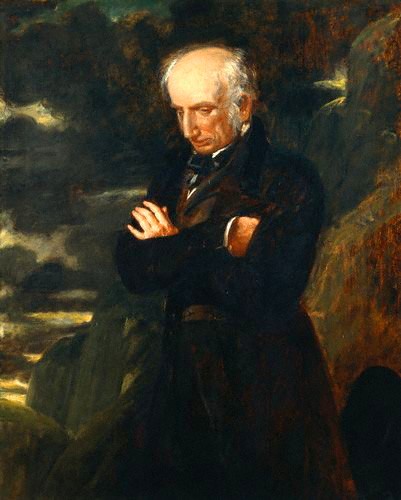
Some modern critics[who?]suggest that there was a decline in his work, beginning around the mid-1810s,perhaps because most of the concerns that characterized his early poems (loss,death, endurance, separation and abandonment) has been resolved in his writingsand his life. By 1820 he was enjoying considerable success accompanying areversal in the contemporary critical opinion of his earlier works.

