
·life
Aristotle was a Greek philosopher and scientist born in theMacedonian city of Stagira, Chalkidice, on the northern periphery of ClassicalGreece.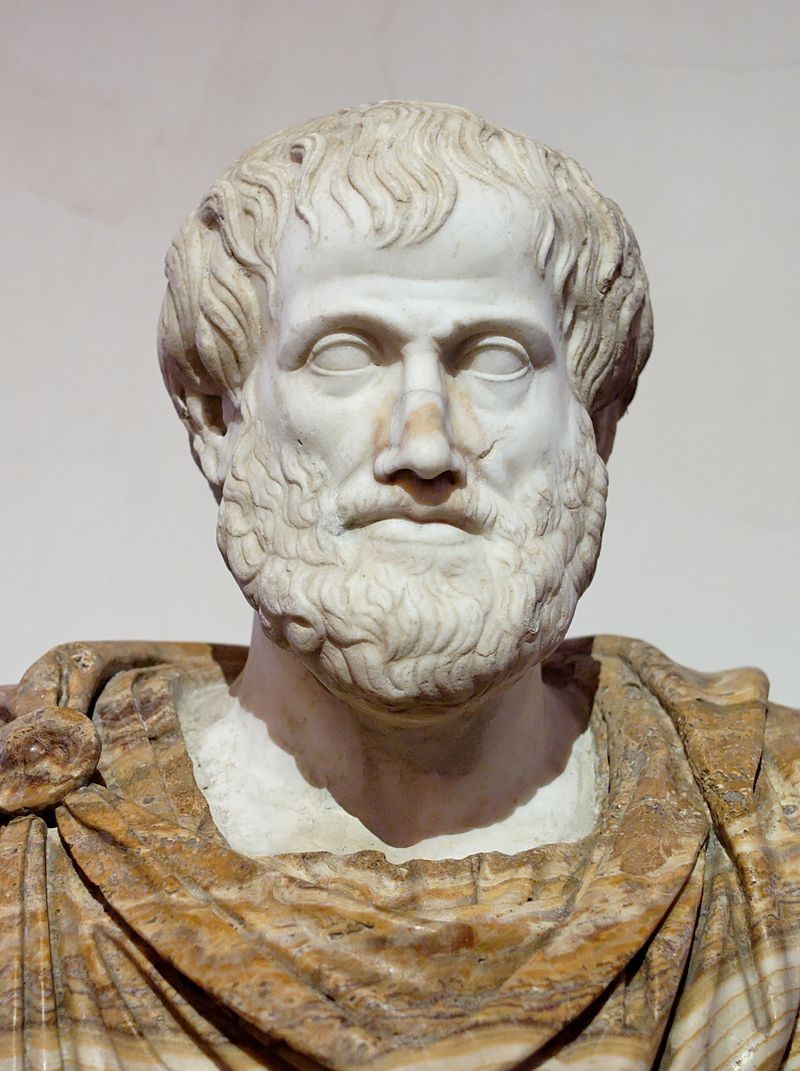
Aristotle was appointed as the head of the royal academy ofMacedon. During that time he gave lessons not only to Alexander, but also totwo other future kings: Ptolemy and Cassander. Aristotle encouraged Alexandertoward eastern conquest and his attitude towards Persia was unabashedlyethnocentric. In one famous example, he counsels Alexander to be "a leaderto the Greeks and a despot to the barbarians, to look after the former as afterfriends and relatives, and to deal with the latter as with beasts orplants". By 335 BC, Aristotle had returned to Athens, establishing his ownschool there known as the Lyceum. Aristotle conducted courses at the school forthe next twelve years.
His writings cover many subjects – including physics, biology,zoology, metaphysics, logic, ethics, aesthetics, poetry, theater, music,rhetoric, linguistics, politics and government – and constitute the firstcomprehensive system of Western philosophy. Shortly after Plato died, Aristotleleft Athens and, at the request of Philip of Macedon, tutored Alexander theGreat starting from 343 BC. According to the Encyclopedia Britannica,"Aristotle was the first genuine scientist in history ... [and] everyscientist is in his debt."

